How to Wash a Leather Jacket Safely (Step-by-Step Guide)
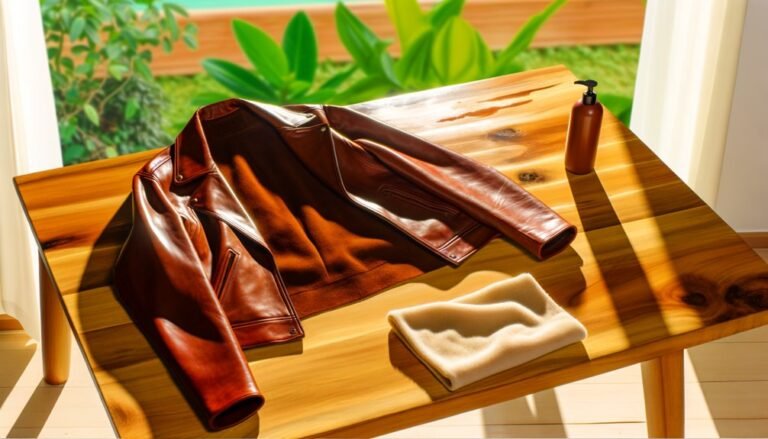
To wash a leather jacket properly, start by gently dusting it with a soft cloth to remove dirt and debris. Using the right cleaning method is essential to maintain the jacket’s appearance and durability.
Mix a mild soap solution with distilled water, then softly clean the surface using a damp cloth in circular motions. Never soak the jacket or use harsh chemicals, as this can damage the leather.
After cleaning, wipe the jacket dry with a clean cloth. Be sure to clean the interior liner carefully as well.
Always condition the leather afterward to keep it supple and prevent cracking.
Avoid machine washing or heat drying, which can ruin the jacket. For tips on stain removal and ongoing maintenance, keep exploring these essential care steps.
Dust the Leather

A soft, dry cloth or a gentle brush can quickly remove dust from your leather jacket. To clean it effectively, use a soft-bristled brush or a clean cloth, moving in circular motions to lift dust without scratching the leather.
Avoid pressing too hard or using abrasive tools, as they can damage the leather’s surface. Regular dusting prevents dirt from settling into the leather, helping maintain its smooth appearance and longevity.
After wearing your jacket or exposure to outdoor elements, take a moment to dust it off. This simple step keeps your leather looking fresh and clean, ensuring it stays in great condition over time.
Prepare a Mild Soap Solution
Once you’ve dusted off your leather jacket, the next step is to prepare a mild soap solution for cleaning. This solution is key when you wash a leather jacket, as it gently lifts dirt without harming the material.
Here’s how to make it:
Follow these simple steps to create a gentle soap solution perfect for cleaning your leather jacket.
- Pour warm water into a small bowl or container.
- Add two teaspoons of liquid detergent to the water.
- Stir well to evenly distribute the detergent, creating a mild soap solution.
Avoid harsh or scented soaps since they can discolor or damage your leather. Before you proceed with cleaning leather, always test the solution on a hidden spot of your jacket to ensure it won’t cause any issues.
This careful preparation sets the stage for effective and safe cleaning.
Gently Clean the Leather
When you gently clean the leather, use a soft, damp cloth with distilled water to avoid soaking the material. Before applying any leather cleaner, spot test it on a hidden area to verify it won’t damage the jacket.
Dampen your soft cloth slightly and gently wipe the leather in circular motions to lift dirt without scratching the surface. For minor stains, lightly blot instead of rubbing to prevent spreading. Avoid using excessive moisture, as it can harm the leather.
After cleaning, let the jacket air dry naturally, steering clear of heat sources or direct sunlight that might cause fading or cracking. This careful approach keeps your leather jacket looking its best without risking damage.
Wipe Down the Jacket
Although it might seem simple, wiping down your leather jacket requires care to keep it in good condition. To clean a leather jacket effectively, follow these steps carefully:
- Use a soft, damp cloth, just slightly moist with distilled water, to avoid soaking the leather.
- Test the cloth on a hidden spot first to ensure it won’t cause discoloration.
- Gently wipe down the jacket in circular motions, which helps lift dirt and oils without damaging the surface.

Clean the Inside
Turn your jacket inside out to easily reach the lining and interior surfaces. Use a damp cloth with mild soap to gently clean fabric areas like cuffs and collars without soaking them.
Then, let the interior air dry completely in a cool, shaded spot to keep your jacket fresh and protected.
Interior Cleaning Essentials
Accessing the inside of your leather jacket by flipping it out lets you clean the interior surfaces more effectively. For proper interior cleaning, follow these essentials:
- Hang the jacket inside out and use a soft cloth dampened with mild soap to gently wipe cuffs, collars, and underarms where sweat and oils build up.
- Apply a leather-safe interior cleaner with a soft cloth, working in circular motions to cover evenly without saturating the material.
- After cleaning, pat the interior dry with a dry cloth and let your jacket air dry in a cool, shaded area. Avoid direct heat or sunlight to prevent damage.
This routine keeps your jacket fresh, prevents odors, and maintains the integrity of the leather’s interior.
Fabric Liner Care
Cleaning the interior of your leather jacket doesn’t stop with the leather itself; you’ll also want to care for the fabric liner. Start by turning your jacket inside out and hanging it to access the interior surfaces easily.
Use a soft cloth or sponge dampened with a mild soap solution to gently clean areas like cuffs, collars, and underarms. Be careful not to saturate the lining with water; instead, spot clean any stained or dirty patches to avoid damage.
For stubborn stains or odors, lightly wipe the lining with equal parts rubbing alcohol and water, then let it dry fully. This careful cleaning guarantees your leather jacket stays fresh and comfortable on the inside, maintaining its overall quality and wearability.
Drying Interior Properly
After you’ve gently cleaned the interior, make sure you hang your leather jacket inside out in a cool, well-ventilated spot to dry. Proper interior drying is vital to prevent mold and odors. Here’s how to do it right:
- Hang the jacket on a sturdy hanger in a well-ventilated area away from direct sunlight and heat sources.
- Let the jacket air dry naturally; avoid using hairdryers or heaters as they can damage the leather.
- Allow several hours or overnight for thorough drying to ensure no moisture remains inside.
Following these steps helps preserve the jacket’s shape and prevents cracking or fading. By taking care to air dry the interior properly, you keep your leather jacket fresh and ready to wear.
How to Clean Tough Stains on a Leather Jacket
When tough stains like ink, oil, or wine appear on your leather jacket, you’ll want to act carefully to avoid making the damage worse. For ink stains, gently blot with a cotton swab dipped in nail polish remover, then wipe with a moist cloth.
Oil or grease stains respond well to a sprinkle of baking soda, baby powder, or cornstarch left overnight, which you can then brush off. For wine or coffee stains, quickly blot with a dry cloth and apply a leather-specific stain remover to clean the area. Always test any cleaning method on a hidden spot first to verify it won’t harm the leather. Avoid aggressive rubbing, as it can spread stains and damage the leather surface, making cleaning less effective.
What to Avoid When Treating Stains on Leather
Handling stains on leather requires more than just knowing how to treat them; you also need to steer clear of certain actions that can worsen the damage. To protect your jacket, avoid these common mistakes:
- Using household cleaners, bleach, alcohol, or acetone. They cause discoloration and irreparable damage.
- Applying excessive water or soaking the leather, which leads to stiffness, warping, or cracking.
- Rubbing or scrubbing stains aggressively, as this spreads the stain and harms the leather’s surface.
Also, don’t try home remedies like vinegar or baking soda directly on leather, and never toss your jacket in a washing machine or dryer. Following these guidelines will help keep your leather jacket stain-free and looking great.
Conditioning a Leather Jacket
Before you condition your leather jacket, make sure it’s completely dry to avoid trapping moisture. Choose a conditioner made for your jacket’s specific leather type and apply it gently with a soft cloth using circular motions.
Remember to condition your jacket every 6 to 12 months to keep it soft and prevent cracking.
Choosing the Right Conditioner
Although leather jackets are durable, they need regular conditioning to stay soft and crack-free. Choosing the right leather conditioner is vital to maintaining your jacket’s look and feel.
Here’s what you should consider:
- Select a leather conditioner formulated specifically for your jacket’s leather type to prevent dryness and cracking.
- Use a soft cloth to apply the conditioner, ensuring you apply circular motions for even absorption.
- Opt for products designed for high-quality leather to preserve its texture and durability.

Application Techniques
Once you’ve chosen the right conditioner, applying it properly will guarantee your leather jacket stays soft and vibrant. Start by ensuring your jacket is completely dry, as conditioning damp leather can cause damage.
Apply a small amount of the conditioner onto a soft cloth, then gently massage it into the leather using circular motions. This technique helps the product penetrate evenly without saturating the material.
After applying, let the conditioner absorb for 15 to 30 minutes. Finally, use a dry soft cloth to buff the surface, restoring the jacket’s natural shine.
These cleaning techniques are essential for effective conditioning, maintaining your leather jacket’s suppleness and preventing drying or cracking over time.
Conditioning Frequency
To keep your leather jacket soft and crack-free, you should condition it every 6 to 12 months. Over-conditioning or applying leather conditioner monthly isn’t necessary and might cause residue buildup.
Proper conditioning helps protect your jacket from drying out and environmental damage. Here’s how to time it right:
- Condition your jacket twice a year if you wear it regularly.
- If used less often, conditioning once a year is enough.
- Always test the conditioner on a small, hidden spot before full application to avoid damage.
Common Mistakes When Washing a Leather Jacket
If you want your leather jacket to stay in great shape, you shouldn’t use harsh detergents or bleach, as they strip the natural oils and cause damage. Avoid excessive water exposure too. Submerging or over-wetting your jacket can lead to stiffness, cracks, and warping.
Never toss your leather jacket in a washing machine or dryer; the agitation and heat will ruin the material. When dealing with stains, resist rubbing them aggressively. That only spreads dirt and damages the surface, making marks permanent.
Also, steer clear of household cleaning products like vinegar, alcohol, or acetone. These can dry out or discolor your leather, compromising its integrity. By avoiding these common mistakes, you’ll keep your jacket looking great and extend its lifespan considerably.

Frequently Asked Questions
Can You Put a Leather Jacket in the Washing Machine?
You generally shouldn’t put a leather jacket in the washing machine because it can damage the leather.
If the label allows it, use a delicate cycle with cold water and a laundry bag, but dry cleaning is safer.
How to Wash a Leather Jacket Without Ruining It?
You clean your leather jacket by spot cleaning with a damp cloth and mild cleaner, avoiding harsh chemicals. Let it air dry away from heat, then condition it regularly to keep the leather soft and damage-free.
How Do You Clean a Leather Jacket That Smells?
You’ll want to freshen it up by airing it outside first. Then, wipe the inside with a water-vinegar mix, sprinkle baking soda overnight, and finally brush it out.
Your jacket will smell brand new!
Is It Okay to Use Dawn Dish Soap on Leather?
You can use Dawn dish soap on leather occasionally, but dilute it well and test a small area first. Don’t overdo it, as it may dry out your leather; leather-specific cleaners work better long-term.
Conclusion
Washing your leather jacket isn’t rocket science, but it’s close enough to make you feel like a superhero! Dust it off like you’re revealing a masterpiece, clean with care like you’re defusing a bomb, and condition it like you’re pampering royalty.
Avoid mistakes like they’re quicksand, and tough stains? Tackle them like a fearless warrior. Follow these steps, and your leather jacket will look so good, people might just bow down to your impeccable style!
By mastering how to wash a leather jacket properly, you ensure it stays soft, supple, and stylish for years to come. Proper care and cleaning techniques will keep your leather jacket looking its best and protect your investment.