“How to Remove Water Stains From Leather: Simple and Effective Methods”
To remove water stains from leather effectively, it is important to first identify the type of leather you are dealing with. Finished leather generally repels water, while unfinished leather tends to absorb it.
Start by gently blotting any excess moisture with a soft cloth.
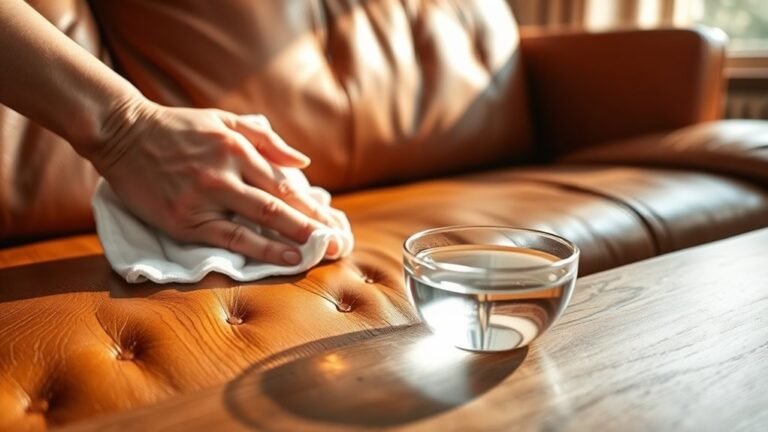
Next, use distilled water or a mild vinegar-water solution to carefully clean the stained area.
Allow the leather to air dry naturally, keeping it away from direct heat sources.
Once dry, apply a leather conditioner to restore essential oils and prevent the leather from becoming stiff.
Regular conditioning and waterproofing treatments help protect your leather items over the long term.
Keep reading to discover detailed methods and useful care tips for maintaining your leather’s appearance and durability.
Understanding Water Stains on Leather

Although water stains might seem harmless at first, they can considerably alter your leather’s appearance by causing discoloration or marks. When water penetrates the leather, it may leave mineral deposits or cause swelling, resulting in lasting damage if you don’t act quickly.
The damage varies depending on the type of leather and how long the water stays on the surface. Natural finishes like aniline or crust leather absorb water more easily, making them more vulnerable to stains. On the other hand, leathers with a protective finish, such as pigmented or water-repellent types, resist water penetration better and maintain their appearance longer.
Recognizing water stains early is key because they usually show up as lighter or darker patches on your leather, signaling the need for prompt care.
Identifying Different Types of Leather

You’ll want to recognize the type of leather you’re dealing with before tackling water stains, since each kind reacts differently. Full-grain and aniline leathers need gentle care, while pigmented leather offers more protection against moisture.
Nubuck and suede are especially delicate, so they require extra caution to avoid damage.
Leather Types Overview
Understanding the different types of leather helps you choose the right care method, especially when tackling water stains. Among leather types, full-grain leather stands out for its durability and natural surface, making it less prone to damage and ideal for effective leather care.
Top-grain and genuine leathers vary in quality but generally require careful attention when using leather cleaner. Nubuck and suede have soft, velvety textures that water stains can easily damage, so they need gentler treatment.
Corrected leather, with its altered surface, may hide stains better but still demands proper cleaning. Knowing these differences guarantees you pick the right products and techniques, protecting your leather’s appearance and lifespan while effectively removing water stains without causing harm.
Care Needs Variations
Knowing the type of leather you’re working with shapes how you handle water stains and overall care. Different leathers require tailored leather care to clean leather effectively and prevent damage.
- Full-grain leather is dense and water-resistant, so water stains are less common. Use leather conditioner regularly to maintain its durability.
- Aniline and nubuck leathers are delicate; water stains appear easily. Apply a waterproofing spray before use and clean leather gently to avoid damage.
- Suede and pigmented leather need special attention. Suede is highly sensitive, so waterproofing spray is essential, while pigmented leather’s protective layer helps repel moisture but still benefits from routine conditioning.
Understanding these variations helps you prevent damage and keep your leather looking its best.
Preparing Leather for Water Stain Removal

Before you start removing water stains, make sure you know what type of leather you’re working with to pick the right cleaning method. Gently wipe the surface with a soft, dry cloth to clear away dirt and moisture.
Always test any cleaning product on a hidden spot first to avoid damage.
Identifying Leather Type
Since water stains affect different types of leather in unique ways, you’ll need to identify your leather before starting the cleaning process. Proper leather identification guarantees you choose the right approach for water stain removal.
Here’s how to determine your leather type through surface examination:
- Check the texture: Finished leather has a smooth, coated surface, while unfinished leather like nubuck or suede feels soft and porous.
- Perform a water test: Dab a small, hidden area with water; finished leather repels moisture, whereas unfinished leather absorbs it quickly.
- Consider the leather’s look: Pigmented, fully finished leather resists water stains better than natural, untreated leather.
Testing Cleaning Products
How can you guarantee your leather stays intact while removing water stains? Start with a patch test on a small, hidden area. Use a gentle cleaning solution or distilled water to do a spot test first.
Observe for 10-15 minutes to check for any color or texture changes. Avoid harsh chemicals during product testing to prevent damage. Record your leather test results before proceeding.
| Step | Action |
|---|---|
| 1. Patch Test | Apply cleaning solution sparingly on a hidden spot |
| 2. Observe | Wait 10-15 minutes, watch for changes |
| 3. Evaluate | Confirm no discoloration or texture damage |
This cautious approach ensures your leather stays safe while effectively removing water stains.
Clearing Surface Dirt
A soft, dry cloth or brush helps you gently remove loose dirt and debris from your leather’s surface. Before tackling water marks or stains, make sure your leather is clean to avoid trapping dirt beneath your cleaning efforts. Follow these steps:
- Use a soft-bristled brush or dry cloth to brush off surface dirt and dust carefully.
- Wipe the leather gently with a damp, lint-free cloth. Avoid soaking it to prevent further stains.
- Let the leather dry completely in a ventilated space to ensure no moisture remains.
Always test any cleaning method on a hidden spot first. This way, you protect your leather’s finish while preparing it effectively for water stain removal.
Home Remedies for Removing Water Stains
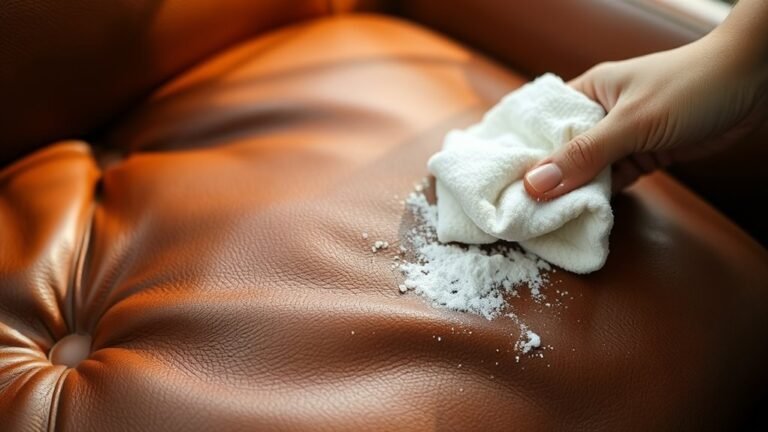
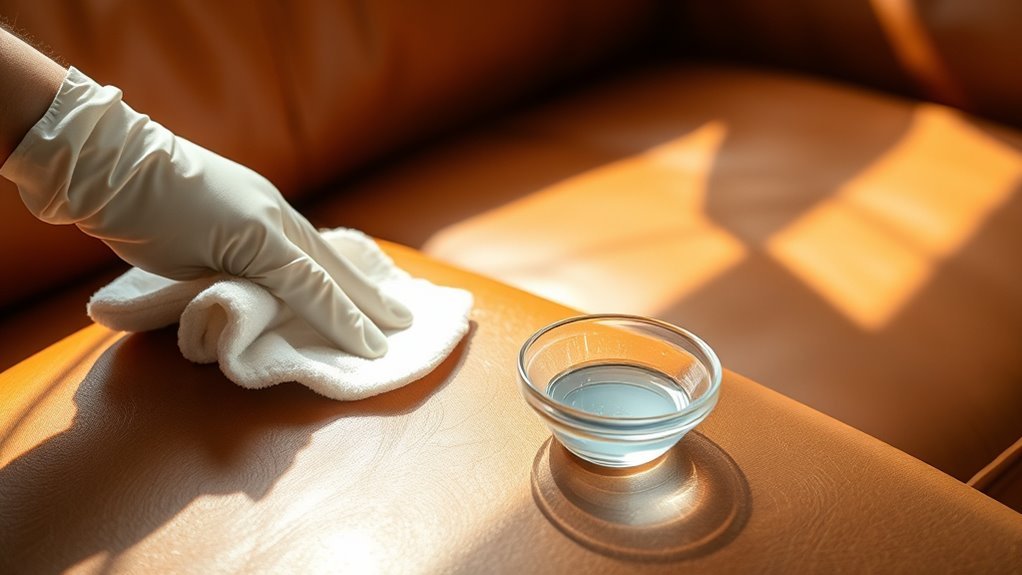
When you spot water stains on your leather, you can tackle them effectively using simple home remedies. To remove water stains from leather, start by dampening a clean cloth with distilled water and gently wipe the affected area.
For stubborn spots, mix equal parts vinegar and water, then dab the solution lightly with a cotton swab or cloth. Afterward, let the leather air-dry to prevent further water damage.
You can also apply a small amount of mayonnaise on the stain, leave it for 30 minutes, then wipe it off to absorb residual water marks. Finally, condition your leather with coconut oil to restore natural oils and maintain the care of your leather.
These methods help you safely remove water stains while preserving your leather’s quality.
Using Commercial Leather Cleaners Effectively
Although home remedies can be effective, using commercial leather cleaners offers a reliable way to tackle stubborn water stains. These products are specially formulated for stain removal and can help restore your leather’s appearance without causing discoloration.
To use commercial leather cleaners effectively, follow these steps:
- Test the cleaner on a small, hidden area first to check for any discoloration or damage.
- Apply the cleaner gently with a soft cloth or sponge, working it into the water stains without excessive rubbing to protect the leather surface.
- Let the cleaner sit as directed, then wipe off any residue with a damp cloth to complete the cleaning process. Afterward, using a leather conditioner will help maintain moisture and prolong your leather’s life.
Conditioning and Protecting Leather After Cleaning
Since cleaning can strip leather of its natural oils, you’ll want to apply a high-quality leather conditioner right afterward to restore moisture and keep the material supple. Use a soft cloth to evenly spread the conditioner, allowing it to penetrate the leather’s pores for effective moisture retention.
This step is vital in leather care because it replenishes oils lost during cleaning, preventing drying and cracking. Regular conditioning also creates a protective barrier that helps prevent future stains and damage.
To enhance protection, follow up with a water-repellent treatment like a waterproofing spray. This adds an extra layer of defense, boosting the leather’s resistance to water exposure. Together, these steps guarantee your leather stays healthy, flexible, and shielded from harm.
Preventative Measures to Avoid Future Water Stains
To keep your leather looking its best and free from water stains, you should take proactive steps that shield it from moisture damage. Proper care involves combining waterproofing, conditioning, and smart storage to prevent future stains effectively.
Here are three key preventative measures:
- Apply waterproofing or water-repellent sprays regularly to create a barrier that repels moisture and protects the leather surface.
- Condition your leather with high-quality creams to restore natural oils, enhancing its resistance to water damage.
- Store leather items in cool, dry, and well-ventilated places away from direct sunlight, which helps avoid environmental factors that cause stains.
Frequently Asked Questions
Are Water Stains on Leather Permanent?
Water stains on leather aren’t always permanent. If you act quickly and treat the stain properly, you can often remove or reduce it.
The stain’s permanence depends on the leather type and how fast you respond to it.
How Do You Get Water Marks off of Leather?
You’ll gently blot the water marks with a damp cloth, like wiping morning dew from a leaf.
Then, apply equal parts water and vinegar, let it dry, and finish with leather conditioner to restore its soft glow.
Does Rubbing Alcohol Remove Water Stains From Leather?
Rubbing alcohol can remove water stains, but you should use it carefully. Dilute it, test a hidden spot first, and apply sparingly.
Always follow up with a leather conditioner to prevent drying or damage.
How to Fix Water Damage on Leather?
Like a knight polishing armor, you should gently clean your leather with a leather cleaner or vinegar solution. Then, condition it with coconut oil, blot dry, and apply waterproof spray to fix and protect water damage effectively.
Conclusion
Removing water stains from leather is like restoring a faded painting—you just need the right touch and care. By understanding your leather type, preparing it properly, and using gentle cleaners or home remedies, you can bring back its natural beauty.
Don’t forget to condition and protect your leather afterward to keep it looking fresh. With these steps, you’ll turn those stubborn stains into distant memories and keep your leather looking its best. Proper leather care, including stain removal and conditioning, is essential for maintaining its appearance and durability.
Following these tips for water stain removal from leather ensures your leather goods stay beautiful and well-preserved over time.