How to Remove Oil Stains From Leather: Easy & Effective Cleaning Tips
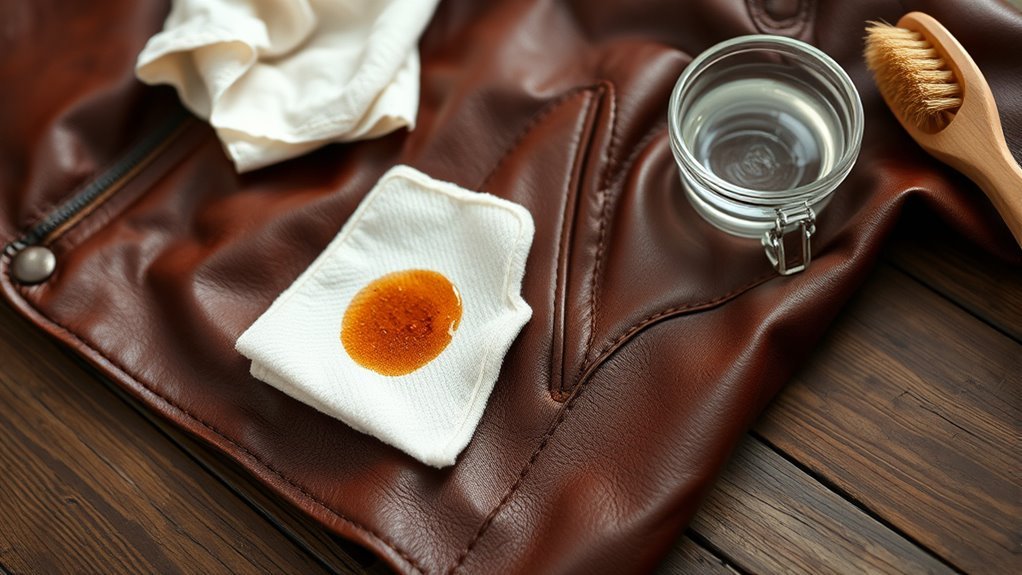
To remove oil stains from leather effectively, start by immediately blotting excess oil with a soft cloth—don’t rub to avoid spreading the stain.
Using baking soda or cornstarch is a great natural remedy; sprinkle it over the stain and let it sit for several hours to absorb the oil.
Afterward, gently brush off the powder.
If the stain persists, you can try a mild soap and water solution or diluted vinegar, but always test these on a hidden spot first to ensure they don’t damage the leather.
Finally, apply a leather conditioner to restore moisture and prevent the leather from drying out or cracking.
For tackling tougher stains or maintaining your leather’s appearance, there are additional techniques worth exploring.
Why Oil Stains Are Difficult to Remove From Leather

Although you might think water-based cleaners would work, oil stains resist removal because oil repels water and seeps deep into leather pores. Leather’s natural fibers are hydrophobic, meaning oil can easily penetrate and bond tightly.
This makes oil stains stubborn and difficult to lift with typical cleaning methods. Once the oil sets, it becomes embedded within the leather, making removal even more challenging.
The semi-solid nature of oil allows it to sink into the fibers, creating long-lasting stains if you don’t act quickly. Traditional water-based cleaners often fail since they can’t dissolve or extract oil effectively.
To tackle these tough stains, you need specialized cleaning products designed to break down the oil without damaging the leather’s delicate structure.
Identifying Different Types of Leather for Proper Cleaning

Removing oil stains effectively depends largely on knowing the type of leather you’re dealing with. Proper leather identification guarantees you apply the right cleaning methods and avoid damage.
Full-grain leather needs gentle, pH-balanced products; aniline leather requires delicate care. Pigmented leather tolerates more aggressive cleaning, while suede demands dry, liquid-free techniques. Always follow the manufacturer’s instructions or consult a pro for the best leather care.
| Leather Type | Characteristics | Recommended Cleaning Techniques |
|---|---|---|
| Full-grain | Highest quality, durable | Mild soap, gentle pH-balanced cleaner |
| Aniline | Sensitive, natural finish | Delicate cleaning methods |
| Pigmented | Protective coating | More robust cleaning allowed |
| Suede | Soft, porous | Dry powders, no liquids |
| Nubuck | Similar to suede | Dry cleaning only |
Immediate Actions to Take When Oil Spills Occur

When oil spills on your leather, start by blotting the excess with a clean, dry microfiber cloth. Never rub, as that pushes the stain deeper.
Next, gently lift any remaining oil with a soft paper towel or cloth. Finally, sprinkle an absorbent powder like baking soda over the spot and let it sit for several hours to draw out the oil before brushing it off.
Blot Excess Oil
If you catch an oil spill on your leather, quickly blot the area with a clean, dry microfiber cloth to soak up the excess before it soaks in. Use gentle pressing motions to absorb as much oil as possible. Don’t rub, as that spreads the stain and can damage the leather.
Replace the cloth often to prevent re-depositing oil or dirt. Acting fast helps prevent permanent stains and makes removal easier.
| Action | Why It Matters | Tip |
|---|---|---|
| Blot | Absorbs excess oil | Use a dry microfiber cloth |
| Press, don’t rub | Avoids spreading the stain | Gentle pressing works best |
| Change cloth | Prevents re-depositing oil | Use a fresh cloth regularly |
Avoid Rubbing Stains
How should you handle an oil spill on leather to prevent making it worse? First, avoid rubbing the stain. Rubbing or scrubbing pushes the oil deeper into the leather fibers, making the stain harder to remove and potentially causing damage.
Instead, focus on blotting the oil gently with a clean, dry microfiber cloth. Use gentle, circular motions to absorb the excess oil without spreading it further. This careful blotting lifts the oil from the surface while protecting the leather’s texture.
Refrain from applying water or cleaning solutions immediately; your priority is to absorb as much oil as possible through blotting. Acting quickly and avoiding harsh rubbing ensures you don’t set the stain or harm the leather during the initial cleaning process.
Use Absorbent Powders
Although blotting helps remove excess oil initially, using absorbent powders is your next essential step to draw out remaining grease from leather. Sprinkle a generous layer of talcum powder, cornstarch, or baking soda directly onto the fresh oil stain.
These absorbent powders work to soak up the oil effectively if left undisturbed for several hours or overnight. Once dry, gently brush off the powders with a soft cloth or brush to remove the absorbed oil.
If stubborn stains persist, don’t hesitate to repeat the process to enhance absorption. Remember, always blot excess oil immediately before applying powders to prevent spreading and set-in.
Using absorbent powders correctly helps keep your leather clean and oil-free.
Using Absorbent Powders to Lift Oil From Leather
When oil stains appear on your leather, absorbent powders like baking soda, cornstarch, or talcum powder can effectively draw out the oil. To remove oil using these powders, follow these steps:
Sprinkle a generous amount of absorbent powders onto the oil stain. Let the powders sit undisturbed for several hours or overnight for maximum stain absorption.
Use a soft brush or a vacuum with a brush attachment to gently remove the powders without spreading the stain. Repeat the process if the stain remains, applying fresh powder each time.
Always test the powder on a hidden leather area first to avoid discoloration or damage. This method helps lift oil from leather safely and efficiently using common absorbent powders.
Cleaning Oil Stains With Soap, Vinegar, and Other Mild Solutions
Since oil stains can be stubborn, using mild solutions like soapy water or diluted vinegar offers a gentle way to clean your leather without causing damage. Mix a small amount of dish soap with warm water to create a mild solution.
Dampen a soft cloth with this soapy water and gently blot the oil stains on your natural leather, avoiding rubbing to prevent spreading. For extra stain removal power, dilute vinegar with water in a 1:1 ratio and lightly dab the stain using a clean damp cloth.
Always test these mild solutions on a hidden spot first to guarantee they won’t discolor your leather. After cleaning, wipe the area with a damp cloth to remove residue and let the leather air dry naturally for best results.
Specialized Techniques Involving Rubbing Alcohol and Nail Polish
You can tackle tough oil stains on leather by gently rubbing rubbing alcohol on a soft cloth and applying it in circular motions. For more stubborn spots, dab a bit of nail polish remover on a cotton ball to help break down the residue.
Just remember to test these methods on a hidden area first and wipe away any chemicals afterward to protect your leather.
Rubbing Alcohol Application
How can rubbing alcohol help tackle stubborn oil stains on your leather? Rubbing alcohol effectively dissolves the fatty molecules causing the leather stain, making it an excellent option to remove oil stains. To apply it correctly, follow these steps:
Test first on a hidden spot to ensure it won’t damage delicate leather. Spray a small amount of rubbing alcohol onto a soft cloth.
Gently rub the stained area in circular motions to break down the oil. Repeat as needed, allowing the leather to dry between applications.
After stain removal, condition the leather to restore moisture and prevent cracking.
Nail Polish Removal Steps
Although it might seem unconventional, using nail polish can effectively tackle oil stains on leather when combined with rubbing alcohol. Start by applying a small amount of nail polish to a cotton ball, then gently dab it onto the oil stain. Let it sit for a few minutes to loosen the oil from the leather surface.
Next, wipe away the nail polish and oil stain using a damp cloth, making sure to remove all residue. If the stain persists, repeat these steps until the oil stain diminishes or disappears.
Once the stain is gone, apply a thin, even layer of nail polish over the entire leather surface to create a protective barrier. This method helps remove stain while protecting your leather from future damage.
Conditioning Leather After Oil Stain Removal
Once you’ve removed an oil stain, applying a high-quality leather conditioner is essential to restore moisture and prevent the material from drying out or cracking. Conditioning replenishes natural oils lost during cleaning, helping maintain leather’s suppleness and overall appearance.
Applying leather conditioner after cleaning restores moisture and keeps the material soft and crack-free.
To condition effectively, follow these steps:
- Use a soft cloth for even distribution of the leather conditioner
- Apply in gentle circular motions to cover the entire surface
- Allow the conditioner to absorb fully before using or exposing to moisture
- Condition regularly every 3-6 months to protect leather from damage
- Maintain the leather’s suppleness and enhance its appearance over time

Preventing Future Oil Stains and Maintaining Leather Quality
To keep your leather looking its best, you should take proactive steps to prevent oil stains before they happen. Regular leather conditioning preserves natural oils, boosting leather resilience and reducing stain risks.
Use protective coverings to shield surfaces from oil spills and avoid handling greasy foods near leather. Promptly blot fresh spills to stop stains from setting.
Incorporate these leather care tips into your routine for effective leather maintenance.
| Leather Care Tips | Purpose | Frequency |
|---|---|---|
| Leather Conditioning | Maintain natural oils | Monthly |
| Protective Coverings | Shield from oil spills | As needed |
| Avoid Greasy Contact | Prevent oil stains | Always |
| Immediate Blotting | Stop stain setting | At spill occurrence |
| Regular Cleaning | Enhance leather resilience | Weekly |
Frequently Asked Questions
How to Get a Grease Spot Out of a Leather Purse?
You should blot the grease spot quickly, then cover it with cornstarch or baking soda and let it sit overnight.
Brush off the powder, gently clean with mild soap, and condition the leather to keep it soft.
Does Baking Soda Get Grease Out of Leather?
Yes, baking soda can get grease out of leather if you sprinkle it on fresh stains, let it absorb oil overnight, then gently brush it off.
You might need to repeat for stubborn marks.
How to Remove Old Oil Stain From Leather Bag Reddit?
You’ll want to sprinkle baking soda or cornstarch on the old stain and leave it overnight. Then, gently brush it off. Repeat if needed, and finish by conditioning the leather to keep it soft and supple.
Does Oil Destroy Leather?
Yes, oil can destroy leather if you don’t clean it promptly. It penetrates the pores, dries out the material, and damages its natural oils.
This causes cracks, discoloration, and weakens the leather’s overall integrity.
Conclusion
Think of oil stains on leather like coffee spills on a favorite book—if you act fast, you can save the story. Studies show that addressing stains within the first hour boosts removal success by 70%. So, when oil hits your leather, don’t wait.
Use absorbent powders, gentle cleaners, and condition afterward to keep your leather looking fresh. With quick care, your leather stays as timeless and smooth as that well-loved book’s pages. Remember, timely removal of oil stains from leather is key to preserving its beauty and durability.