How to Remove Ink Pen Stains From Leather Step by Step
First, identify your leather type to choose the right cleaning method for removing ink pen stains from leather. Blot fresh ink gently with a soft cloth—don’t rub, as this can spread the stain further.
Test rubbing alcohol on a hidden spot before dabbing it carefully on the stain, moving from outside in to avoid spreading. Wipe residue with a damp cloth and let it air dry.
Finish by conditioning your leather to keep it supple and prevent future damage. For more detailed steps and prevention tips, keep exploring the process.
Identify the Type of Leather

Before you begin removing ink stains, you need to identify the type of leather you’re dealing with. Different leathers react differently to cleaning methods, so knowing this helps prevent damage.
Look for labels or tags if it’s a product, or check its texture and finish. Genuine leather often feels soft and supple, while bonded leather might feel stiffer or plasticky.
Check labels or feel the texture; genuine leather is soft, bonded leather feels stiffer or plasticky.
Aniline leather has a natural look with visible grain, whereas pigmented leather has a coated surface that’s usually shinier.
If you’re unsure, test a hidden area by applying a small drop of water. Natural leather absorbs it, while synthetic leather repels it.
Identifying the leather type ensures you choose the right cleaning approach, keeping your leather item safe while tackling those ink stains effectively.
Gather Necessary Cleaning Supplies

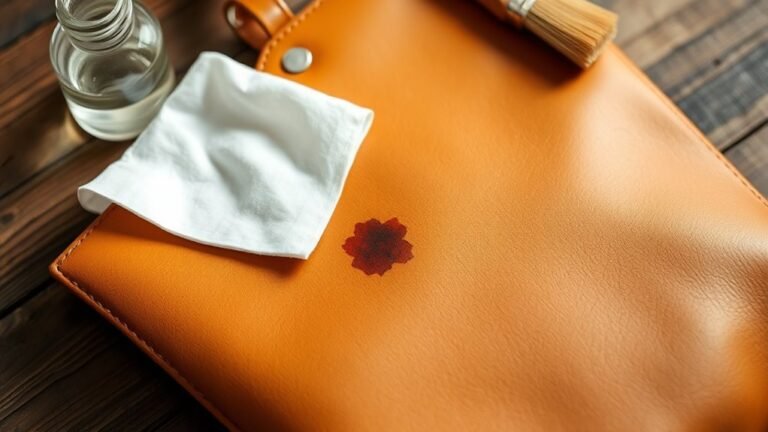
When you’re ready to tackle ink stains on leather, gather all the necessary cleaning supplies to guarantee a smooth process. Having the right tools at hand will boost your confidence and make the task less intimidating.
Here’s what you’ll need:
- Soft white cloths or microfiber towels to gently blot and clean without scratching.
- Leather cleaner or mild soap, effective yet gentle enough to protect your leather.
- Rubbing alcohol or isopropyl alcohol for breaking down stubborn ink stains carefully.
- Cotton swabs or Q-tips to apply cleaning solutions precisely in small areas.
Collecting these supplies ensures you’re fully prepared, helping you approach the stain removal with calm and control.
Test Cleaning Solution on a Hidden Area

Although it might feel tempting to dive right in, you should always test your cleaning solution on a hidden spot of the leather first. This step guarantees the cleaner won’t damage or discolor your leather.
Choose an inconspicuous area, like the inside flap or underside, where any mistakes won’t be noticeable. Apply a small amount of the solution using a cotton swab or soft cloth, then wait a few minutes to observe any reactions.
If the leather shows signs of fading, darkening, or texture changes, stop immediately and try a different cleaner. Testing prevents ruining your item and saves you from costly repairs.
Once you confirm the solution is safe, you can confidently proceed with treating the visible ink stains.
Blot Fresh Ink Stains Immediately
If you catch an ink stain while it’s still wet, act quickly to blot it gently with a clean, dry cloth or paper towel. Don’t rub; it’ll only spread the ink and push it deeper into the leather.
Follow these steps to minimize damage:
- Grab a soft, absorbent cloth immediately.
- Lightly press the cloth onto the stain without scrubbing.
- Use fresh areas of the cloth to keep blotting until the ink stops transferring.
- Avoid applying water or cleaning solutions before blotting, as moisture can worsen the stain.
Apply Rubbing Alcohol Carefully
Since ink stains can be stubborn, you’ll need to apply rubbing alcohol carefully to break down the ink without damaging the leather.
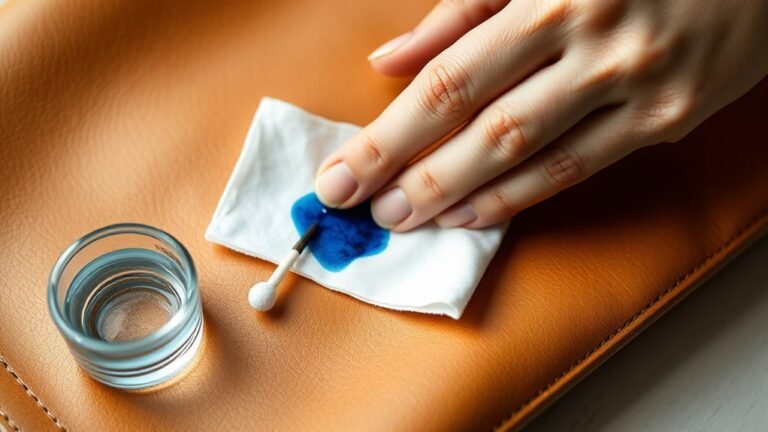
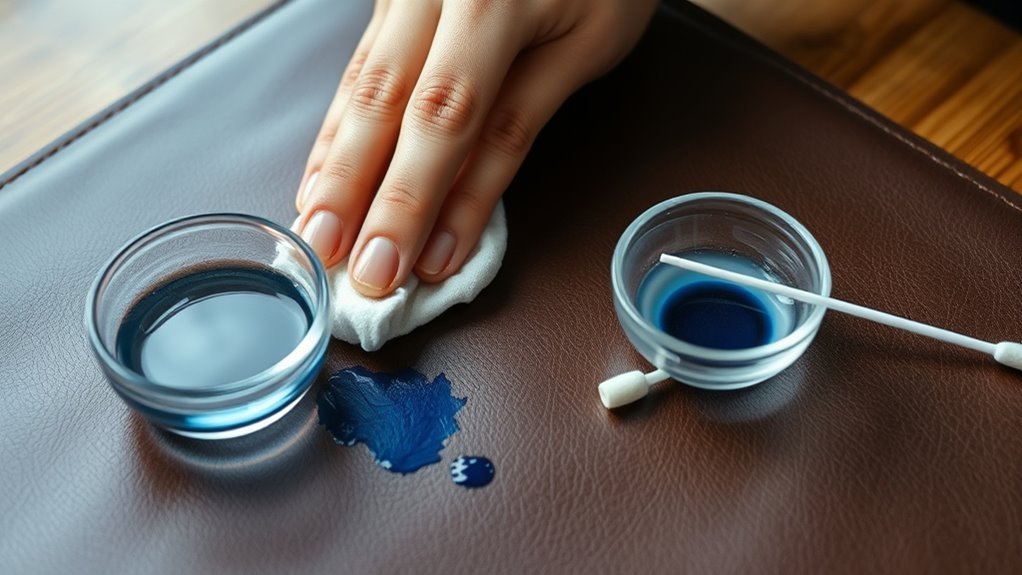
First, dampen a cotton swab or soft cloth with a small amount of rubbing alcohol. Don’t soak it.
Gently dab the stained area, working from the outside toward the center to prevent spreading. Avoid rubbing harshly, as this can discolor or dry out the leather.
After a few dabs, you should see the ink transferring onto the cotton.
If the stain persists, repeat the process sparingly.
Once the ink fades, wipe the leather with a clean, damp cloth to remove any alcohol residue.
Allow it to air dry completely before considering further treatment to protect the leather’s finish.
Use Leather Cleaner for Stubborn Stains
When rubbing alcohol doesn’t completely lift the ink stain, you can turn to a leather cleaner designed specifically for tough marks. These cleaners are formulated to treat stubborn stains without damaging the leather’s finish.
Here’s how to use one effectively:
- Test the cleaner on a hidden spot to ensure it won’t discolor your leather.
- Apply a small amount of cleaner to a soft, clean cloth.
- Gently rub the stained area in circular motions, avoiding excessive pressure.
- Wipe away any residue with a damp cloth and let it air dry.
Using a leather cleaner gives you a safer, more targeted approach to removing ink, making your leather look fresh again without harsh chemicals.
Try a Mixture of Dish Soap and Water
Although tougher stains may require specialized products, you can often lift fresh ink marks by gently cleaning the leather with a mixture of dish soap and water. Mix a few drops of mild dish soap with warm water, dip a soft cloth in the solution, and wring it out well.
Gently dab the stained area; don’t rub too hard to avoid damaging the leather. Repeat as needed, then let the leather air dry naturally.
| Feeling | Action |
|---|---|
| Hopeful | Spotting the fresh ink fade |
| Relief | Seeing the stain lighten |
| Cautious | Handling leather gently |
| Confidence | Knowing you can fix this |
| Satisfaction | Restoring your leather item |
Remove Residue With a Damp Cloth
After lifting the ink stain with dish soap and water, you’ll want to clear away any leftover soap to prevent buildup. Using a damp cloth helps guarantee your leather stays clean and undamaged. Follow these simple steps:
- Dampen a soft cloth with clean, lukewarm water. Avoid soaking it.
- Gently wipe the treated area in circular motions to lift soap residue.
- Rinse the cloth often to keep it fresh and avoid spreading soap back onto leather.
- Pat dry with a dry microfiber cloth to absorb moisture without rubbing harshly.
This careful process leaves your leather fresh and ready for the next step, while protecting its texture and color.
You’ll feel relief knowing your leather looks better without any sticky residue lingering.
Condition the Leather After Cleaning
Since cleaning can strip your leather of natural oils, you’ll want to condition it promptly to restore moisture and flexibility.
Start by choosing a leather conditioner suitable for your leather type.
Apply a small amount to a soft cloth, then gently rub it into the leather using circular motions. Focus on the cleaned area but cover the entire surface to keep it evenly nourished.
Let the conditioner absorb for about 10-15 minutes, then buff with a dry cloth to remove any excess and bring out the leather’s natural shine.
Conditioning prevents cracking and keeps your leather soft, extending its life.
Repeat this process every few months or whenever the leather feels dry to maintain ideal condition after cleaning.
Prevent Future Ink Stains on Leather
To keep your leather looking its best, you should take proactive steps to prevent ink stains before they happen. Protecting your leather saves you from future headaches and keeps your items looking pristine.
- Use a leather protector spray. It creates a barrier against spills and stains.
- Keep pens capped and away. Store pens separately to avoid accidental marks.
- Clean spills immediately. Quick action stops ink from setting in.
- Educate those around you. Let family or colleagues know to handle leather items with care.
Frequently Asked Questions
Can Ink Stains Cause Permanent Damage to Leather?
Yes, ink stains can cause permanent damage to leather if you don’t act quickly.
You’ll want to treat the stain promptly because ink soaks in and can leave a lasting mark that’s tough to remove.
Is It Safe to Use Nail Polish Remover on Leather Ink Stains?
You wouldn’t want to dip into alchemy here—no, it’s not safe to use nail polish remover on leather ink stains.
It can damage the finish, so stick to gentler, leather-specific cleaners to protect your prized items.
How Long Does It Take for Ink to Set in Leather?
Ink usually sets in leather within a few minutes to an hour, depending on the type of ink and leather.
You’ll want to act quickly because once it dries, it becomes much harder to remove effectively.
Can Ink Stains Be Removed From Suede Leather?
Yes, you can remove ink stains from suede leather, but you need to be extra gentle. Use a suede eraser or rubbing alcohol sparingly, then brush the area softly to restore texture without damaging the material.
Are Commercial Leather Ink Removers Better Than Homemade Solutions?
You can’t judge a book by its cover—commercial leather ink removers often work faster, but homemade solutions can be gentler and safer.
You’ll want to test both to see which suits your leather and stain best.
Conclusion
Now that you know how to tackle ink stains on leather, you can confidently restore your items without damage. Remember to always identify your leather type first and test solutions discreetly. Acting quickly and using gentle methods like rubbing alcohol or soapy water keeps your leather looking fresh.
Conditioning afterward seals in moisture and prevents cracking. With these steps, you’ll keep your leather stain-free and beautiful, proving that careful care truly makes a visible difference. Removing ink pen stains from leather effectively requires patience and the right approach to maintain the material’s quality.