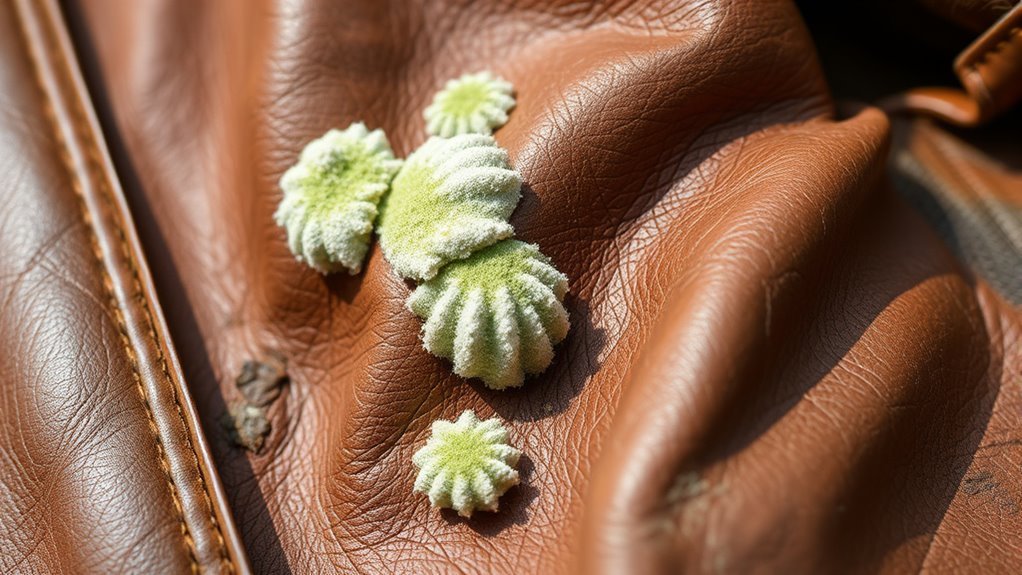
How to Get Paint Off a Leather Couch Step by Step
To get paint off your leather couch effectively, it’s important to first identify whether the paint is water-based or oil-based. This step is crucial for choosing the right cleaning method and protecting your leather’s finish.
Start by testing a small area with rubbing alcohol. If the paint softens, it’s likely water-based; if not, it may be oil-based.
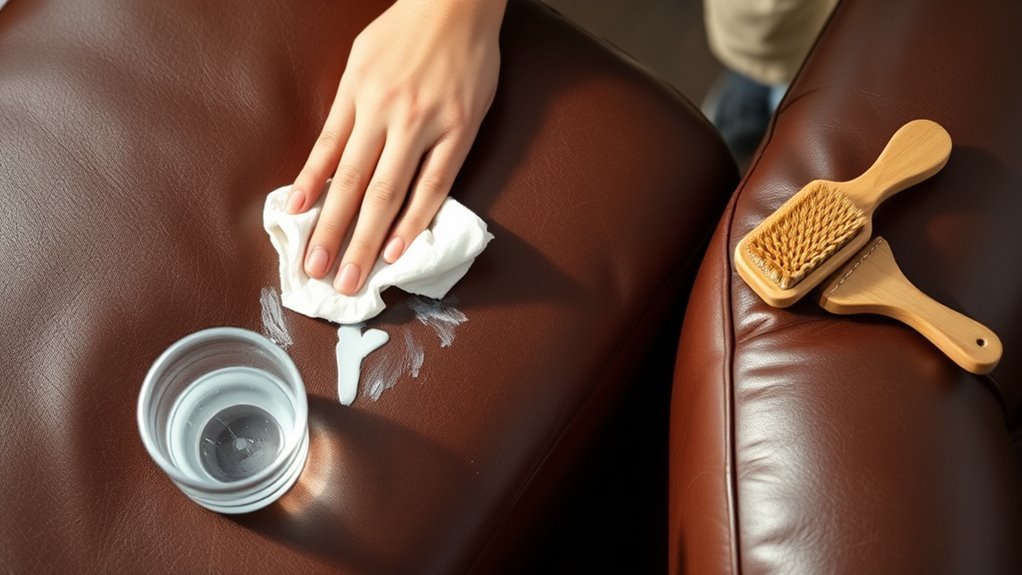
Next, gently blot any wet paint with a soft cloth to remove excess without spreading it further. For water-based paint, use a mild soap solution to clean the area carefully.
If the paint is oil-based, dab the spot with rubbing alcohol or nail polish remover, but do so sparingly to avoid damaging the leather. For dried paint, carefully scrape it off using a plastic tool to prevent scratches.
After removing the paint, condition the leather thoroughly to restore moisture and keep it soft. Follow these steps patiently, and you’ll be able to restore your leather couch to its original pristine condition.
Identify the Type of Paint on the Leather Couch

Before you start removing paint, you need to identify what type of paint is on your leather couch. Knowing whether it’s water-based or oil-based helps you choose the right cleaning method.
Water-based paint, like acrylic or latex, feels softer and washes off more easily with water or mild soap.
Water-based paints, such as acrylic or latex, are softer and clean easily with water or mild soap.
Oil-based paint is thicker, sticky, and requires stronger solvents to break down. To test, dab a small area with rubbing alcohol. If the paint softens or comes off, it’s likely water-based. If it resists, it’s probably oil-based.
Avoid guessing, as using the wrong cleaner can damage your leather. Take your time to identify the paint type correctly to protect your couch while effectively removing the stain.
Gather Necessary Cleaning Supplies

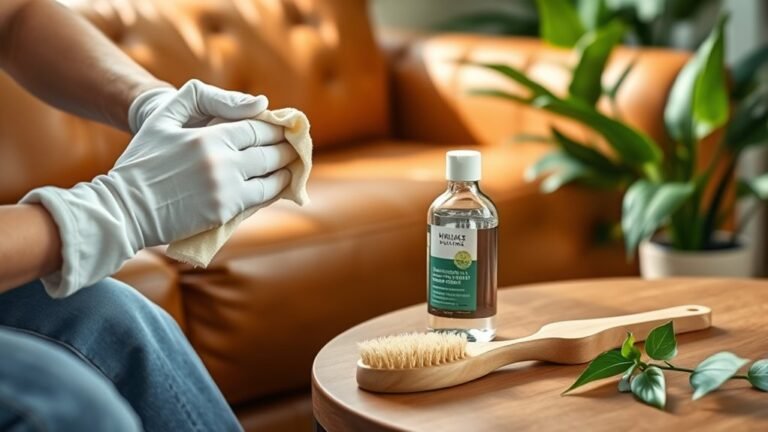
To tackle paint removal effectively, you’ll need a few essential supplies tailored to the type of paint on your leather couch. Having the right materials at hand guarantees you work efficiently without damaging the leather. Here’s a quick list of what to prepare:
| Supply | Purpose |
|---|---|
| Soft cloths | Gently wipe off paint residues |
| Leather cleaner | Safely clean the area post removal |
| Mild soap | Remove water-based paint |
Depending on the paint, you might also require rubbing alcohol or a leather conditioner. Make sure you have a small bowl for mixing solutions and gloves to protect your hands. Gathering everything before you start will save time and help preserve your couch’s finish.
Test Cleaning Products on a Hidden Area

Although it might seem like an extra step, testing cleaning products on a hidden area of your leather couch protects it from potential damage. Before applying any cleaner to the paint stain, dab a small amount onto a discreet spot, like under a cushion or the back corner.
Wait a few minutes to see if the leather reacts. Look for discoloration, darkening, or texture changes.
If the product causes no harm, you can proceed confidently with cleaning the paint.
However, if you notice any damage, stop immediately and try a gentler alternative. Testing guarantees you don’t worsen the stain or ruin the leather’s finish.
This simple precaution saves you from costly repairs and keeps your couch looking its best throughout the paint removal process.
Remove Excess Wet Paint Carefully
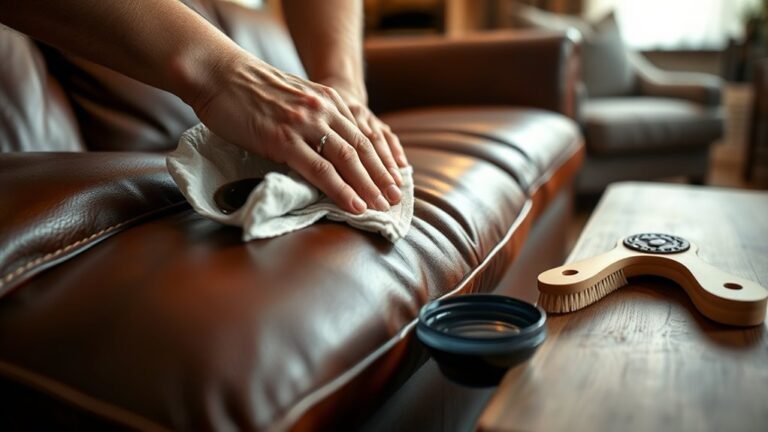
Once you’ve confirmed your cleaning product is safe, carefully remove any wet paint from the leather surface using a soft cloth or paper towel. Don’t rub hard, as this can push the paint deeper or damage the leather. Instead, gently blot the paint to lift it off.
Follow these steps:
- Fold the cloth to create a clean, absorbent edge before blotting.
- Dab the paint spot repeatedly, replacing the cloth section as it absorbs paint.
- Avoid spreading the paint by working from the outside of the stain toward the center.
This method helps you remove excess paint without grinding it into the leather, preparing the area for more thorough cleaning.
Always work patiently and gently to protect your couch’s finish.
Use a Mild Soap Solution for Water-Based Paint
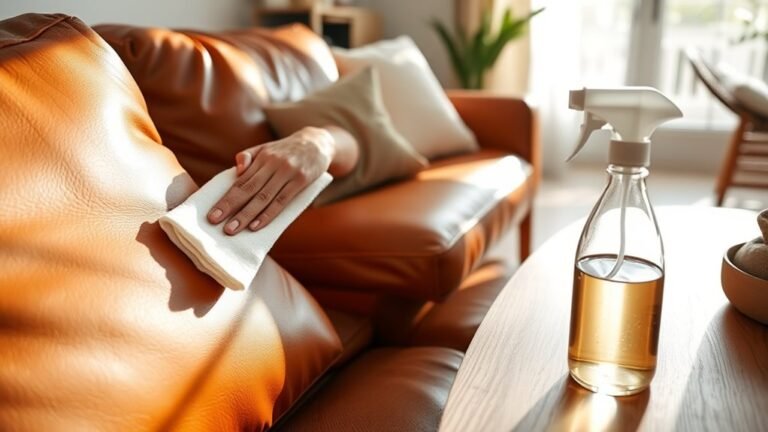
If the paint on your leather couch is water-based, you can gently break it down using a mild soap solution. Mix a few drops of gentle dish soap or liquid hand soap with warm water.
Dampen a soft cloth or sponge with the solution, then wring out excess moisture. You don’t want it dripping.
Gently dab or rub the paint stain, working from the edges inward to prevent spreading.
Avoid scrubbing harshly, as this can damage the leather’s surface.
After the paint starts to lift, wipe the area with a clean, damp cloth to remove soap residue.
Finally, dry the leather thoroughly with a soft towel.
Repeat the process if necessary, but always be gentle to maintain your couch’s finish.
Apply Rubbing Alcohol or Nail Polish Remover for Oil-Based Paint
When you’re dealing with oil-based paint on your leather couch, rubbing alcohol or nail polish remover can effectively break down the stubborn stain. First, test a small hidden area to verify the product won’t damage the leather.
For oil-based paint on leather, test rubbing alcohol or nail polish remover on a hidden spot first.
Then, dampen a clean white cloth with a small amount of rubbing alcohol or acetone-based nail polish remover.
Next, follow these steps:
- Gently dab the paint stain, avoiding rubbing to prevent spreading.
- Blot the area with a dry cloth to lift loosened paint.
- Repeat dabbing and blotting until the paint starts to dissolve.
Once the paint lightens, wipe the spot with a damp cloth and let it air dry.
Always condition the leather afterward to restore moisture and prevent drying.
Gently Scrape Dried Paint With a Plastic Tool
Although dried paint can be stubborn, you can carefully remove it by gently scraping with a plastic tool. Choose a plastic scraper or an old credit card to avoid damaging the leather.
Hold the tool at a low angle and slowly lift the paint off, working in small sections. Avoid using metal tools, as they can scratch or tear the surface. If the paint resists, soften it slightly with a damp cloth before scraping.
| Step | Tip |
|---|---|
| 1. Choose tool | Use plastic scraper or card |
| 2. Angle | Hold tool low against leather |
| 3. Motion | Gently lift paint off slowly |
| 4. Patience | Work in small, careful sections |
| 5. Softening paint | Use damp cloth if needed |
This method helps preserve your couch’s finish while removing dried paint.
Condition the Leather After Cleaning
Since cleaning can strip essential oils from your leather couch, you’ll want to condition it afterward to restore softness and prevent cracking. Conditioning replenishes moisture and keeps the leather supple.
Conditioning your leather couch after cleaning restores essential oils, maintaining softness and preventing cracks.
Here’s how to do it effectively:
- Choose a quality leather conditioner that suits your couch’s finish. Cream or lotion types work best.
- Apply a small amount to a clean, soft cloth and gently rub it into the leather in circular motions, covering all cleaned areas evenly.
- Let it absorb for 15 to 20 minutes, then buff with a dry cloth to remove excess product and bring out a natural shine.
Tips for Preventing Future Paint Stains on Leather
Conditioning your leather couch helps maintain its durability, but taking steps to prevent paint stains in the first place can save you time and effort. Always cover your couch with a drop cloth or old sheet before starting any painting projects nearby.
Keep paint supplies well away from your furniture to avoid accidental spills. If possible, designate a specific area for painting that’s far from your leather pieces.
When using paint, wear old clothes and handle brushes carefully to minimize drips.
Finally, clean your hands before touching the couch to avoid transferring paint.
These simple habits protect your leather and keep it looking pristine, so you won’t have to worry about tough paint stains in the future.
Frequently Asked Questions
Can Paint Damage the Leather Permanently?
Yes, paint can permanently damage leather if it seeps in deeply or you use harsh chemicals.
You’ll want to act quickly and carefully to avoid staining or drying out the leather, preserving its texture and color.
Is It Safe to Use Commercial Leather Cleaners on Paint Stains?
You shouldn’t rush in; commercial leather cleaners can be safe but might sting like lemon on a sunburn if the paint’s stubborn.
Test a small spot first to avoid turning your couch into a blotchy canvas.
How Long Should I Wait Before Cleaning Fresh Paint?
You should start cleaning fresh paint as soon as possible, ideally within minutes. The longer you wait, the harder it gets to remove.
Acting quickly helps prevent the paint from setting into the leather’s pores.
What if the Paint Has Soaked Into Leather Pores?
If paint’s soaked into leather pores, don’t panic; it’s tougher but not impossible. You’ll need a gentle leather cleaner and patience. Avoid harsh scrubbing—dab carefully, and consider professional help if stains persist to protect your couch.
Can Professional Cleaning Services Remove Paint From Leather?
Yes, professional cleaning services can often remove paint from leather, especially if it’s soaked in.
They use specialized products and techniques you might not have, increasing the chances of restoring your couch without damage.
Conclusion
Now that you’ve gently guided the paint away from your leather couch, your space can shine like new again. Remember, a little patience and the right touch can turn a messy moment into a fresh start.
Keep your leather looking its best by treating it with care and a bit of foresight. Those accidental splashes will become just charming stories of resilience rather than lasting marks.
Your couch deserves that kind of gentle love. With proper maintenance and prompt action on stains, you can maintain the beauty and longevity of your leather couch. Following these steps to get paint off a leather couch ensures your furniture remains pristine and inviting.