How to Get Coffee Stains Out of Leather Step by Step
To get coffee stains out of leather effectively, start by gently blotting the spill with a dry cloth without rubbing. This helps absorb the coffee without spreading the stain.
Next, mix a few drops of mild soap with warm water and test this solution on a hidden area to ensure it won’t damage the leather. If it’s safe, dampen a soft cloth with the soapy water and gently blot the stain, working from the edges toward the center.
After treating the stain, rinse lightly with a clean damp cloth to remove soap residue. Dry the area with a soft towel, then apply a leather conditioner to restore moisture and keep the leather supple.
Stay tuned for more tips on preserving your leather’s look and maintaining its quality over time.
Assess the Type and Condition of Your Leather

Before you begin cleaning, you’ll need to identify the type and condition of your leather. Different leathers react differently to cleaning methods, so knowing whether it’s aniline, semi-aniline, or protected leather helps you choose the best approach.
Check for any cracks, dryness, or discoloration, as these issues can affect how the stain responds to treatment. If the leather feels stiff or fragile, you’ll want to avoid harsh cleaners that could cause damage.
Also, test a small, hidden area before applying any cleaner to the stain.
Blot the Coffee Stain Immediately

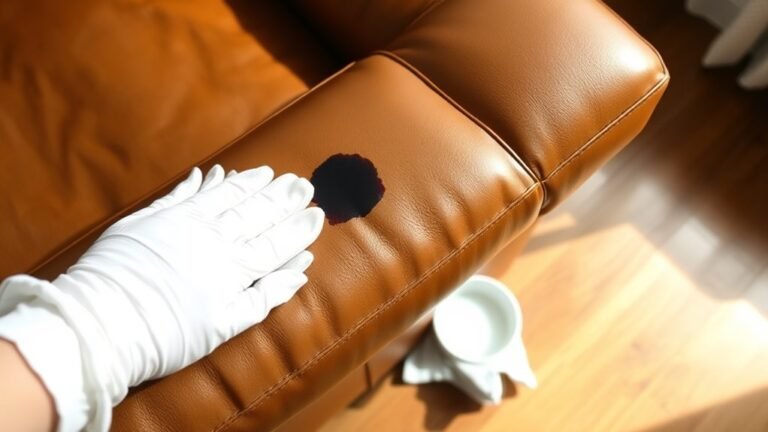
As soon as you notice the coffee spill, grab a clean, dry cloth and gently blot the stain to soak up as much liquid as possible. Avoid rubbing, as it can push the coffee deeper into the leather and spread the stain.
Instead, press the cloth lightly against the surface, lifting the moisture without damaging the leather’s finish. Use a fresh section of the cloth repeatedly to prevent reapplying the coffee onto the same spot.
Act quickly because the longer the coffee sits, the harder it becomes to remove. If the stain is large, consider using multiple cloths to absorb the excess liquid efficiently.
This immediate action helps minimize staining and prepares the leather for the next cleaning steps.
Prepare a Mild Cleaning Solution

Since leather is sensitive to harsh chemicals, you’ll want to create a gentle cleaning solution that won’t damage the material.
Mix a few drops of mild liquid soap, like dish soap or castile soap, with warm water in a small bowl. Avoid using too much soap—just enough to create a slightly soapy mixture. Stir gently to combine.
Combine a few drops of mild soap with warm water for a gentle, effective leather cleaning solution.
This mild solution will help lift the coffee stain without stripping the leather’s natural oils. Make sure the water isn’t too hot, as excessive heat can harm the leather.
Once prepared, you’ll have an effective and safe cleaner ready to tackle the stain.
Keep your solution light and avoid abrasive ingredients to preserve your leather’s finish and softness.
Test the Cleaning Solution on a Hidden Area
Although your cleaning solution is mild, you’ll want to test it on a hidden area of the leather first to verify it doesn’t cause discoloration or damage. Choose a spot that’s out of sight, like the underside of a cushion or inside seam.
Apply a small amount of the solution using a cotton swab or soft cloth. Wait a few minutes to see if the leather color changes, lightens, or if the texture becomes rough or sticky.
If you notice any negative effects, don’t proceed with that solution; instead, try a gentler mix or a commercial leather cleaner designed for delicate surfaces. Testing first guarantees your leather stays safe, so you can confidently move forward with stain removal without risking further harm.
Gently Clean the Stain With a Soft Cloth
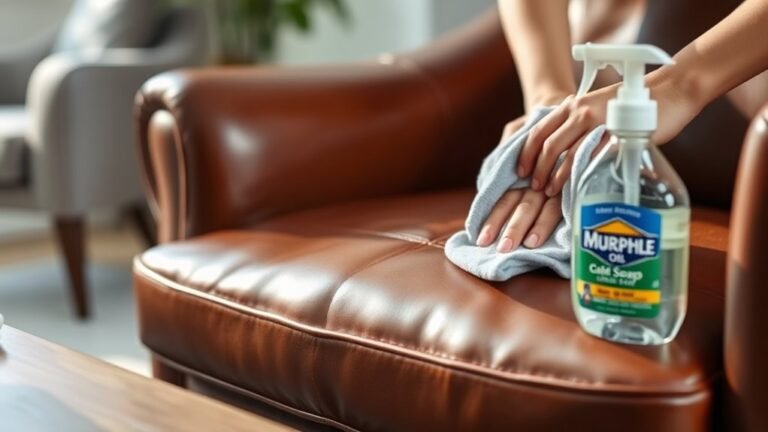
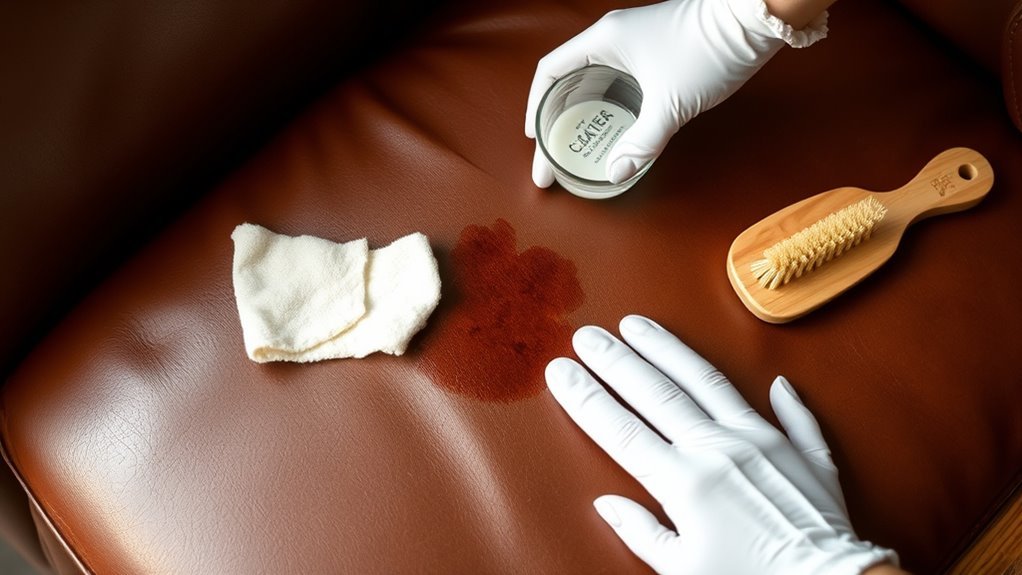
Once you’ve confirmed your cleaning solution is safe for the leather, you can start addressing the coffee stain. Begin by dipping a soft cloth into the solution, wringing out excess liquid to avoid soaking the leather.
Gently blot the stained area, don’t rub, as this can damage the leather or spread the stain. Work from the outer edges inward to prevent the coffee from spreading further.
Remember to use light pressure and be patient; harsh scrubbing can cause discoloration or texture changes.
- Use a clean, soft cloth like microfiber or cotton
- Apply the solution sparingly to avoid oversaturation
- Blot gently, avoiding circular rubbing motions
- Focus on edges first, then the center of the stain
This careful approach helps lift the stain without harming your leather.
Use Distilled Water to Rinse the Area
After gently blotting the coffee stain, you’ll want to use distilled water to rinse the area.
Distilled water is free from minerals and impurities that could further damage or discolor your leather.
Dampen a clean, soft cloth with the distilled water, avoiding soaking it, and gently wipe the stained spot.
This helps remove any remaining coffee residue without saturating the leather.
Be sure to use light, circular motions to avoid pushing the stain deeper.
Remember, never pour water directly onto the leather, as excess moisture can cause warping or staining.
Using distilled water guarantees a safe rinse, preparing the leather for the next step in the cleaning process.
This method protects your leather’s finish while effectively lifting leftover coffee particles.
Dry the Leather With a Soft Towel
As you finish rinsing the leather with distilled water, gently pat the area dry using a soft towel. Avoid rubbing, as this can damage the leather’s surface or spread the stain. Instead, press lightly to absorb moisture without causing friction.
Make sure the towel you use is clean and lint-free to prevent any residue from sticking to the leather.
Keep these tips in mind when drying your leather:
- Use a microfiber or cotton towel for softness
- Apply gentle pressure, don’t rub aggressively
- Change towels if one becomes too damp
- Allow the leather to air dry completely afterward
Following these steps helps maintain the leather’s integrity while preparing it for the next stage of stain removal.
Apply Leather Conditioner to Restore Moisture
Because coffee stains and cleaning can dry out leather, you’ll want to apply a leather conditioner to restore its moisture and flexibility. Start by choosing a conditioner that’s specifically designed for leather. Apply a small amount onto a clean, soft cloth.
Gently rub the conditioner into the stained area using circular motions, ensuring even coverage. Don’t over-saturate the leather; a thin, consistent layer is enough. Allow the conditioner to absorb for about 15 to 20 minutes.
This process nourishes the leather, preventing it from cracking or becoming stiff after cleaning. Once absorbed, buff the leather lightly with a dry cloth to restore its natural shine.
Conditioning keeps your leather soft and durable, helping it look great long after you remove the coffee stain.
Repeat Cleaning if the Stain Persists
If the coffee stain remains visible, don’t hesitate to repeat the cleaning process. Sometimes one round isn’t enough to fully remove stubborn stains from leather. Be patient and gentle to avoid damaging the material.
Here’s how to approach it effectively:
Use a clean, damp cloth with mild soap or leather cleaner. Gently blot the stained area instead of rubbing aggressively. Allow the leather to dry naturally between attempts to prevent moisture buildup.
Reapply leather conditioner after each cleaning to keep the leather supple.
Prevent Future Stains With Protective Measures
While accidents can happen, you can considerably reduce the risk of coffee stains on your leather by taking a few simple protective measures. First, apply a high-quality leather protector or conditioner designed to repel liquids and prevent absorption. Reapply it every few months to maintain effectiveness.
Next, be mindful of where you place your coffee cup. Use coasters or trays to create a barrier between the cup and your leather items. Avoid drinking coffee near leather whenever possible, especially if it’s untreated or delicate.
Finally, clean your leather regularly with appropriate products to keep it in good condition, making it less prone to stains. Taking these steps helps preserve your leather’s appearance and extends its lifespan, saving you time and effort in future stain removal.
Frequently Asked Questions
Can Coffee Stains Cause Permanent Discoloration on Leather?
Yes, coffee stains can cause permanent discoloration on leather if you don’t act quickly.
You’ll want to clean the stain right away to prevent it from setting and ruining your leather’s appearance.
Is It Safe to Use Vinegar on Leather Stains?
You’ve heard “don’t put all your eggs in one basket,” right? Vinegar can be safe for leather stains if diluted, but test it first on a hidden spot to avoid damage.
Always use sparingly and gently.
How Long Should I Wait Before Cleaning a Dried Coffee Stain?
You should start cleaning a dried coffee stain as soon as you notice it, but if it’s already dried, don’t wait any longer.
Immediate action improves removal success and prevents the stain from setting deeper into the leather.
Can I Use a Hairdryer to Speed up Drying Leather?
Sure, blast your leather with a hairdryer—because who doesn’t love cracked, shriveled leather?
But seriously, don’t. Instead, let it air dry naturally to keep it looking smooth and fabulous for years to come.
Are Commercial Leather Cleaners More Effective Than Homemade Solutions?
Commercial leather cleaners are usually more effective because they’re specially formulated for leather care.
However, you can get good results with homemade solutions if you use them carefully and test on a small area first.
Conclusion
Just like a fresh rain can wash away dirt from a leaf, your careful steps can lift that coffee stain from your leather. By acting quickly and treating your leather gently, you’re not just cleaning—it’s like giving your leather a new breath, restoring its natural glow.
Keep protecting it, and your leather will stay as timeless and beautiful as a well-tended garden, ready to weather any spills that come its way. Following these steps to get coffee stains out of leather ensures your leather remains clean, supple, and vibrant for years to come.