How to Clean a Leather Couch: Step-by-Step Guide
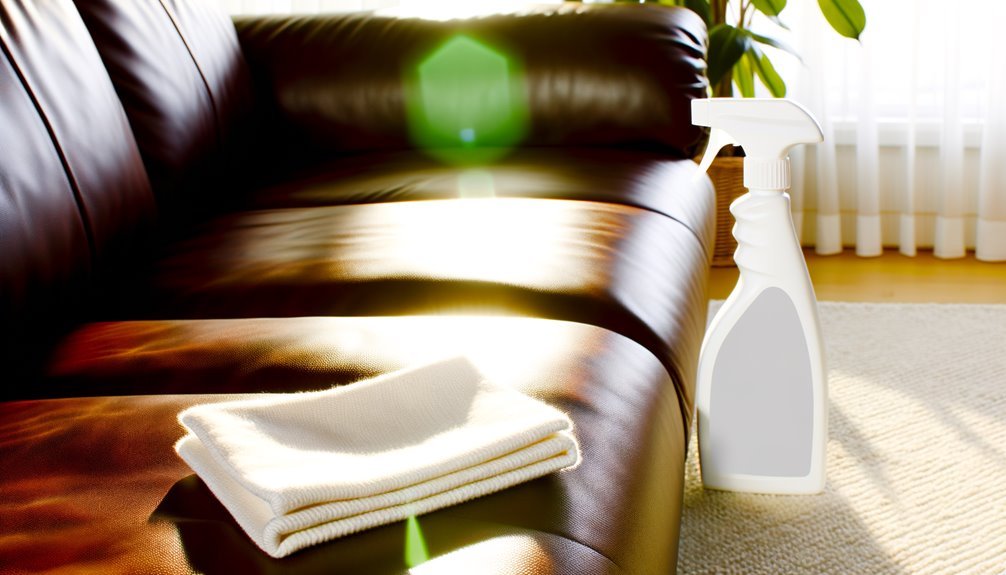
To clean your leather couch effectively, start by dusting it weekly with a soft microfiber cloth or gently vacuuming the crevices. Regular cleaning helps maintain the leather’s natural look and extends its lifespan.
Use a pH-neutral leather cleaner diluted with distilled water, wiping the surface in circular motions without soaking it. This method prevents damage and keeps the leather supple.
Address stains promptly using spot treatments like baking soda for grease or diluted vinegar for spills.
Conditioning the leather every 6 to 12 months will keep it soft and prevent cracking.
Following these steps promises longer-lasting leather, and there’s more to learn about perfect care and maintenance.
Types of Leather Used in Couches

When choosing a leather couch, understanding the types of leather can help you pick one that fits your lifestyle and budget. Full-grain leather, the top layer of animal hide, offers unmatched durability and ages beautifully, making it ideal for long-lasting leather furniture.
Top-grain leather is slightly sanded for a smooth, uniform look and is common in high-quality pieces. Sueded leather, including nubuck and traditional suede, comes from buffed top-grain hides, giving you that soft, velvety texture but requiring more care to keep clean.
Knowing these leather types helps you maintain your couch properly and choose the right cleaning methods. Whether you prefer the rugged look of full-grain or the refined surface of top-grain, understanding leather is key to preserving your furniture’s beauty.
Identifying Your Leather Couch Material
Understanding the types of leather used in couches gives you a solid foundation for identifying your own leather couch material. To figure out if your couch is genuine leather and what leather type it is, follow these steps:
- Look for labels on your couch. Terms like “aniline,” “semi-aniline,” or “pigmented” reveal the leather variety.
- Check the surface texture. Full-grain leather shows natural markings, while top-grain leather feels smooth and uniform.
- Feel the material. Split leather is softer but less durable, and bonded leather often feels synthetic and may crack.
- Inspect edges and seams. Genuine leather has a fibrous texture inside, unlike synthetic alternatives.
Recommended Cleaning Frequency
Although leather is durable, you should clean your couch at least twice a year to keep it looking its best and prevent dirt buildup. This cleaning frequency helps maintain the leather’s natural oils and appearance.
For regular cleaning, focus on weekly dust removal using a microfiber cloth or vacuum attachment to reduce surface dirt. If you live in a dusty or humid environment, increase your cleaning frequency to every 3 to 4 months to protect the leather from damage.
Deep cleaning and conditioning are essential maintenance steps and should be done every 6 to 12 months, depending on use and exposure. Promptly addressing spills will also help prevent dirt buildup and reduce the need for intensive cleaning later on.
Essential Cleaning Supplies for Leather
To keep your leather couch looking its best, you’ll need the right tools and ingredients. Grab a soft microfiber cloth for gentle cleaning, and use distilled water combined with natural soaps or vinegar for safe stain removal. Don’t forget to condition your leather with oils like olive or coconut to maintain its softness and protect it from drying out.
Must-Have Cleaning Tools
When you clean your leather couch, having the right supplies makes all the difference. To protect your investment and keep it looking great, you’ll want to gather these must-have cleaning tools:
- Microfiber cloth Soft, non-abrasive, and excellent for trapping dust without scratching.
- Leather cleaner Choose a gentle, pH-neutral cleaning solution designed specifically for leather to avoid damaging its natural oils.
- Distilled water Use it for diluting cleaners or wiping surfaces to prevent mineral deposits and streaks.
- Soft brush Perfect for reaching crevices and seams without harming the leather’s surface.
After cleaning, apply a quality leather conditioner to maintain suppleness and protect your couch from drying out. These tools ensure your leather stays clean and cared for.
Safe Cleaning Ingredients
Having the right tools is only part of the process; knowing which cleaning ingredients are safe for your leather couch makes a big difference in preserving its quality. Start with distilled water combined with a natural soap like castile for gentle cleaning that won’t damage the leather.
You can also mix white vinegar with distilled water in equal parts to tackle stains naturally and effectively. Avoid harsh chemicals such as bleach, ammonia, or alcohol. They strip leather’s natural oils and cause cracks.
While cleaning, stick to gentle cleaning solutions that maintain leather’s softness. Later, small amounts of conditioning oils like olive or coconut oil help keep your leather supple and shiny. Using safe ingredients ensures your couch stays beautiful and lasts longer.
Conditioning and Protection Products
Although cleaning removes dirt and grime, conditioning your leather couch is essential to keep it soft, flexible, and looking its best. A good leather conditioner restores moisture and prevents cracks and dryness that can damage your sofa over time.
To properly care for your couch, follow these steps:
- Choose a pH-balanced leather-specific protectant to shield against stains, spills, and UV damage.
- Apply a leather conditioner every 6 to 12 months to maintain flexibility and extend lifespan.
- Use natural oils like coconut or olive oil sparingly, then follow with a leather moisturizer for ideal hydration.
- Always test any conditioning product on a small, hidden area first to avoid color changes or damage.
This routine keeps your leather couch supple and well-protected for years to come.
Step-by-Step Leather Couch Cleaning Guide
Before you start cleaning, make sure to remove any loose dust or debris from your leather couch. Then, prepare a gentle cleaning solution and follow careful wiping techniques to avoid damaging the leather.
Finally, don’t forget to condition your couch to keep the leather soft and protected.

Cleaning Preparation Tips
To get your leather couch ready for a thorough cleaning, start by removing any loose dust and debris with a soft microfiber cloth or a vacuum fitted with a soft brush attachment. This dust removal step prevents grit from scratching the leather during cleaning.
Follow these preparation tips:
- Blot any fresh stains immediately using a dry or slightly damp microfiber cloth to avoid permanent marks.
- Mix a gentle cleaning solution by combining mild soap with distilled water, steering clear of harsh chemicals.
- Perform a spot test by applying the cleaning solution on a hidden area to check for discoloration or damage.
- Use a damp microfiber cloth to wipe the couch section-by-section, then dry each area thoroughly with a clean cloth.
These steps ensure your couch is primed for effective cleaning.
Cleaning and Conditioning Steps
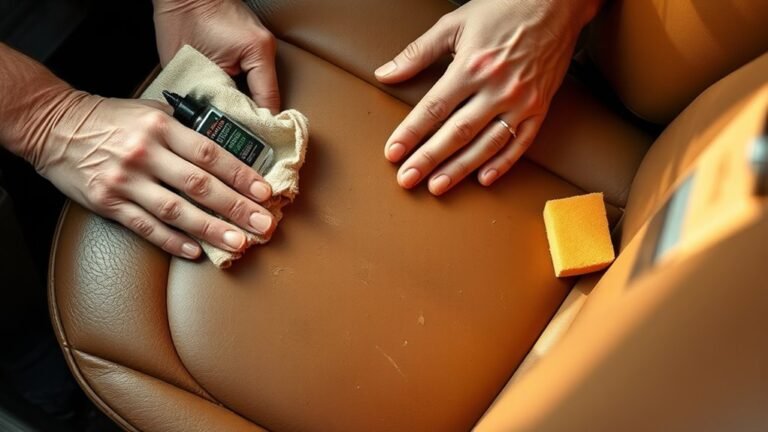
Once you’ve prepped your leather couch, start cleaning by gently wiping the surface with a microfiber cloth dampened in a mild soap and distilled water solution. Use circular motions, keeping the cloth damp but not soaked.
For spot cleaning, treat stains immediately with a damp cloth. Rinse the sofa with a separate cloth moistened with plain distilled water, then dry thoroughly.
Finish by applying a leather conditioner in circular motions to moisturize and prevent premature aging. Incorporate this cleaning routine regularly to maintain softness and durability.
| Step | Tool/Material | Purpose |
|---|---|---|
| 1. Dust Removal | Microfiber cloth | Remove loose debris |
| 2. Soap Cleaning | Damp cloth | Clean surface |
| 3. Spot Cleaning | Damp cloth | Target stains |
| 4. Rinse | Damp cloth | Remove soap residue |
| 5. Conditioning | Leather conditioner | Moisturize and protect |
Techniques for Removing Common Stains
Though leather is durable, it can still attract stains that require prompt and careful treatment. When you notice a stain, quick action is key to effective stain removal. Here’s how to tackle common stains on your leather couch:
Leather is durable but needs prompt, careful treatment to effectively remove stains and maintain its beauty.
- For grease stains, blot immediately with a dry cloth, sprinkle baking soda on the area overnight, then brush off gently.
- Ink stains respond well to a cotton swab dipped in rubbing alcohol. Always test this on a hidden test area first.
- Red wine or juice stains can be lifted by blotting with equal parts distilled water and white vinegar, followed by wiping with a damp cloth.
- For dye transfer or colored beverages, carefully blot with an alcohol-based cleaner or diluted vinegar solution.
Always test your method on a discreet spot to avoid damage.
Proper Conditioning Methods for Leather
Because leather naturally loses moisture over time, you should condition your couch every 6 to 12 months to keep it soft and flexible. Start by choosing a high-quality leather conditioner or natural oils like mink or lanolin.
Before applying, always perform testing on a hidden spot to guarantee the product doesn’t cause discoloration or damage. Use a clean microfiber cloth to apply the conditioner in gentle, circular motions, making sure to cover the entire surface evenly.
Let the leather absorb the conditioner fully. This helps restore moisture and prevent cracks. Once absorbed, buff the couch with a dry cloth to bring out a soft, supple finish.
Regular conditioning preserves your leather’s look and feel, extending its lifespan effectively.

Routine Maintenance Tips for Longevity
To keep your leather couch looking great, make a habit of dusting it weekly with a microfiber cloth.
Every six months, give it a thorough conditioning to maintain its softness and prevent cracks.
Sticking to this routine helps extend your couch’s lifespan and keeps it comfortable for years.
Weekly Dusting Routine
A simple weekly dusting routine can make a big difference in keeping your leather couch looking its best. Regular dusting helps prevent dirt buildup and maintains the leather’s natural oils, ensuring your couch stays clean and durable.
Here’s how to do it effectively:
- Use a soft, dry microfiber cloth to gently dust the leather couch.
- Avoid wet or damp cloths to prevent moisture from seeping into the leather.
- Focus on all surfaces, including crevices where dust tends to collect.
- Consider using a vacuum attachment for hard-to-reach areas.
Biannual Conditioning Schedule
When you condition your leather couch every six to twelve months, you help keep the material soft and prevent it from drying out or cracking. Before applying a high-quality leather conditioner, make sure you’ve thoroughly cleaned the surface with a gentle, soapy solution and allowed it to dry completely.
This prep guarantees the conditioner absorbs deeply and works effectively. Use a soft microfiber cloth to spread the conditioner evenly in circular motions, and don’t forget to wipe off any excess to avoid buildup.
Sticking to this biannual conditioning schedule, combined with regular cleaning, considerably extends your couch’s lifespan. By maintaining this routine, you’ll protect your leather and keep it looking fresh and supple for years to come.
Common Mistakes to Avoid When Cleaning Leather
Although leather is durable, cleaning it improperly can cause lasting damage. To keep your leather couch looking its best, avoid these common mistakes:
- Using harsh chemicals like bleach or ammonia, which strip natural oils and cause damage.
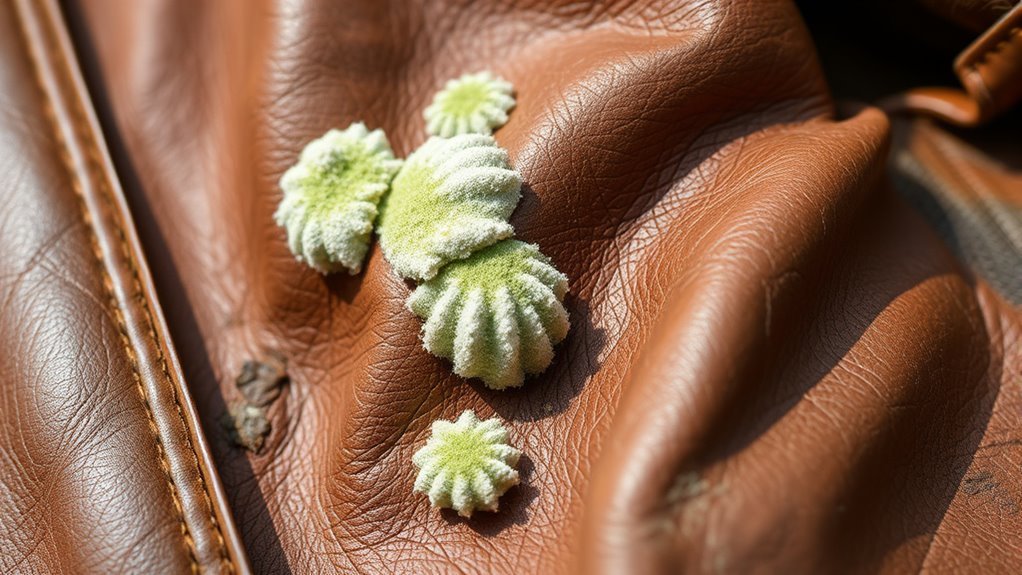
- Applying excess moisture or soaking solutions, as leather is porous and can swell or develop mold.
- Relying on abrasive cleaners or household products not designed for leather, which may harm the surface.
- Trying steam cleaning or exposing leather to high heat, which removes essential fats and leads to cracking.

When to Seek Professional Leather Care
If deep stains or significant damage go beyond what you can handle with DIY methods, it’s time to call in a professional. Professional leather care becomes essential when you notice deep stains, discoloration, or cracking that simple cleaning can’t fix.
Also, if your couch shows signs of mold or mildew, don’t risk it. Experts have the right tools to safely remove these issues. For antique or high-value leather, seeking professional help ensures proper restoration without causing further damage.
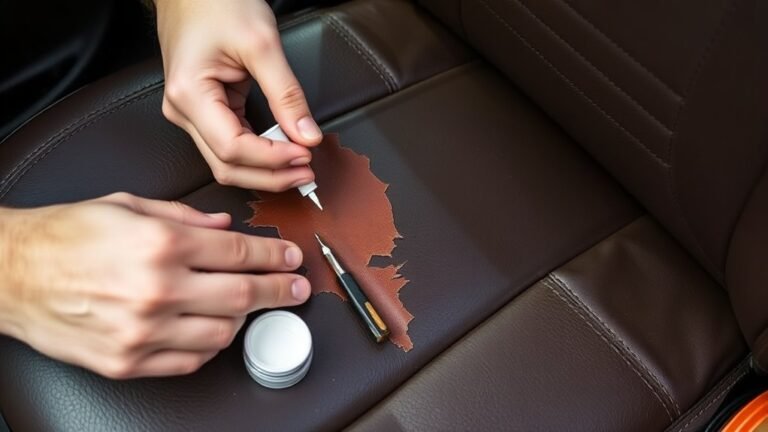
Avoid attempting repairs on rips, tears, or scratches yourself, as this might worsen the problem. When you’re unsure about your leather type or the best cleaning method, consulting a leather specialist guarantees your couch gets the care it needs, preserving its look and durability for years to come.
Frequently Asked Questions
What Is the Best Thing to Clean Leather Couches?
The best thing to clean leather couches is a pH-neutral leather cleaner or a mild soap mixed with distilled water. Use a microfiber cloth, avoid harsh chemicals, and condition regularly to keep your couch looking great and lasting longer.
Can I Use Dawn Dish Soap to Clean My Leather Couch?
You can use Dawn dish soap cautiously by diluting a few drops in water and testing first. Don’t apply it directly or use too much, as it can dry out and damage your leather couch over time.
How Can I Make My Leather Couch Look New Again?
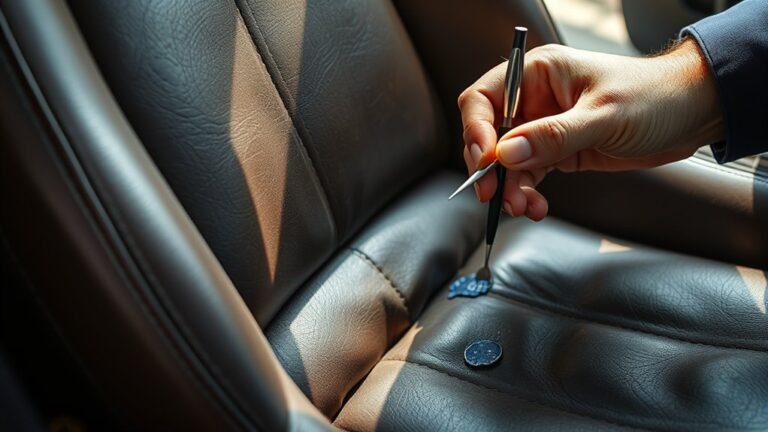
You can make your leather couch look new again by regularly cleaning, using a vinegar-water mix for stains, conditioning with a leather-specific product, dusting weekly, and repairing scratches with a leather repair kit to restore its vibrancy.
What Should You Not Clean Leather Couches With?
You shouldn’t clean leather couches with bleach, ammonia, alcohol-based cleaners, all-purpose cleaners, or household glass and wood cleaners.
Avoid excessive water, steam cleaning, and silicone-based polishes to prevent damage and residue build-up.
Conclusion
Caring for your leather couch is like nurturing a timeless treasure—it needs gentle hands and regular attention to keep its glow alive. By following these cleaning and conditioning steps, you’ll protect its rich texture and extend its life, turning your couch into a cozy, lasting masterpiece.
Avoid common pitfalls, stay consistent, and don’t hesitate to call in professionals when needed. With a little love, your leather will age like fine wine, only getting better with time.
Remember, proper leather couch care is essential for maintaining its beauty and durability. Regular cleaning and conditioning help preserve the leather’s natural oils and prevent cracks. Incorporating these tips into your routine ensures your leather couch remains a stunning centerpiece for years to come.