
How to Care for Leather: Essential Tips for Long-Lasting Leather Goods
To care for your leather properly, it’s essential to first identify the type of leather you have. Using a gentle, pH-balanced cleaner with a soft cloth helps maintain its quality—never soak or scrub harshly. Regular cleaning is key to preserving the leather’s texture and appearance.
Condition your leather regularly by applying thin layers of conditioner. This keeps it flexible and prevents cracks from forming over time. Proper conditioning extends the life of your leather items.
When storing leather, choose a cool, dry place away from direct sunlight. Use breathable covers or supports like shoe trees or padded hangers to maintain shape and avoid damage. Avoid exposure to moisture and heat to protect the leather’s texture.
By consistently following these care tips, you’ll discover even more ways to preserve your leather’s beauty and durability for years to come.
Understanding Different Types of Leather

What makes each type of leather unique? When you explore different leather types, you’ll find full grain leather and top grain leather stand out for their durability and premium quality. These require specific care needs like regular conditioning to keep them looking great.
Split leather comes from lower hide layers; it’s softer and cheaper but won’t last as long. Bonded leather, made by bonding shredded leather fibers with polyurethane, is less durable and prone to wear, so it demands gentle use.
Suede offers a soft, velvety texture, but it’s delicate and needs special care like brushing and water-resistant sprays. Understanding these differences helps you choose the right care routine, ensuring your leather items stay beautiful and last longer.
Essential Steps for Cleaning Leather

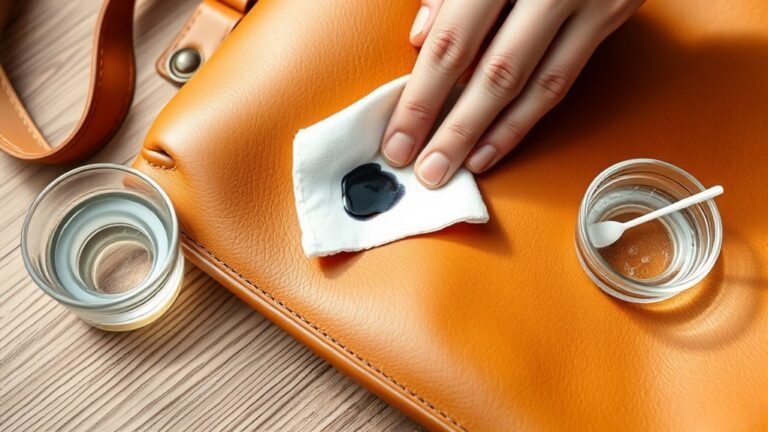
Before you start cleaning your leather, make sure to use a soft, lint-free cloth paired with a gentle leather cleaner like Leather Honey Leather Cleaner to lift dirt and stains without damaging the surface. Always test the cleaner on a hidden spot first to avoid discoloration.
Use a soft cloth and gentle cleaner, testing first on a hidden spot to protect your leather.
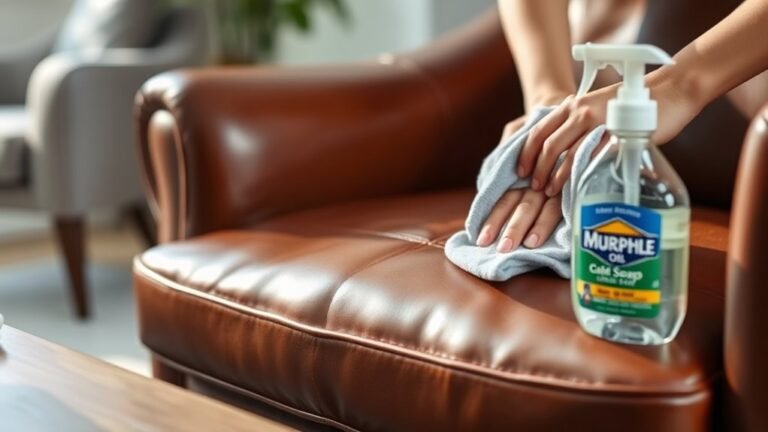
Apply the cleaner to your cloth, not directly on the leather, and gently wipe the surface to remove dirt. For tougher grime, use saddle soap or a specialized cleaner, following instructions carefully. Avoid soaking or scrubbing harshly.
After cleaning, let your leather dry naturally in a well-ventilated area, keeping it away from heat or sunlight. Once dry, apply a leather conditioner to restore moisture and maintain softness.
Regular cleaning and conditioning keep your leather looking its best and prolong its life.
Choosing the Right Leather Cleaner

Cleaning your leather properly starts with choosing the right cleaner. Use a pH-balanced leather cleaner designed specifically for leather to avoid damage and discoloration. Always test a small area first to guarantee no fading or staining occurs.
Opt for a water-based cleaner, like Leather Honey Leather Cleaner, safe for most leather types except suede. Avoid harsh soaps and chemical solvents that strip natural oils and cause cracking. Never spray cleaner directly onto the leather surface; instead, apply with a soft cloth or spray applicator gently.
| Cleaner Type | Suitable For | Key Advice |
|---|---|---|
| pH-balanced | All leather except suede | Test a small area first |
| Water-based cleaner | Most leather | Avoid harsh soaps |
| Harsh soaps | Not recommended | Causes drying and cracking |
| Baby wipes | Not recommended | Can damage leather surface |
| Chemical solvents | Not recommended | Strips natural oils |
Proper Techniques for Conditioning Leather
You’ll want to apply leather conditioner like Leather Honey in a thin, even layer using a soft cloth to avoid oversaturating. Work it in with circular motions, then let the leather rest for a few hours or overnight to absorb the moisture fully.
Remember to recondition your leather twice a year or more if it starts to look dry or has faced tough conditions.
Applying Conditioner Correctly
When applying conditioner to leather, start by putting a small amount on a clean, lint-free cloth instead of spraying it directly onto the surface. This lets you control how much leather conditioner you apply. Use circular motions to evenly distribute the conditioner across the leather, making sure you cover every area thoroughly.
Let the conditioner absorb for at least two hours or overnight to nourish the leather deeply. Avoid over-conditioning by only applying when the leather looks dry or faded; too much conditioner can cause greasy buildup and damage.
Before full application, always test on a hidden spot to check for any discoloration or adverse reactions. Following these steps helps maintain your leather’s softness and durability without risking harm.
Conditioning Frequency Guidelines
Although leather benefits from regular conditioning, applying it too often can cause buildup and damage. Typically, you should condition your leather twice a year to maintain moisture and prevent cracking.
If you live in a dry environment, increase the conditioning frequency to every three to four months to keep the leather supple. Always test the conditioner on a small, inconspicuous area before you apply it fully to guarantee color stability.
When you condition, apply only a thin, even layer to avoid clogging the leather’s pores or creating a greasy feel. After applying, let the leather absorb the conditioner for at least two hours or overnight before using it or exposing it to moisture. This careful routine helps your leather stay healthy and durable.
Preventing Damage and Wear on Leather
Since leather is sensitive to its environment, protecting it from direct sunlight, heat, and moisture helps maintain its strength and appearance. To prevent damage and wear, avoid exposing your leather items to water or salt, as these can weaken fibers and cause discoloration.
Always store leather in a cool, dry place, using dust bags or breathable covers to keep dust and environmental harm at bay. Clean your leather regularly with appropriate products and condition it to keep the material supple.
For suede or nubuck, use water-repellent sprays to protect against moisture and stains. Handle your leather gently to minimize friction and avoid contact with sharp or abrasive surfaces that could cause scratches or tears.
Storing Leather Items Correctly
To keep your leather items looking their best, store them in a cool, dry place away from direct sunlight. Use dust bags or breathable covers to protect against dust and moisture, and choose sturdy hangers or acid-free tissue paper to help maintain their shape.
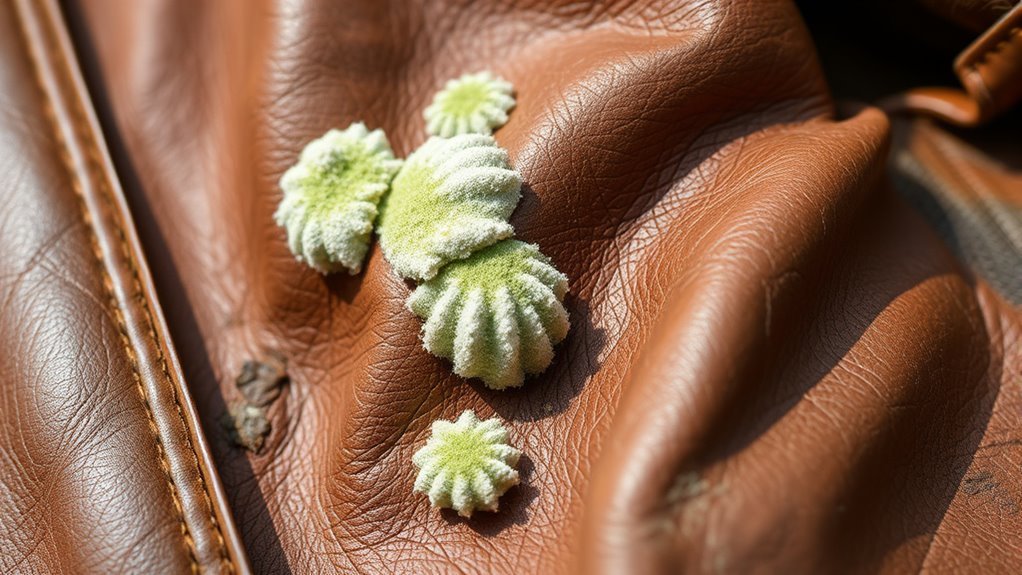
Avoid airtight containers, as trapped moisture can cause mold and damage.
Ideal Storage Environment
You want to keep them in a cool, dry place with temperatures between 60-70°F (15-21°C) to prevent drying and cracking. When you store leather, choose a dry environment with good humidity control to avoid mold and moisture damage.
Avoid direct sunlight, which can fade and weaken the leather over time. Use breathable dust bags or cotton covers instead of plastic to allow air circulation during leather storage. This helps maintain the leather’s natural condition and prevents mildew.
To maintain shape, hang jackets on broad-shouldered hangers and fill handbags with tissue paper. Avoid storing leather items in basements or attics where humidity often fluctuates.
Shape Maintenance Tools
Proper tools play an essential role in maintaining the shape of your leather items during storage. For leather shoes, use cedar shoe trees to preserve their natural form and prevent creases.
When storing leather jackets, opt for padded hangers to support the shoulders evenly and avoid distortion. Always store your leather products in breathable dust bags to shield them from dust without trapping moisture, which can cause deformation.
Avoid hanging leather bags or jackets from a single point; instead, distribute weight on wide, sturdy hangers or supports. Fill empty leather bags with acid-free tissue paper to keep their shape intact.
Using these leather care tools ensures your items stay in excellent condition, maintaining their shape and longevity through proper shape maintenance techniques.

Moisture and Dust Control
A cool, dry place away from direct sunlight helps keep your leather items from drying out or fading. To control moisture and dust, store leather items in breathable dust bags or cloth coverings, not plastic, so air circulation can prevent moisture buildup.
Avoid humid areas, as excess moisture promotes mold and mildew, which damage leather. Keep your leather clean by regularly dusting it off before storage. When storing bags or shoes, fill them with acid-free tissue or cedar shoe trees to maintain shape and absorb moisture.
Don’t forget to air out your leather items occasionally, preventing mustiness and trapped moisture. These simple steps help you prevent damage, keeping your leather looking its best for years.
Special Care for Leather Shoes and Accessories
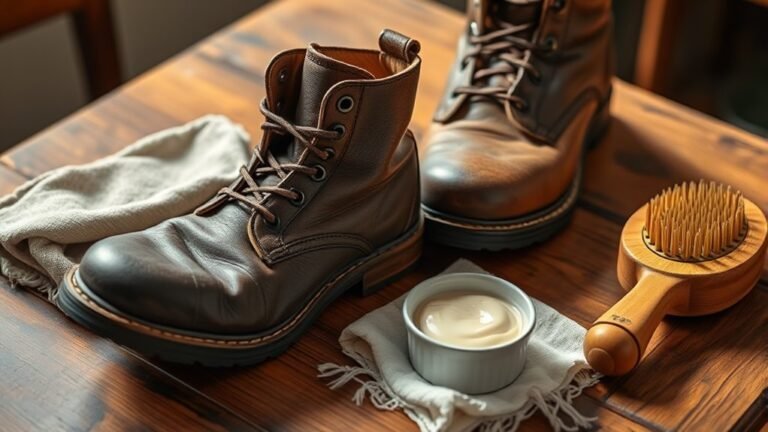
When caring for leather shoes and accessories, maintaining their appearance and durability requires consistent attention. Regularly clean leather shoes using a damp cloth, and for textured surfaces like suede, use a soft brush to remove dirt gently.
Apply a leather conditioner at least twice a year to prevent cracking and keep the material flexible. To protect leather from water damage and stains, use water-repellent sprays specifically designed for leather.
Store your shoes in a cool, dry place, and insert shoe trees made of cedar to absorb moisture and maintain shape. Avoid exposing your leather accessories to direct sunlight, heat, or salt, as these can cause discoloration and deterioration.
Following these steps helps you protect leather and extend the life of your shoes and accessories.
Restoring and Maintaining Vintage Leather
Caring for leather shoes and accessories lays the groundwork for handling vintage leather pieces. To restore vintage leather, start by using leather care products designed specifically for aged materials. Gently clean the leather with a mild leather clean solution to remove dirt without stripping natural oils.
Next, condition your leather with a high-quality leather conditioner like Leather Honey or mink oil to replenish moisture and prevent cracking. Address any surface scratches or stains promptly to maintain its character and avoid further damage.
Store your vintage leather in a cool, dry place away from direct sunlight to prevent fading and dryness. Regularly clean the leather and condition it every six months to extend its lifespan and keep your treasured vintage items supple and beautiful.

Recommended Leather Care Products and Customer Experiences
Since maintaining leather’s softness and durability is essential, choosing the right care products makes all the difference. Leather Honey Leather Care Kit, which includes both cleaner and conditioner, stands out for its ability to revive dry, aged leather effectively.
Customers often share how their leather products look nearly new after just a few treatments. Its deep-penetrating formula provides long-lasting hydration, lasting six months or more per application, reducing frequent maintenance.
Users appreciate that Leather Honey is non-toxic, family-owned, and safe for all genuine leather types, including vintage and distressed pieces. Many report no sticky or oily residue, enhancing their leather care experience.
If you want reliable products that combine quality and proven results, this kit is a top choice for leather care and maintenance.
Frequently Asked Questions
What Oil Can I Put on Leather?
You can use leather-specific oils like neatsfoot, mink oil, or lanolin to condition your leather.
If you try natural oils like olive or coconut, test first to avoid darkening. Always apply oils sparingly and carefully.
What Do You Put on Leather to Protect It?
You’ll want to cloak your leather with water-repellent sprays or nano coatings made just for it. Natural oils like neatsfoot nourish while shielding, but skip waxy stuff. It stifles breathability and harms over time.
Is Leather Ruined if It Gets Wet?
Leather isn’t ruined if it gets wet, but you’ve got to dry it properly. Wipe off moisture gently and air-dry away from heat.
Otherwise, it can stiffen, crack, or develop mold over time.
How Often Should Leather Be Conditioned?
Like tending to a classic car, you should condition your leather twice a year, or every three to four months in dry climates. Don’t overdo it. Too much conditioner can leave it greasy and clogged.
Conclusion
Caring for leather might seem tricky at first, but once you know the right steps, it’s surprisingly simple—kind of like finding that one missing sock in the laundry. By understanding your leather type, cleaning gently, and conditioning regularly, you’ll keep your items looking great for years.
Plus, storing and protecting them properly means you’ll avoid those unexpected cracks or stains. With a little attention, your leather will stay as timeless as your favorite jacket—ready whenever you are.
Remember, proper care for leather involves consistent cleaning, conditioning, and storage. These steps ensure durability and maintain the leather’s natural beauty over time. Embracing these practices will help you enjoy your leather goods for many years to come.