3 Easy Tips to Break New Leather Shoes In
To break new leather shoes in easily, start by wearing thick socks and gradually increasing wear time indoors to reduce discomfort. This simple tip helps your feet adjust without causing blisters or pain.
Apply a good leather conditioner to soften and protect the material, preventing cracks and extending the lifespan of your shoes. Conditioning also keeps the leather supple and comfortable.
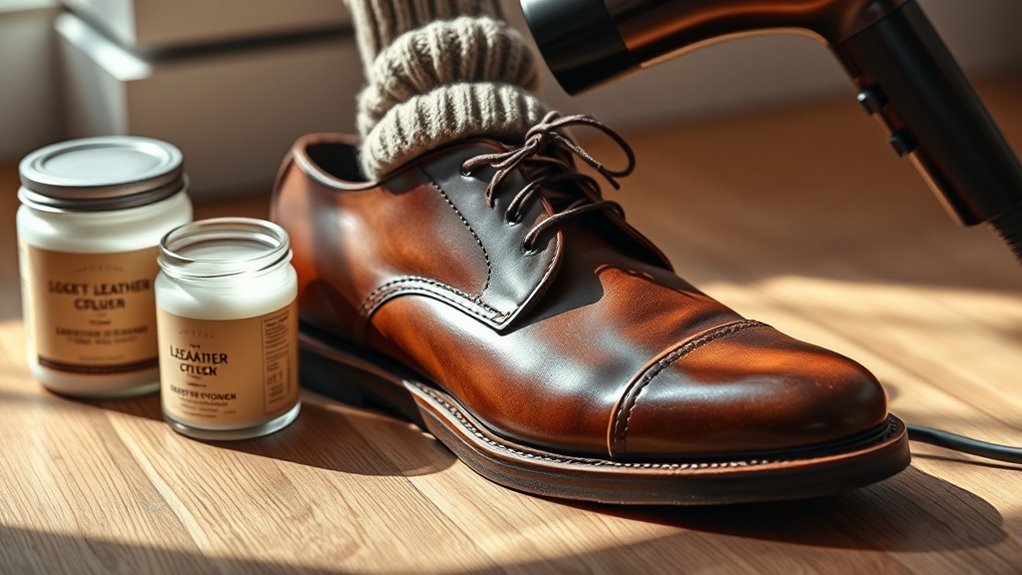
You can also gently warm your shoes with a hairdryer and use stretchers or thick socks to loosen tight spots. Taking these steps lets your shoes mold comfortably to your feet.
Keep going, and you’ll discover even more ways to get the perfect fit faster. With patience and care, your new leather shoes will feel just right in no time.
Use Thick Socks and Gradual Wear

Although new leather shoes can feel stiff and uncomfortable at first, you can ease the process by wearing thick socks and gradually increasing wear time. Thick socks add cushioning, reducing friction and preventing blisters.
Start by wearing your shoes indoors for short periods, about 30 minutes to an hour. Each day, add a little more time to help the leather soften and mold to your feet naturally.
Avoid rushing the process; forcing your feet into tight shoes can cause pain and damage. If you notice pressure points, wear the shoes with thick socks to stretch those areas gently.
This approach lets the leather adjust without causing discomfort, making your shoes more comfortable and ready for longer wear before you take them outdoors.
Apply Leather Conditioner and Moisturizer

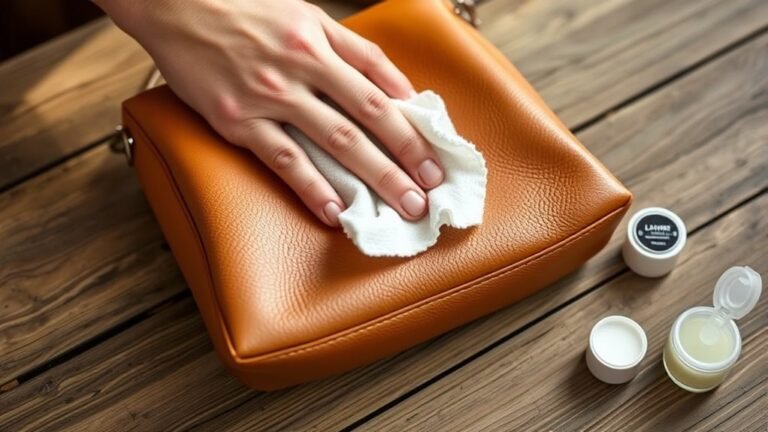
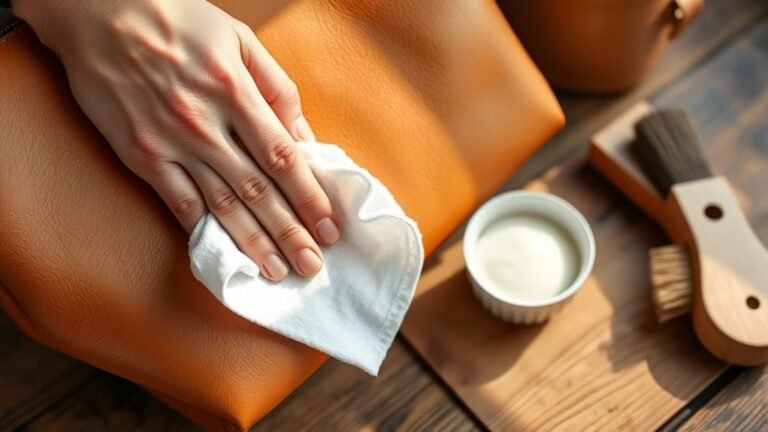
When you want your new leather shoes to stay soft and flexible, applying a leather conditioner and moisturizer is essential. This treatment prevents cracking and keeps the leather supple, making your shoes more comfortable faster.
Choose a conditioner suitable for your shoe’s leather type, and apply it evenly with a soft cloth. Allow it to absorb fully before wearing.
| Product Type | Best For | Application Tip |
|---|---|---|
| Cream Conditioner | Smooth leather | Use sparingly, buff gently |
| Oil-based Moisturizer | Dry, stiff leather | Apply thin layers, avoid excess |
| Wax-based Cream | Polished leather | Use for shine and protection |
Regular conditioning extends shoe life and speeds up break-in time.
Use Heat and Stretching Techniques

Since leather becomes more pliable with warmth, you can use heat and stretching techniques to speed up the break-in process. Start by gently warming your shoes with a hairdryer on a low setting, holding it about six inches away.
Move the heat evenly over the leather for a few minutes to soften it.
After warming, put on thick socks and wear the shoes around the house to help stretch them comfortably. Alternatively, use a shoe stretcher to target tight spots.
Be careful not to overheat or overstretch, as that can damage the leather.
Repeat this process gradually, and your shoes will conform to your feet faster, reducing discomfort and preventing blisters.
Combining heat with stretching gives you a quicker, more effective break-in.
Frequently Asked Questions
Can Water Damage New Leather Shoes During Breaking In?
Yes, water can damage your new leather shoes during breaking in by causing stains, stiffness, or warping.
You should avoid soaking them and instead use a damp cloth sparingly to clean or soften the leather.
How Long Does It Typically Take to Break in Leather Shoes?
It typically takes you about two to four weeks to break in leather shoes, depending on wear frequency and leather quality.
You’ll notice them becoming more comfortable as the material softens and molds to your feet.
Are There Specific Shoe Shapes That Are Harder to Break In?
Yes, pointed-toe and narrow shoes are usually harder for you to break in because they squeeze your feet more tightly.
Rounder or wider shapes tend to feel comfortable faster, making your break-in process easier.
Can Insoles Help With Breaking in Tight Leather Shoes?
Just like Cinderella needed that perfect fit, you’ll find insoles can ease tight leather shoes by adding cushioning and support.
They help reduce pressure points, making the break-in period more comfortable and less painful for you.
Is It Safe to Use Oils Like Olive Oil on Leather Shoes?
You shouldn’t use olive oil on leather shoes; it can cause damage and darken the leather unevenly.
Instead, use products specifically designed for leather care, like leather conditioner, to keep your shoes safe and supple.
Conclusion
Breaking in new leather shoes is like nurturing a young plant—it takes patience and care. By wearing thick socks and easing into longer use, you can gradually adapt the shoes to your feet without discomfort.
Applying conditioner regularly helps keep the leather soft and supple, preventing cracks and stiffness. Additionally, gently using heat and stretching methods will soften those stiff edges in no time.
Stick with these simple steps, and soon your shoes will feel like they were made just for you. With proper leather shoe care and breaking in techniques, your shoes will be ready to walk every path comfortably and confidently.