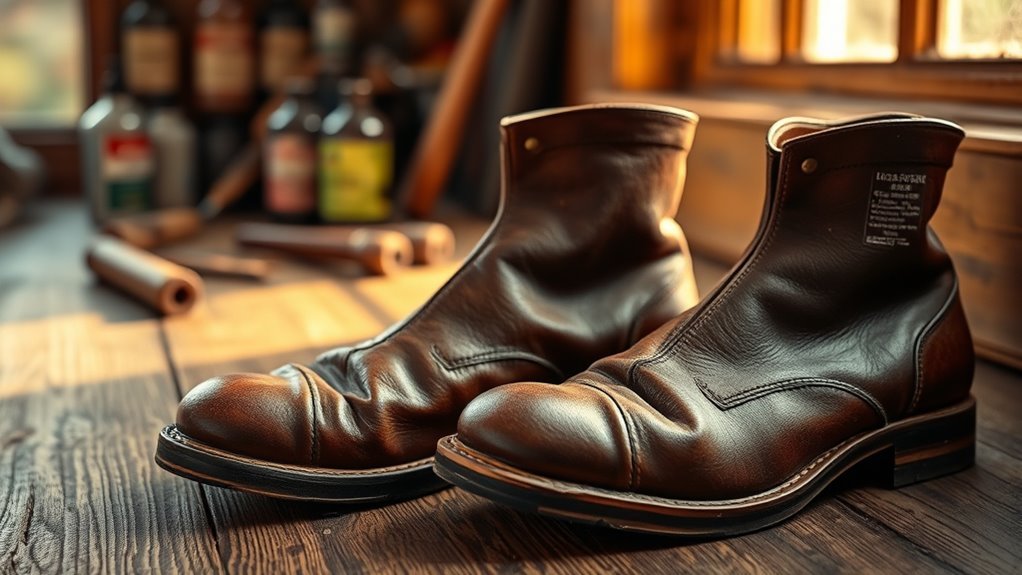
How Long to Break Leather Boots Step by Step
You’ll usually break in leather boots within one to two weeks by wearing them for short periods each day. Properly breaking in leather boots helps ensure comfort and longevity. Start by cleaning and conditioning the leather to soften it, then wear them indoors with medium-thickness socks to reduce friction.
Gently flex the boots by hand and consider using a boot stretcher for tight spots. Limit wear initially to avoid blisters, and gradually increase time as they mold to your feet. Keep going, and you’ll find even more helpful steps and tips ahead.
Understanding the Break-In Period for Leather Boots

Although leather boots might feel stiff and uncomfortable at first, understanding the break-in period helps you know what to expect and how to speed up the process. When you first wear your boots, the leather is firm and hasn’t molded to your feet yet.
This stage usually lasts from a few days to a couple of weeks, depending on the leather quality and boot design. During this time, the leather softens and becomes more flexible as it adapts to your foot’s shape and movement.
You might notice some tight spots or slight discomfort, but that’s normal. By consistently wearing your boots for short periods, you allow the material to loosen gradually, preventing damage and ensuring a comfortable fit that lasts.
Preparing Your Leather Boots Before Wearing

Before you start wearing your leather boots, take a few steps to prepare them properly to guarantee comfort and durability. First, clean any dust or factory residue with a soft cloth.
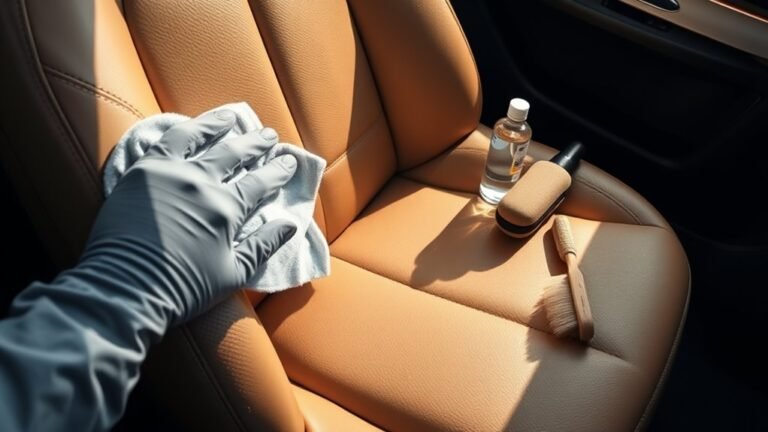
Then, apply a high-quality leather conditioner to keep the material supple and prevent cracking. Allow the conditioner to absorb fully before proceeding.
Next, check the insoles and laces; replace them if necessary for better fit and support. It’s also a good idea to wear thick socks during the initial break-in period to reduce friction and protect your feet.
Finally, verify the boots fit well, not too tight or loose, to avoid discomfort as the leather molds to your feet. These preparations set a solid foundation for a smoother break-in experience.
Step-by-Step Process to Soften and Shape Leather

Once you start wearing your leather boots, you’ll notice the material gradually softens and begins to mold to your feet. To speed this up, wear them around the house for short periods.
Wearing your leather boots regularly, even just at home, helps them soften and mold to your feet faster.
Next, apply a leather conditioner to keep the leather supple and prevent cracking. Focus on areas that feel stiff or tight.
After conditioning, gently flex the boots by bending them with your hands to loosen the leather fibers.
You can also use a boot stretcher overnight to target specific pressure points.
Repeat this process daily: wear, condition, and flex until the boots feel comfortable.
Avoid soaking your boots, as excess moisture can damage the leather.
Following these steps consistently helps your leather boots soften and shape perfectly to your feet.
Tips for Wearing Your Boots During the Break-In Phase
While breaking in your leather boots, you should wear them in short sessions to gradually adjust your feet without causing discomfort. Start with 1-2 hours daily, allowing the leather to mold to your foot shape.
Avoid wearing thick socks initially; instead, choose medium-thickness socks to balance comfort and fit. Pay attention to any pressure points or rubbing areas and gently massage or stretch those spots afterward.
Keep your boots dry and clean during this phase to prevent damage and odor. Rotate your boots with other footwear to give them time to air out and maintain their shape.
Signs Your Leather Boots Are Fully Broken In
As you continue wearing your leather boots, you’ll notice certain changes that signal they’ve fully broken in. They’ll feel more comfortable, conforming perfectly to your feet without pinching or causing blisters. The leather softens and flexes easily, making every step smoother.
Additionally, the boots will show subtle creases that indicate the material has adapted to your movement.
| Sign | What to Look For | Why It Matters |
|---|---|---|
| Comfort | No tight spots or blisters | Ensures all-day wearability |
| Leather Flexibility | Soft, pliable leather | Prevents stiffness and pain |
| Fit Adjustment | Boots hug your foot snugly | Improves support and stability |
Recognizing these signs means your boots are ready for any adventure.
Frequently Asked Questions
Can I Use Water to Speed up Breaking in Leather Boots?
You can use water to speed up breaking in leather boots, but be cautious. Wetting them too much can damage the leather.
Lightly dampen, then wear until dry for a faster, gentler break-in process.
How Do I Clean My Boots During the Break-In Period?
You clean your boots gently with a soft brush or damp cloth during the break-in. Avoid soaking them; instead, use leather cleaner and conditioner to keep the leather supple without damaging the material.
Are Leather Boot Insoles Necessary for a Better Break-In?
Think of leather boots as a dance partner; insoles are your rhythm. You don’t always need them, but they cushion your steps, speeding comfort’s arrival.
Can Leather Boots Be Broken in Using a Boot Stretcher?
Yes, you can break in leather boots using a boot stretcher. It gently expands tight areas, making your boots more comfortable faster.
Just use it carefully to avoid overstretching or damaging the leather.
How Often Should I Condition My Boots While Breaking Them In?
You should condition your leather boots every 3-5 wears while breaking them in to keep the leather soft and prevent cracking.
Don’t overdo it; too much conditioner can weaken the leather’s natural structure.
Conclusion
Breaking in your leather boots takes patience, care, and time. You’ll feel the leather soften, your feet settle, and the boots mold perfectly to your shape.
You’ll walk with confidence, move with ease, and enjoy every step.
By preparing them right, wearing them often, and recognizing the signs, you’ll transform stiff leather into comfortable companions.
So, lace up, take it slow, and watch your boots become as flexible and ready as you are. Remember, how long to break leather boots depends on consistent wear and proper care.