How Do You Soften Hard Leather Shoes Quickly
To soften hard leather shoes quickly, start by cleaning them thoroughly and applying a leather conditioner evenly to rehydrate the leather. Conditioning is essential to restore moisture and prevent cracking.
Next, use a hairdryer on low heat to gently warm the shoes, making the leather more pliable. As the shoes warm up, flex them by bending and twisting to help break in the material.
Wearing thick socks while walking in the shoes adds gentle stretch and accelerates the softening process. Additionally, using shoe stretchers or moisturizing the leather with natural oils can further enhance softness and comfort.
Keep exploring these methods, and you’ll discover even more effective ways to soften your leather shoes quickly and efficiently.
Using Leather Conditioner for Quick Softening

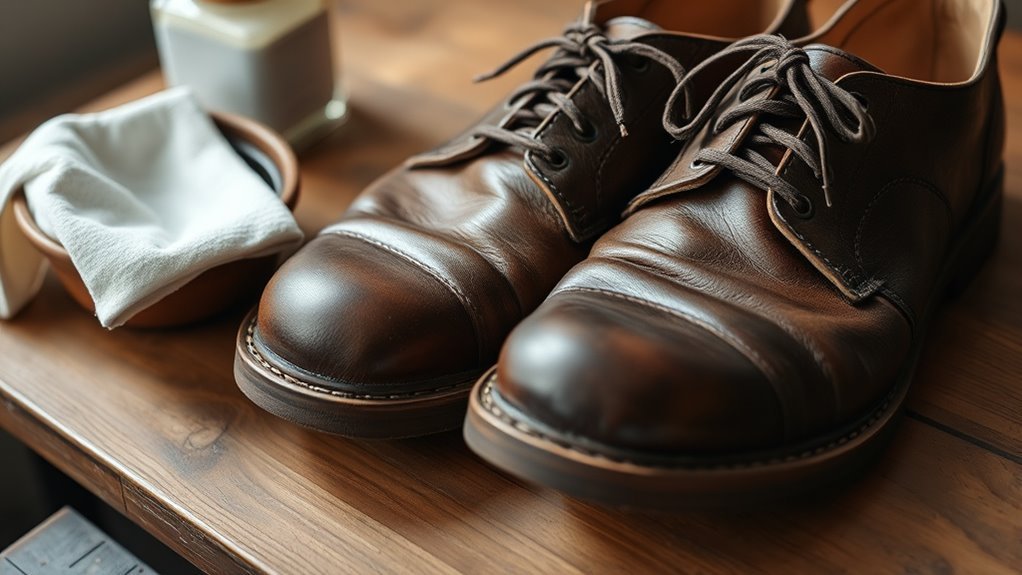
Although hard leather shoes can feel stiff and uncomfortable, applying a leather conditioner can quickly restore their softness. You’ll want to start by cleaning your shoes with a damp cloth to remove dirt and dust.
Hard leather shoes may feel stiff, but a simple leather conditioner can quickly soften them for comfortable wear.
Then, apply a small amount of conditioner using a soft cloth or sponge, rubbing it in with circular motions. Make sure to cover the entire surface evenly.
Let the conditioner absorb for at least 15 to 20 minutes, allowing the leather fibers to rehydrate and become more flexible.
After that, buff the shoes gently with a clean cloth to bring out the shine and finish.
Regular conditioning prevents cracking and extends the life of your shoes, keeping them comfortable and looking great every time you wear them.
Applying Heat to Loosen Stiff Leather

When you apply gentle heat to your hard leather shoes, you help relax the fibers and make them more pliable. Use a hairdryer on a low or medium setting, keeping it about six inches away from the shoe’s surface.
Move the dryer continuously to avoid overheating any spot, which could damage the leather. As the leather warms, gently flex the shoe with your hands to encourage softness.
Avoid excessive heat or direct contact with open flames, as this can cause cracking or discoloration. After heating, apply a leather conditioner to lock in moisture and further soften the material.
Wearing Thick Socks to Break in Shoes Faster

If you want to break in your leather shoes faster, wearing thick socks can make a big difference. Thick socks add extra cushioning and stretch the leather gently as you wear your shoes.
Wearing thick socks cushions and gently stretches leather shoes, helping them break in faster and feel more comfortable.
This helps soften the material without causing damage. Put on a pair of thick socks, then slip into your shoes and walk around your home for 30 to 60 minutes.
The combination of pressure from the socks and your foot’s natural movement gradually loosens the leather fibers. You can repeat this process daily until your shoes feel more comfortable.
Just be careful not to force the shoes if they feel too tight, as that could cause blisters or damage. Thick socks offer a simple, effective way to speed up the breaking-in process.
Utilizing Freezing Method to Soften Leather
Since leather stiffens in cold temperatures, you can use the freezing method to soften your shoes by gently stretching the material. First, fill two sealable plastic bags with water, removing excess air before sealing tightly.
Insert the bags into the toe box of each shoe, ensuring they fit snugly without forcing. Place the shoes in the freezer overnight. As the water freezes, it expands, gently stretching the leather.
The next day, remove the shoes and let them thaw at room temperature. This process relaxes the leather fibers, making your shoes more flexible and comfortable.
Repeat if necessary, but avoid overfreezing to prevent damage.
The freezing method offers a simple, chemical-free way to break in hard leather shoes efficiently.
Stretching Shoes With Shoe Stretchers
Freezing your shoes can help loosen the leather, but for more controlled stretching, shoe stretchers offer a practical solution. You simply insert the stretcher into your shoe, then adjust it to expand the leather gently. This method targets tight spots without risking damage.
Here’s why you’ll appreciate shoe stretchers:
Discover the benefits of shoe stretchers for a customized, comfortable fit and longer-lasting shoes.
- They prevent painful blisters by easing tight pressure points.
- You can customize the stretch to fit your unique foot shape.
- Using them overnight saves time and effort compared to manual stretching.
- They extend the life of your shoes by improving comfort without harsh treatments.
With shoe stretchers, you’ll quickly enjoy a better fit and softer leather, no guesswork involved.
Moisturizing Leather With Natural Oils
Although stretching can help, moisturizing your leather shoes with natural oils plays an essential role in keeping the material soft and pliable. Oils penetrate deep into the leather fibers, restoring flexibility and preventing cracks.
You can use oils like coconut, olive, or mink oil to nourish your shoes. Apply a small amount evenly with a soft cloth, let it absorb, then buff gently. Here’s a simple guide to visualize the process:
| Step | Action | Result |
|---|---|---|
| 1 | Clean shoes | Remove surface dirt |
| 2 | Apply natural oil | Leather begins to absorb |
| 3 | Wait 15-20 minutes | Oil penetrates deeply |
| 4 | Buff with cloth | Shine and softness |
| 5 | Repeat as needed | Long-lasting softness |
Moisturizing regularly keeps your leather shoes comfortable and durable.
Frequently Asked Questions
Can Hard Leather Shoes Cause Foot Pain or Blisters?
Yes, hard leather shoes can cause foot pain or blisters because they don’t flex properly with your feet. You’ll feel discomfort and rubbing, which leads to irritation and blisters if you don’t soften or break them in.
How Long Does It Take for Leather Shoes to Naturally Soften?
Imagine slipping into shoes that feel like clouds after a long wait.
It usually takes leather shoes about 2 to 4 weeks of regular wear for them to naturally soften and mold comfortably to your feet.
Are There Specific Leather Types That Are Harder to Soften?
Yes, you’ll find full-grain and vegetable-tanned leather harder to soften due to their dense fibers.
In contrast, corrected-grain or chrome-tanned leathers break in faster, so focus your softening efforts accordingly for best results.
Can Soaking Leather Shoes in Water Damage Them?
Yes, soaking leather shoes in water can damage them. It can cause warping, shrinking, and weakening.
You’ll risk ruining the leather’s texture, color, and durability if you soak them too long or too often.
Is Professional Shoe Stretching More Effective Than Home Methods?
Yes, professional shoe stretching is more effective than home methods because experts use specialized tools and techniques tailored to your shoes.
You’ll get precise, lasting results that are hard to achieve by yourself at home.
Conclusion
Softening hard leather shoes is like coaxing a stubborn seed to bloom—patience and care release their true comfort. By conditioning, warming, or gently stretching them, you transform rigid leather into a supple embrace.
Picture slipping your feet into shoes that mold perfectly, like a second skin, ready to walk miles with you. With these quick techniques, you’ll breathe life into your shoes, turning stiffness into effortless ease.
Using these methods to soften hard leather shoes quickly ensures every step feels just right. Embrace these tips and enjoy the comfort that comes with well-softened leather shoes.