What Is Faux Leather Made Of? Materials, Types & Uses Explained
Faux leather is made by coating a fabric base, usually cotton or polyester, with synthetic plastics like polyurethane (PU) or polyvinyl chloride (PVC). These materials mimic the look and feel of real leather while offering durability, flexibility, and easier maintenance.
Faux leather production involves key components such as PU and PVC, which are essential in replicating genuine leather textures. PU feels softer, and PVC provides more water resistance.
While faux leather avoids the use of animal hide, its production involves plastics and chemicals with environmental concerns. You can explore how it’s made, its uses, and eco-friendly choices next.
Definition and Characteristics of Faux Leather

Although faux leather isn’t genuine leather, it closely mimics its look and feel by using synthetic materials like polyurethane (PU) or polyvinyl chloride (PVC). When you touch faux leather, you’re feeling a base fabric, usually cotton or polyester, coated with a plastic layer designed to replicate leather’s texture.
Polyurethane-based faux leather feels softer and more flexible, making it comfortable for clothing or upholstery. On the other hand, polyvinyl chloride versions offer greater durability and water resistance, ideal for items exposed to moisture. These synthetic materials make faux leather affordable, stain-resistant, and easier to maintain than real leather.
Some eco-friendly options even blend organic substances into the base fabric, but the core of faux leather remains its innovative layering of synthetic materials over a durable fabric base.
Historical Development of Faux Leather
Faux leather has come a long way from its early attempts to replicate genuine leather. You’d find that its journey started with Presstoff, a layered paper pulp used in WWII Germany. Then, the 1920s brought Rexine, a vinyl-coated fabric offering durability and affordability.
In 1920, Naugahyde marked a major milestone as a mass-produced synthetic leather. By mid-20th century, polyurethane coatings created more realistic, water-resistant poromeric materials. Growing environmental concerns in the 1970s pushed innovation toward eco-friendly, biodegradable faux leathers.
| Era | Key Development |
|---|---|
| WWII | Presstoff (layered paper pulp) |
| 1920s | Rexine (vinyl-coated fabric) |
| 1920 | Naugahyde (mass production) |
| Mid-1900s+ | Polyurethane & eco-friendly options |
Base Materials Used in Faux Leather Production
What gives synthetic leather its strength and flexibility? It all starts with the base fabric, usually porous textiles like cotton or polyester. These materials provide the structural support needed for durability and breathability.
You’ll find that these fabrics are carefully chosen for their porosity, which affects how well the faux leather resists water and allows air flow. On top of this base, manufacturers apply coatings made from synthetic materials such as polyurethane (PU) or polyvinyl chloride (PVC).
This combination creates the texture and finish that mimic real leather. Some eco-conscious producers even use natural fibers or recycled fabrics as their base fabric to reduce environmental impact, proving that faux leather production can be both functional and sustainable.
Plastic Formulations in Faux Leather Manufacturing
When you look closely at synthetic leather, you’ll see that its surface owes much to plastic formulations like polyurethane (PU) and polyvinyl chloride (PVC). PVC, made from petroleum derivatives and salt through electrolysis, forms a rigid plastic that becomes flexible with the addition of plasticizers.
These plasticizers soften PVC but raise environmental and health concerns. PU, on the other hand, is created by reacting isocyanates with polyols, resulting in a softer, more flexible coating that closely mimics real leather’s texture.
Both PU and PVC are applied as coatings over a fabric base, using melting, spreading, and curing techniques to produce durable faux leather. Understanding these plastic formulations helps you appreciate how synthetic leather achieves its leather-like appearance and feel.

Manufacturing Process of Faux Leather
Although synthetic leather starts with a simple fabric base like cotton or polyester, the manufacturing process transforms it by coating the fabric with melted plastics such as polyurethane (PU) or polyvinyl chloride (PVC). You’ll see the base fabric first coated evenly with these plastics, which then dry and cure to form a tough, flexible surface.
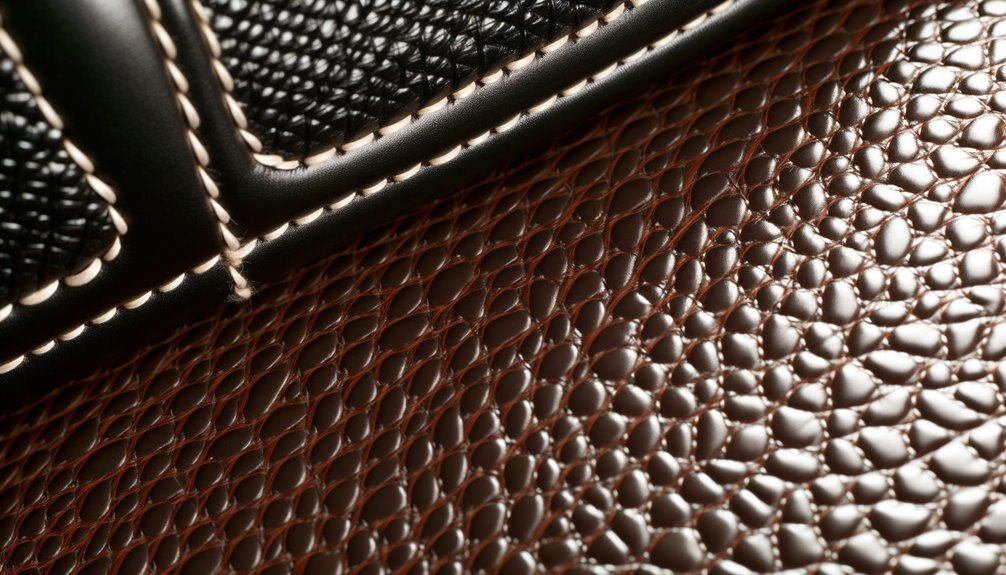
To give faux leather its characteristic look, embossed release paper presses textures onto the wet coating, mimicking real leather grain. Multiple layers follow, including color coats and finishes, sometimes with foam backing for extra softness.
After curing, the material undergoes cutting and additional treatments like dyeing or surface finishing before it’s ready for use. This process guarantees the faux leather feels and looks convincing while remaining durable and consistent.
Common Types of Faux Leather Materials
When choosing faux leather, you’ll often come across PU and PVC types. PU leather feels softer and mimics real leather by coating fabric with polyurethane.
PVC leather, on the other hand, is tougher and waterproof thanks to its vinyl coating.
PU Leather Composition
Since you want a material that looks and feels like leather but is more affordable and eco-friendly, PU leather is a great choice.
PU leather is made by applying a polyurethane coating over a base fabric, such as polyester or cotton. This coating is carefully mixed, spread, and cured to create a flexible surface that mimics the softness and durability of real leather.
To enhance its realistic look, the PU leather is often textured or embossed with patterns resembling natural leather grain.
Because of its breathable composition, PU leather is lighter and more comfortable compared to other faux leathers. Plus, its production involves fewer toxic chemicals, making it a more environmentally friendly option for your clothing or upholstery needs.

PVC Leather Characteristics
If you need a highly durable and water-resistant material, PVC leather offers a practical solution. It’s made by coating a fabric base, like polyester or cotton, with a layer of polyvinyl chloride (PVC) plastic.
During manufacturing, PVC resin is melted and mixed with plasticizers to keep the material flexible before applying the coating. This process creates a rigid, glossy surface that can be embossed to mimic real leather grain.
You’ll often find PVC leather in furniture upholstery and automotive seats because of its excellent durability and resistance to moisture. However, be aware that PVC production and disposal release dioxins and other toxic chemicals, raising significant environmental concerns.
Despite this, PVC leather remains a popular choice when durability and water resistance are priorities.
Applications of Faux Leather in Various Industries
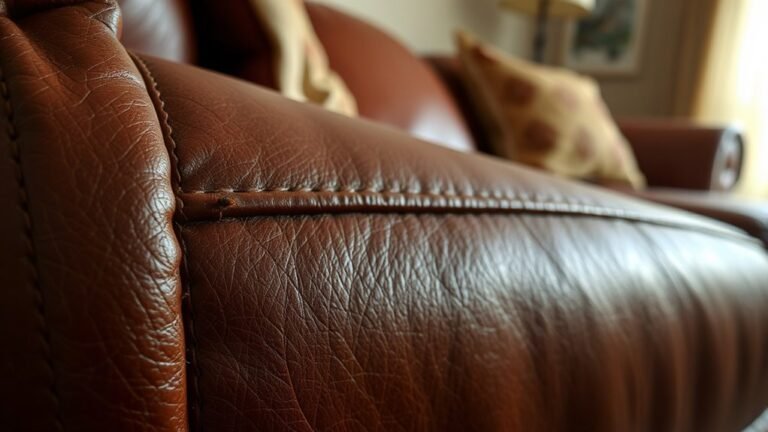
Although faux leather mimics the look of genuine leather, it offers unique benefits that make it popular across various industries. Its synthetic materials provide durability and water resistance, making faux leather ideal for upholstery in homes, offices, and commercial spaces.
You’ll find it widely used in the fashion industry for jackets, handbags, shoes, and accessories, presenting a cruelty-free alternative. Automotive manufacturers choose faux leather for car seats and interior trims because it resists cracking and fading while requiring minimal upkeep.
Additionally, its waterproof qualities suit watercraft and marine applications. In sportswear, faux leather adds flexibility and style to leggings, gloves, and accessories. These diverse applications highlight why faux leather continues to gain traction in multiple sectors.
Environmental Impact of Faux Leather Production
When you consider faux leather’s appeal as a cruelty-free alternative, it’s important to also recognize the environmental costs tied to its production. Faux leather relies heavily on PVC and other plastics derived from fossil fuels, which are non-biodegradable and linger in the environment for centuries.
Producing these materials emits greenhouse gases and involves toxic chemicals like plasticizers and solvents, leading to chemical pollution that harms ecosystems and contaminates water sources. Disposal poses further problems. Burning or discarding faux leather releases hazardous substances such as dioxins and phthalates, posing risks to both human health and wildlife.
Although it avoids animal cruelty, the environmental impact of faux leather production remains significant due to its dependence on non-renewable resources and challenges in recycling these synthetic materials.
Certifications and Eco-Friendly Alternatives
While faux leather lacks dedicated certifications, you can still find eco-friendly options verified by standards like Greenguard or OEKO-TEX Standard 100, which guarantee low chemical emissions. These certifications help you identify sustainable faux leather made with safer materials.
Some manufacturers create biodegradable or plant-based faux leather, often using vegetable-tanned or bio-based polyurethane, offering an eco-friendly alternative to traditional synthetics. Although the Leather Working Group certifies genuine leather manufacturing, it doesn’t cover faux leather.
Instead, look for third-party sustainability certifications that confirm recycled content or environmentally safe processes in faux leather production. Even though certification labels remain limited in this market, seeking out these eco-friendly badges guarantees you choose sustainable, lower-impact faux leather products that align with your values.
Frequently Asked Questions
Is Faux Leather as Good as Real Leather?
No, faux leather isn’t as good as real leather. You’ll find it less durable, less breathable, and prone to cracking or peeling.
However, it’s more affordable and cruelty-free, making it a practical choice for many.
What Are the Disadvantages of Faux Leather?
You’ll find faux leather cracks, peels, and fades faster than real leather. It’s less durable, often contains harmful chemicals, and isn’t eco-friendly since it’s non-biodegradable and relies on energy-intensive production processes.
Is Faux Leather Made From Animals?
Imagine buying a jacket without harming a single animal. That’s faux leather for you. It’s completely synthetic, so you don’t have to worry about animal products or cruelty.
You’re choosing style without sacrifice.
How Long Does Faux Leather Last?
Faux leather usually lasts between 3 to 10 years, depending on the type and care.
You’ll get longer use from PU-based versions, especially if you avoid heat, sunlight, and regularly clean and condition your items.
Conclusion
Now that you know faux leather is made from plastic-based materials designed to mimic real leather, it’s no coincidence that it’s both versatile and widely used—from fashion to furniture.
You might not realize it, but the same manufacturing process that creates its durability also poses environmental challenges.
So, when you choose faux leather, you’re not just picking style—you’re also part of a bigger conversation about sustainability and innovation in synthetic leather production and eco-friendly alternatives.