How to Soften Up New Leather Boots: Easy DIY Methods
To soften up new leather boots, start by cleaning them thoroughly to remove any dirt or residues.
Then, apply a quality leather conditioner evenly over the surface. This process helps maintain the leather’s suppleness and durability.
Next, use a low-heat hairdryer to gently warm the leather, which allows the conditioner to soak in better.
Wearing thick socks while flexing and bending the boots helps relax the fibers. This molds the boots comfortably to your feet, making them softer and more flexible.
Regular conditioning and care are essential to keep your boots soft and flexible over time.
Keep going with these steps, and you’ll discover more tips to make your boots feel even better and last longer.
Understanding Leather Softening

Although leather is durable, it often feels stiff when new, especially if it’s full-grain or thick. That stiffness comes from the natural fibers packed tightly in the leather. To soften your new boots, you need to moisturize these fibers, making them pliable and flexible.
Using a good leather conditioner is key. It seeps into the fibers and helps relax them. Applying gentle heat, like from a low-heat hairdryer, opens the leather’s pores so the conditioner penetrates deeper.
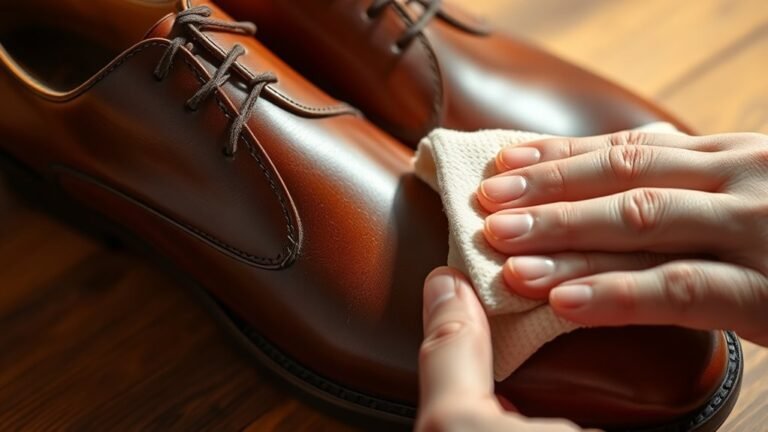
Remember to use soft cloths for even application as part of your leather care routine. Flexing and bending your boots regularly also encourages the fibers to loosen. With consistent care, your leather will soften, making your new boots feel comfortable and ready for any adventure.
Preparing Your Boots for Softening

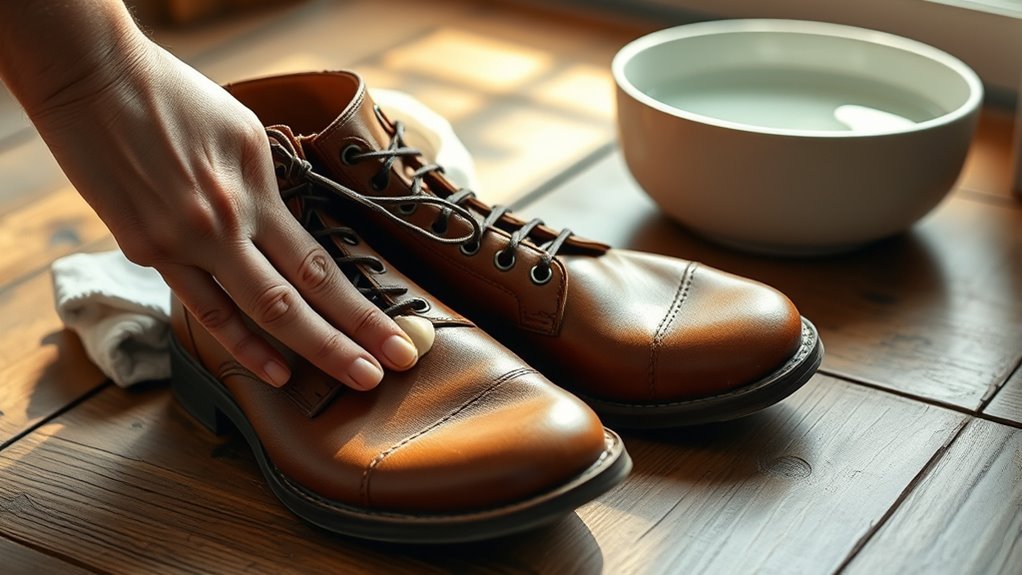
Before you begin softening your leather boots, make sure they’re clean by gently removing any dirt or dust with a soft brush or damp cloth. Preparing your boots properly sets the foundation for effective softening.
First, test the leather’s thickness since thicker leather may need extra conditioning and gentle warming. Next, apply a high-quality leather conditioner evenly to the entire surface.
After applying, use low heat from a hairdryer to warm stiff areas, helping the leather absorb the conditioner and become more pliable. Finally, slip on thick socks and wear your boots to mold them comfortably.
Remember to:
- Clean your leather boots thoroughly
- Apply leather conditioner evenly
- Warm areas gently with heat
- Wear thick socks for gradual softening
This preparation guarantees your boots soften smoothly and last longer.
Effective Methods to Soften Leather Boots

When you want to soften your leather boots effectively, start by applying a leather conditioner evenly over the stiff areas to improve flexibility. Before that, moisten leather slightly with a damp cloth to enhance absorption.
Use a low heat hairdryer gently while wearing thick socks to help the boots mold to your feet. Massaging boots regularly helps distribute oils and relax stiff fibers.
For stretching leather, insert a shoe stretcher or apply stretching sprays overnight to expand tight spots, ensuring a comfortable fit.
| Method | Action | Result |
|---|---|---|
| Leather Conditioner | Apply evenly | Softens leather |
| Moistening Leather | Use damp cloth | Enhances softening |
| Low Heat Hairdryer | Warm boots gently | Molds to foot shape |
| Massaging Boots | Rub with cloth/fingers | Relaxes fibers |
| Boot Stretchers | Insert overnight | Stretches leather |
Tips for Maintaining Soft Leather
To keep your leather boots soft, you should regularly apply a high-quality leather conditioner or cream, which maintains their flexibility and prevents stiffness. Proper care is essential for softening leather and ensuring long-lasting comfort. Combine leather cleaning with leather maintenance routines to avoid dirt buildup that can cause stiffness.
After applying conditioner, try gentle warming with a low-heat hairdryer to boost absorption and enhance flexibility.
Wear thick socks during early use to mold boots naturally and keep leather pliable. Clean boots with a soft cloth to remove grime without damaging the surface.
Store boots in cool, dry storage conditions away from direct sunlight. Condition your boots consistently to maintain softness and prevent stiffness.
Following these tips helps you enjoy soft, flexible boots every step you take.
When to Seek Professional Help
Regular conditioning and careful maintenance usually keep your leather boots soft and comfortable, but sometimes they just won’t cooperate. If your boots remain stiff after repeated softening and stretching attempts or show cracks and damage, it’s time to seek professional help.
A skilled cobbler offers expert solutions, especially for delicate leather or costly boots, preventing permanent damage through proper care.
| Issue | When to Seek Professional Help |
|---|---|
| Stiffness persists | After multiple failed home softening attempts |
| Visible cracks or damage | Immediately to avoid worsening the condition |
| Painful tightness | When home stretching causes pressure points |
| Delicate or expensive | Always consult a cobbler for specialized care |
Trust a cobbler to protect your boots and restore comfort efficiently.
Frequently Asked Questions
How to Soften Stiff Leather Boots?
You can soften stiff leather boots by applying conditioner or mink oil, gently warming them with a hairdryer, wearing thick socks while flexing the boots, and using a shoe stretcher with stretching spray for gradual, comfortable expansion.
How to Make New Boots Less Stiff?
Think of your new boots as a shy friend warmed by your touch and patience. Apply conditioner, wear thick socks, and gently bend the leather. Soon, they’ll open up, molding perfectly to your feet.
How Long Does It Take for Leather Boots to Soften?
It usually takes you around 2 to 3 weeks of regular wear for leather boots to soften fully. Thinner leather softens faster, but consistent use and conditioning speed up the process, so be patient and keep wearing them.
What Does WD-40 Do to Leather Boots?
WD-40 acts like a quick rainstorm on leather boots, temporarily softening fibers and repelling moisture. But you shouldn’t rely on it alone. It can strip oils and cause damage if you overuse it, so condition afterward.
Conclusion
Softening new leather boots isn’t just about comfort—it’s about breaking in a story only you can tell. With patience and the right techniques, you’ll turn stiff leather into supple perfection.
Remember, treating your boots gently now means they’ll last longer and feel better every step you take. So, don’t rush the process; embrace it like a dance between you and your boots.
When in doubt, a professional’s touch can save the day! Proper care and softening techniques will ensure your new leather boots become a cherished part of your wardrobe.