What to Use to Clean a Leather Couch: Safe & Effective Solutions
To clean your leather couch effectively, start with a soft microfiber cloth and gentle cleaning products like diluted mild soap or leather-specific wipes. These items are ideal because they protect the leather’s surface while removing dirt and grime.
Avoid using harsh chemicals, abrasive brushes, or excessive water, as these can damage the leather. After gently wiping off dust and dirt, make sure to dry the surface thoroughly to prevent moisture-related issues.
Regular conditioning with leather conditioners helps keep your couch supple and vibrant.
For maintaining your leather’s appearance longer and tackling tougher stains, there are a few more helpful tips you can explore.
Recommended Cleaning Products for Leather Couches

Although leather couches require careful maintenance, you can effectively clean them using gentle products like microfiber cloths, baby wipes, or leather-specific wipes to remove dust and light dirt. When you clean a leather couch, choosing the right cleaning products is key.
For routine leather cleaning, avoid harsh chemicals such as bleach or ammonia, which can dry out or damage the material. Instead, opt for mild soaps like diluted Dove or Castile soap for deep cleaning.
After cleaning, use leather conditioners containing natural oils or lanolin to restore moisture and keep your couch supple. Leather-specific wipes are especially handy for quick touch-ups, ensuring you manage light dirt without risking damage.
Following this routine helps maintain your leather’s look and longevity.
Materials to Avoid When Cleaning Leather

When cleaning your leather couch, you need to avoid harsh chemicals like bleach, ammonia, or alcohol because they strip natural oils and damage the surface. Stay away from all-purpose cleaners, wood, glass, or all-in-one products since they often contain additives not made for leather care.
Silicone-based polishes and furniture sprays might seem helpful but can leave residues that clog pores and build up over time. Also, don’t use abrasive scrubbers, rough brushes, or rough cloths, as these can scratch or puncture the leather.
Avoid excessive water or steam cleaning too, as this can cause swelling or discoloration. By steering clear of these materials, you’ll protect your leather couch’s look and longevity.
Essential Tools and Supplies for Leather Couch Care

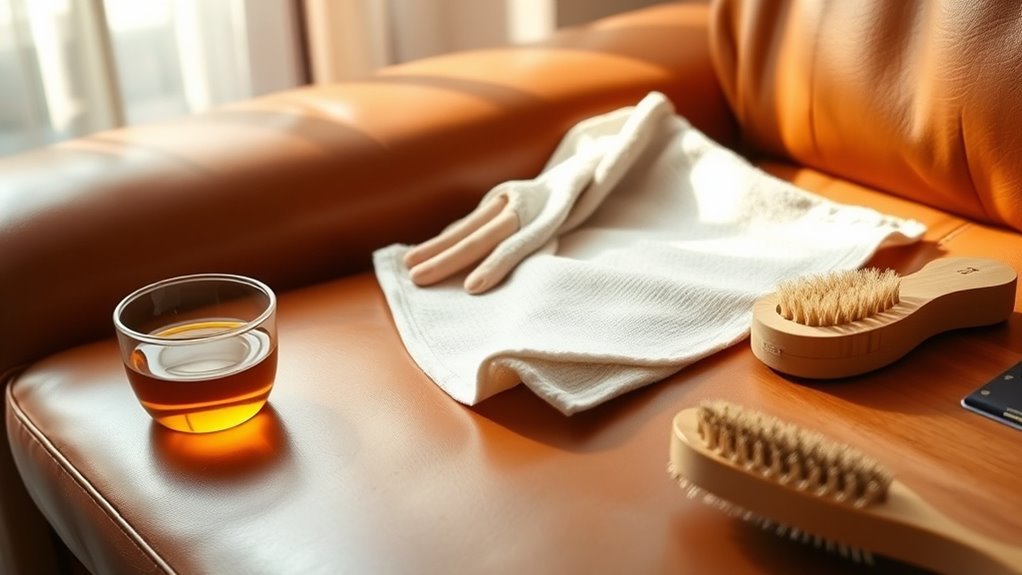
To care for your leather couch effectively, you’ll need a few essential tools and supplies that protect its surface while keeping it clean. Regular dust removal and dirt removal are key to maintaining its look and feel. Here are the top three essentials:
Caring for your leather couch means using essential tools to protect and keep it clean regularly.
- Microfiber cloth and brush attachment Use a soft microfiber cloth for gentle wiping and a vacuum with a soft brush attachment to remove dust and debris from crevices without scratching.
- Natural soap and white vinegar Dilute natural liquid soap or mix white vinegar with water for safe, effective cleaning that avoids harsh chemicals.
- Leather conditioner and dry cloth After cleaning, apply leather conditioner with a dry cloth to nourish the leather, maintain suppleness, and prevent cracking over time.
Having these cleaning supplies ready ensures your leather couch stays fresh and well-maintained.
Step-by-Step Cleaning Process for Leather Couches
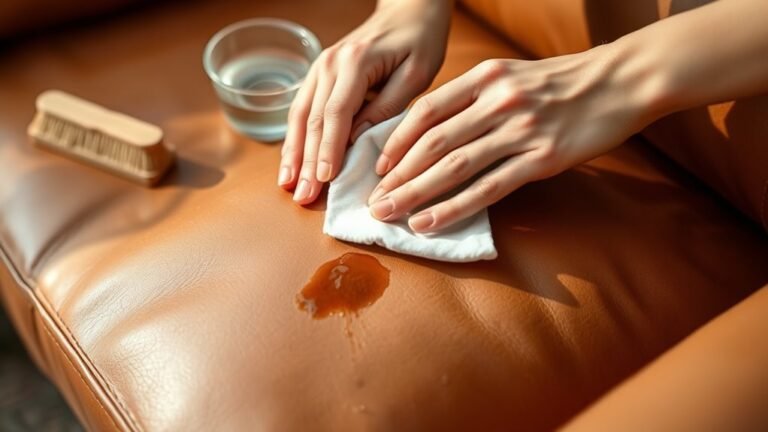
Before you start cleaning your leather couch, gather your supplies and clear the area around it to prevent any accidental spills or damage. Begin by using a microfiber cloth or vacuum with a soft brush attachment to remove loose dust and debris from the leather surface.
Next, mix a few drops of mild soap with distilled water to create a soapy solution. Dampen a cloth with this solution, avoiding soaking it, and gently wipe the leather in circular motions, working section by section.
Rinse the cloth with plain distilled water, wring it out, and wipe the surface again to remove any soap residue. Finally, dry the leather thoroughly with a clean microfiber cloth and allow it to air dry completely before applying conditioner to keep your leather soft and protected.
Techniques for Removing Stains From Leather
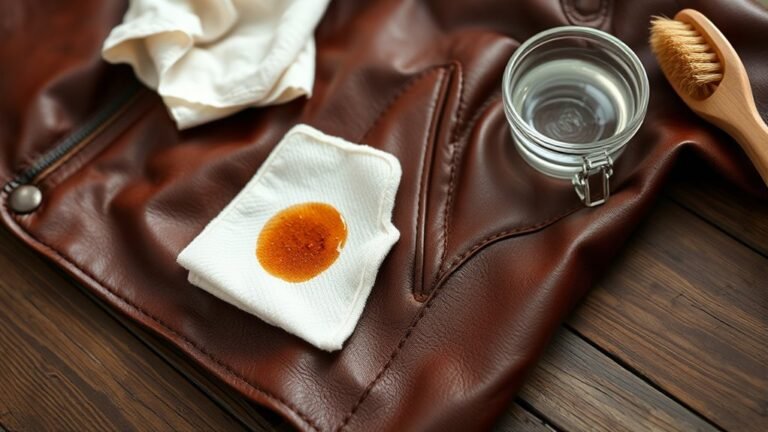
After cleaning your leather couch, you’ll want to tackle any stains promptly to prevent them from setting. To effectively remove stains while maintaining your cleaning routine, follow these steps:
- Blot fresh spots and stains immediately with a dry, soft microfiber cloth to remove dirt without pushing stains deeper.
- For water-based stains, gently wipe with a mix of mild soap and distilled water using a damp microfiber cloth, then dry naturally to avoid damage.
- For stubborn stains like ink or wine, use a diluted white vinegar and distilled water solution, but always test on a hidden area first to avoid harsh effects.
How to Condition and Restore Leather Couch
Maintaining your leather couch means regularly conditioning it to keep the material soft and prevent cracks. Start by using a leather conditioner every 6 to 12 months to restore leather moisture and maintain flexibility.
Before conditioning, clean and condition the leather surface gently. Apply a small amount of leather conditioner to a soft, clean cloth and rub it in circular motions across the entire couch.
Let it penetrate for at least 15 minutes, then wipe off any excess conditioner with a dry cloth. If commercial products aren’t available, mix natural oils like olive or coconut oil with mild soap to hydrate and restore leather.
Regular conditioning not only enhances appearance but also prolongs your couch’s lifespan by keeping the leather supple and protected.
Tips for Maintaining Your Leather Couch Over Time
If you want your leather couch to stay soft and vibrant for years, you should clean it at least twice a year with a pH-neutral cleaner and condition it regularly every 6 to 12 months. To keep your leather sofa looking its best, follow these tips:
- Remove dust weekly using a microfiber cloth or vacuum attachment to prevent dirt buildup and maintain its natural texture.
- Address spills and stains immediately by blotting with a dry cloth; avoid harsh chemicals to protect leather’s oils.
- Apply a leather conditioner and use protectant sprays every 6 to 12 months to condition your leather and create a barrier against damage.
These steps help you maintain your leather’s suppleness and keep your leather couch looking fresh over time.
Frequently Asked Questions
What Is the Best Thing to Clean a Leather Sofa?
You should use a gentle mix of mild soap and distilled water to clean your leather sofa. Regularly apply leather-specific cleaners or conditioners, and avoid harsh chemicals to keep the leather soft, clean, and crack-free.
What Household Cleaner Can I Use on a Leather Couch?
When Sarah needed a quick fix, she used a mild, pH-neutral soap like Dove mixed with distilled water. You can safely use this gentle cleaner, but always test it on a hidden spot before cleaning your leather couch entirely.
Can I Use Dawn Dish Soap to Clean My Leather Couch?
Yes, you can use Dawn dish soap to clean your leather couch, but dilute it with distilled water first. Test a hidden spot, gently wipe with a damp cloth, then remove residue and dry thoroughly to avoid damage.
What Should You Not Use on Leather?
Don’t throw gasoline on a flame. Avoid bleach, ammonia, alcohol, harsh chemicals, all-purpose cleaners, excessive water, steam, wax-based polishes, or abrasive scrubbers when cleaning leather. They’ll strip oils, scratch, or damage your couch’s delicate surface.
Conclusion
Cleaning your leather couch doesn’t have to feel like climbing Mount Everest. With the right products and tools, you can keep it looking fresh and luxurious for years.
Avoid harsh materials, follow the step-by-step process, and don’t forget to condition regularly to restore its natural glow. By maintaining your couch with care, you’ll enjoy its beauty and comfort long after you’ve finished cleaning.
Your leather deserves nothing less! Using the best products to clean leather couches ensures longevity and keeps your furniture looking its best.