What to Use to Clean Leather Car Seats: Best Products and Tips
To clean your leather car seats effectively, use a pH-balanced leather cleaner specifically designed for automotive leather. This helps avoid damage and maintains the natural look and feel of the seats.
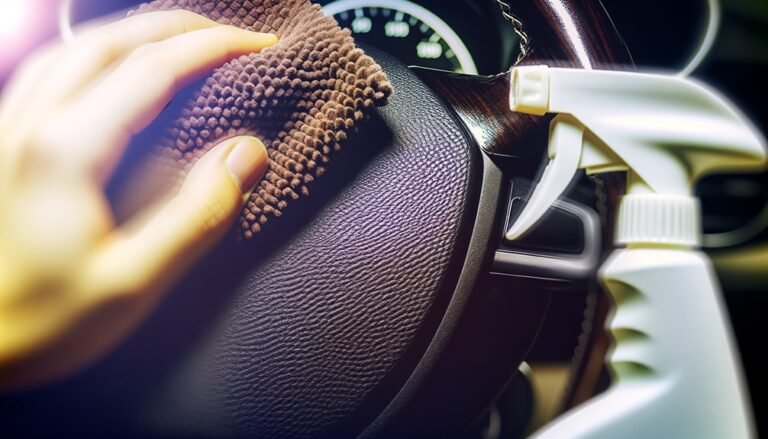
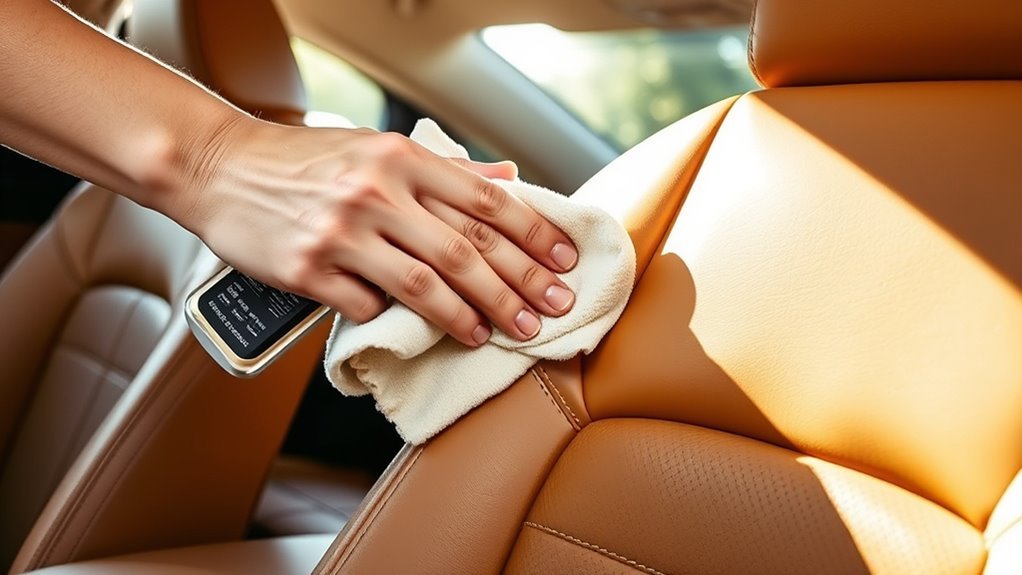
Apply the cleaner gently with a soft microfiber cloth or a soft-bristle brush, working in circular motions on seats that have been vacuumed.
Avoid harsh chemicals like vinegar or alcohol, as they can dry out or stain the leather.
After cleaning, always apply a quality leather conditioner to keep the seats soft and protected.
Keep going to discover the best tools, products, and care tips for lasting results.
Choosing the Right Leather Cleaner

When cleaning your leather car seats, choosing the right cleaner is essential to protect their finish. You want a pH-balanced leather cleaner made specifically for automotive or furniture leather to prevent damage.
Pick a product that lifts dirt, oils, and stains effectively without stripping or discoloring your seats. It’s smart to select a cleaner suitable for all leather types, whether natural, sealed, or synthetic, ensuring versatility.
Also, consider if you prefer a fragrance-free or pleasantly scented formula for a better cleaning experience. Foaming or spray-on leather cleaners work well, letting you apply evenly and remove grime easily.
Understanding Leather Conditioners

Although leather seats can look stunning, they require regular conditioning to stay soft and durable. Using a quality leather conditioner is key to effective Leather Care. These products restore moisture and flexibility, preventing your seats from drying out or cracking.
They often contain oils, waxes, and emollients that deeply penetrate the leather fibers. Many also come with UV inhibitors to shield your seats from sun damage and fading. For best results, apply conditioner about twice a year to maintain appearance and extend lifespan.
Keep these points in mind when selecting and using a leather conditioner:
- Restores moisture and suppleness
- Penetrates deep into leather fibers
- Prevents cracking and fading
- Includes UV protection
- Requires regular, biannual application
Essential Tools for Cleaning Leather Seats

To clean your leather seats effectively, you’ll need the right tools, starting with a suitable leather cleaner that won’t damage the material. Using soft brushes and microfiber cloths helps remove dirt gently, while applicators ensure conditioners spread evenly.
Choosing quality tools makes a big difference in maintaining your seats’ appearance and longevity.
Leather Cleaner Selection
How do you choose the right cleaner to keep your leather car seats looking their best? Selecting a proper leather cleaner is vital to protect and maintain your seats. Look for leather cleaners specifically made for automotive use, as they’re pH-balanced to prevent damage.
Avoid harsh chemicals that can degrade the leather over time. Always test the cleaner on a hidden spot first to ensure it won’t discolor or harm the material. Foam or spray-on leather cleaners are ideal since their foaming action lifts dirt and grime effectively without scrubbing too hard.
Keep these tips in mind when picking your leather cleaner:
- Use pH-balanced leather cleaners designed for car seats
- Select foam or spray-on products for gentle cleaning
- Avoid harsh chemicals and solvents
- Perform a patch test before full application
- Choose cleaners formulated for automotive or furniture leather
Brushes and Cloths
When cleaning your leather car seats, using the right brushes and cloths makes a big difference. Microfiber towels are perfect because they’re soft, non-abrasive, and highly absorbent, allowing you to clean thoroughly without scratching.
You can fold them multiple times to tackle different areas or remove residue without leaving streaks. Pair these with a soft-bristle brush to get into seams and crevices where dirt hides.
A soft-bristle brush gently loosens grime without damaging your leather’s delicate finish, unlike harsher brushes. Using these tools not only improves cleaning efficiency but also helps maintain your seats’ appearance and longevity.
Conditioning Applicators
Alongside brushes and cloths, choosing the right applicators plays a big role in conditioning your leather car seats effectively. For ideal leather cleaning, using a soft cloth is essential to avoid scratches and ensure even application. Here are five applicators to consider:
- Microfiber towels: Distribute conditioner evenly and prevent streaks.
- Foam or sponge applicators: Spread conditioner smoothly over large surfaces.
- Soft-bristle brushes (e.g., horsehair): Gently work conditioner into textured or dirty areas.
- Applicator pads with beveled edges: Reach tight seams and crevices precisely.
- Dedicated clean applicators: Avoid cross-contamination and keep products effective.
Selecting the correct applicator ensures your leather seats receive the care they deserve without damage or uneven conditioning.
Preparing Your Vehicle’s Leather Seats
Before you start cleaning, make sure you’ve gathered all the necessary supplies like a pH-balanced leather cleaner, microfiber towels, and a soft-bristle brush. Proper preparation is key to effective interior care of your leather seats.
Begin by vacuuming the seats thoroughly using a soft-bristle brush attachment to remove loose dirt and debris from seams and crevices. Next, perform a patch test with your chosen cleaner on a hidden spot to ensure it won’t damage or discolor the leather.
Avoid oversaturating the seats during cleaning, as excess moisture can cause harm. Also, park your vehicle in a well-ventilated area to help the leather dry properly and to minimize exposure to chemical fumes. Taking these steps sets the stage for safe, efficient leather seat care.
Step-by-Step Cleaning Process
First, gather all your cleaning supplies, including a vacuum, leather cleaner, and microfiber cloths.
Next, apply the cleaner carefully to lift dirt without harming the leather.
Finally, condition the seats to keep them soft and protected after they dry.
Preparing Cleaning Supplies
When you’re ready to clean your leather car seats, start by gathering all necessary supplies: a pH-balanced leather cleaner, a soft-bristle horsehair brush, microfiber towels, and leather conditioner.
Before applying any product, perform a patch test by applying a small amount of leather cleaner to an inconspicuous area to guarantee it won’t damage or discolor the leather. Also, vacuum the seats using a soft brush attachment to remove loose dirt and debris.
Make sure the seats are cool and dry to avoid any damage during cleaning. Protect surrounding areas with towels or plastic covers to prevent overspray or accidental spills.
Here’s what you’ll need to prepare:
- pH-balanced leather cleaner
- Soft-bristle horsehair brush
- Microfiber towels
- Leather conditioner
- Vacuum with soft brush attachment
Applying Leather Cleaner
Once your supplies are ready and the seats are prepped, you can start applying the leather cleaner. Spray the cleaner onto a microfiber cloth or a soft-bristle brush. Gently scrub the leather in circular motions, focusing on stains or dirty spots.
Let the cleaner sit for about 10 seconds to break down grime. Then, use a clean microfiber cloth to wipe away dirt and excess cleaner. Check the surface and, if needed, repeat the process for a thorough clean. Avoid oversaturating the leather.
| Step | Action |
|---|---|
| 1. Apply Cleaner | Spray onto microfiber cloth or brush |
| 2. Scrub Surface | Circular motions, focus on stains |
| 3. Wipe & Inspect | Use clean microfiber cloth, repeat if needed |
Conditioning and Protection
Although cleaning removes dirt and grime, conditioning your leather seats is essential to restore moisture and prevent cracking. To clean and condition effectively, you need to nourish the leather, preventing it from drying out and maintaining its softness.
Follow these steps for conditioning and protection:
- Apply a high-quality leather conditioner at least twice a year.
- Use a microfiber applicator to spread the conditioner in a crosshatch pattern for even coverage.
- Massage the conditioner into the leather to boost absorption.
- Let the conditioner cure for several hours before sitting to ensure proper bonding.
- Regularly condition to extend leather’s lifespan and shield against UV damage and wear.
This routine keeps your seats supple, durable, and looking great longer.
Applying Leather Conditioner for Protection
To keep your leather car seats soft and protected, you should apply a leather conditioner after thoroughly cleaning and drying them. Use a microfiber applicator or soft cloth to spread the conditioner evenly, working in a circular, crosshatch pattern to cover every inch of the leather.
This guarantees the leather conditioner penetrates well, locking in moisture and preventing cracking. Once applied, let the conditioner bond for 4 to 8 hours before using your car.
Regularly conditioning your seats at least twice a year helps maintain their suppleness and creates a protective barrier against UV rays, moisture, and daily wear. This barrier is essential for preserving the leather’s look and durability over time.

Recommended Products for Leather Seat Care
When you want to keep your leather car seats looking their best, choosing the right products makes all the difference. Using a quality leather cleaner that’s pH-balanced ensures you remove dirt without harming your seats.
Choosing a pH-balanced leather cleaner protects your car seats while effectively removing dirt.
Dedicated leather care items not only clean but also condition and protect the material, maintaining softness and shine. Here are some recommended products to consider:
- Weiman Leather Cleaner for effective dirt removal
- Leather CPR Cleaner and Conditioner for combined care
- Armor All Leather Care Wipes for quick maintenance
- Mothers Leather Cleaner for deep cleaning
- Microfiber cloths and soft-bristle brushes to apply products gently
Sticking to these trusted options helps preserve your leather’s durability and appearance over time.
Tips for Maintaining Leather Seat Quality
Keeping your leather car seats in top condition requires regular care and the right techniques. Start by vacuuming them often to remove dirt and debris that can cause scratches.
Use a pH-balanced leather cleaner made specifically for automotive seats to clean grime gently without harming the leather. After cleaning, apply a high-quality leather conditioner at least twice a year to keep the material soft and prevent cracking.
Avoid household products like vinegar or lemon juice. They can dry out or discolor your seats. Also, protect your seats from direct sunlight and UV rays by using window shades or parking in shaded areas, as prolonged exposure can fade and damage the leather.
With these tips, you’ll maintain your leather’s appearance and durability longer.
Common Mistakes to Avoid When Cleaning Leather Seats
Although cleaning your leather seats might seem straightforward, several common mistakes can unintentionally damage the material. When cleaning leather, it’s easy to overlook how certain actions harm its delicate surface. To protect your seats, avoid these pitfalls:
- Using household cleaners like vinegar or lemon juice that strip natural oils
- Scrubbing too hard or applying excessive pressure, which can scratch the leather
- Applying harsh chemicals or alcohol-based cleaners that remove protective coatings
- Skipping a patch test, risking discoloration or adverse reactions
- Over-wetting the leather, causing water stains or seepage into seams

Frequently Asked Questions
What Is the Best Thing to Clean Leather Car Seats With?
You should use a pH-balanced leather cleaner with a microfiber cloth or soft brush to clean your leather car seats gently. Avoid harsh household cleaners, then apply a leather conditioner to keep them soft and durable.
Can I Use Dawn to Clean My Leather Seats?
You shouldn’t use Dawn on leather seats since it can dry and damage them. If you accidentally do, immediately apply a leather conditioner to restore moisture and protect your seats from cracking or deterioration.
What Household Products Can You Use to Clean Leather?
You shouldn’t use most household products on leather since they can damage it. Mild soap diluted in water can work if you test first, but it’s safer to stick with dedicated leather cleaners for cleaning and conditioning.
What Should You Not Put on a Leather Car Seat?
Don’t pour stormy chemicals like bleach or vinegar onto your leather car seats; they’re like acid rain, eroding beauty and strength. Avoid oils, alcohol, and harsh scrubs. They’ll crack or stain, stealing your seats’ smooth elegance.
Conclusion
Taking care of your leather car seats is easier than you think. For example, Sarah cleaned and conditioned her seats monthly, preventing cracks and keeping them soft for years.
By choosing the right cleaner, using the proper tools, and conditioning regularly, you’ll preserve your car’s interior beautifully. Just stay consistent and avoid harsh chemicals.
With these simple steps, your leather seats will look and feel like new, making every drive more enjoyable. Remember, to clean leather car seats effectively, always use a gentle leather cleaner and conditioner designed specifically for automotive leather.