How to Make Fruit Leather in the Oven: Easy Homemade Recipe
You can make fruit leather in your oven by pureeing about 3 cups of fresh, ripe fruit, adding a little lemon juice and natural sweetener if you like. This simple method for homemade fruit leather lets you control the flavors and ingredients. It’s a fun and healthy snack option.
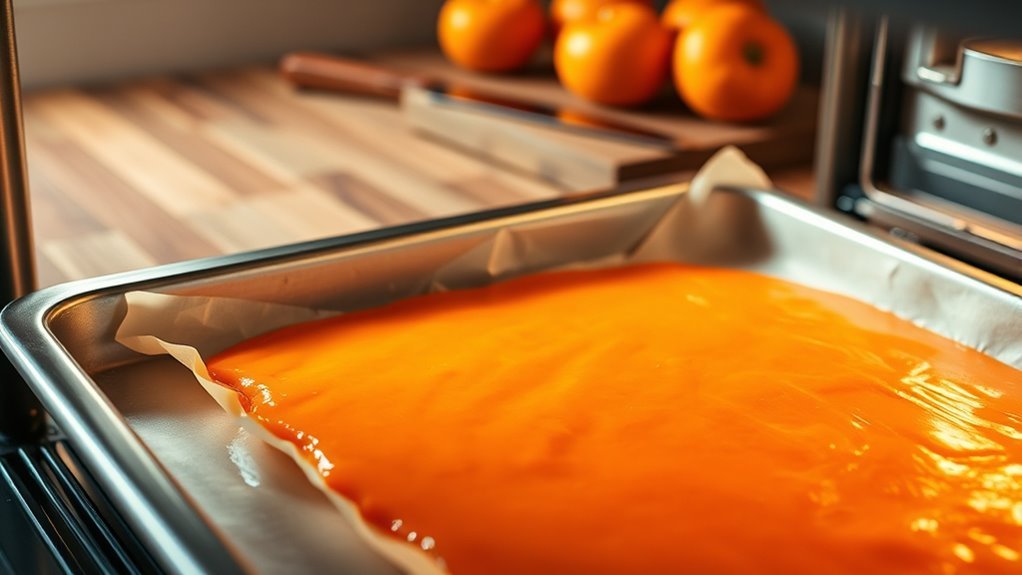
Spread the puree evenly about 1/8 inch thick on a parchment-lined baking sheet.
Dry it at 150–170°F with the oven door slightly open to let moisture escape. This slow drying process helps achieve the perfect chewy texture.
Once the fruit leather is tacky but not sticky, peel it off and cut into strips. Then roll the strips up for easy storage and snacking.
Keep going to discover tips for perfect texture and fun flavor twists.
Why Choose Homemade Fruit Leather

Although store-bought fruit leather is convenient, making your own lets you avoid artificial preservatives and additives while customizing flavors and sweetness to your liking. When you choose homemade fruit leather, you gain full control over the ingredients, ensuring they’re natural and healthy.
You can tailor the taste and texture by adjusting the fruit combinations and sweetness level, creating a snack that perfectly suits your preferences. Plus, making fruit leather at home helps reduce food waste by using ripe or excess fruits before they spoil.
The process is simple and requires minimal equipment, so you can easily whip up a nutritious treat anytime. Homemade fruit leather is a smart, tasty way to enjoy a healthy snack with clean ingredients you trust.
Essential Ingredients for Fruit Leather

To make delicious fruit leather, start with fresh, ripe fruit like strawberries, mangoes, or berries. You’ll need about 3 cups chopped or 16 ounces whole.
You can add a touch of natural sweetener such as honey or maple syrup if your fruit isn’t sweet enough. Don’t forget a splash of lemon juice to brighten the flavor and keep the color vibrant.
Fresh Fruit Selection
When you choose fresh fruit for your fruit leather, pick ripe, flavorful varieties free of bruises or mold to guarantee the best taste and texture. Wash the fresh fruit thoroughly and remove stems or pits before you blend.
Using seasonal and local fruits not only supports your community but also boosts flavor and nutrients in your purée. Aim for about 3 cups of chopped fruit to create the perfect amount of base for your leather.
| Fruit | Ideal Ripeness | Preparation |
|---|---|---|
| Strawberries | Fully red | Remove stems |
| Peaches | Soft to touch | Pit and chop |
| Mangoes | Slightly soft | Peel and cube |
Choosing ripe fruit means natural sweetness, reducing the need for added sugar in your fruit leather.
Sweetener Options
Choosing ripe, flavorful fruit gives your fruit leather a natural sweetness that might not need extra sugar. If you want to enhance flavor without compromising fruit purity, try natural sweeteners like honey, agave syrup, or maple syrup. Just a tablespoon can make a difference.
You can also explore sugar alternatives such as vitamin-enhanced powders or fruit juice concentrates, which add both flavor enhancement and preservation benefits. Adjust the amount based on your taste preference, whether you want a lightly sweetened or more robustly flavored fruit leather.
Some recipes even skip sweeteners entirely to highlight the fruit’s natural sugars, keeping your fruit leather a truly healthy snack. By balancing these sweetener options, you control sweetness while maintaining the freshness and nutrition of your homemade fruit leather.
Selecting and Preparing Your Fruit

Although selecting the right fruit might seem simple, picking ripe, firm options like strawberries, peaches, or berries guarantees your fruit leather will have the best flavor and natural sweetness. Start your fruit selection by choosing fresh, ripe fruits that offer natural sweetness without extra additives.
To prepare fruit, rinse thoroughly under running water and remove any stems, seeds, or pits. Chop larger fruits into smaller pieces to ensure even blending and create a smooth puree. If you’re using frozen berries, thaw them fully and drain any excess liquid to avoid a runny mixture.
Taking these steps helps you achieve a consistent puree that dries evenly, resulting in delicious, flavorful fruit leather every time. Proper fruit preparation is vital for perfect texture and taste.
Optional Sweeteners and Flavor Enhancements
Once your fruit is prepared into a smooth puree, you can decide whether to enhance its flavor with sweeteners or spices. Adding a tablespoon of honey or maple syrup can boost sweetness without masking natural fruit flavors.
For tart fruits, a splash of lemon juice brightens taste and preserves color. Vanilla extract or cinnamon adds warm flavor enhancements, giving your fruit leather a unique twist. Remember, sweeteners are optional, especially if your fruit is naturally sweet.
| Sweetener/Enhancement | Amount | Flavor Profile |
|---|---|---|
| Honey | 1 tbsp | Mild, floral sweetness |
| Maple Syrup | 1 tbsp | Rich, caramel notes |
| Lemon Juice | 1 tbsp | Tart, brightens flavor |
| Vanilla Extract | ½ tsp | Warm, aromatic |
| Cinnamon | Pinch | Spicy, earthy |
Equipment Needed for Oven Drying
To dry fruit leather evenly in your oven, you’ll need a few key pieces of equipment. Start with a rimmed baking sheet to spread your fruit purée evenly without spilling. Line it with parchment paper or a silicone baking mat to prevent sticking and make removal easier.
Your oven must maintain a consistent low heat, ideally between 150°F and 170°F, so monitor the oven temperature closely using a thermometer or the oven’s settings. Using oven racks helps improve air circulation, promoting even drying across the fruit leather.
Together, these tools guarantee your fruit leather dries properly without burning or sticking, giving you a smooth, flexible final product every time.
Step-by-Step Oven Drying Process
When you preheat your oven to its lowest setting, usually around 170°F, prepare a baking sheet by lining it with parchment paper or a silicone mat. Spread your fruit purée evenly on the sheet, about 1/8 inch thick, for consistent oven drying.
Keep the oven door slightly open to let moisture escape and ensure even drying at this low temperature. Here’s a quick guide to the process:
- Pour fruit purée onto the parchment paper-lined baking sheet
- Spread evenly with a spatula to about 1/8 inch thickness
- Bake for 6 to 8 hours, checking for dryness and a non-sticky feel
- Let cool before peeling off the fruit leather and cutting into pieces
This method helps you create perfect fruit leather using your oven and parchment paper.
Achieving the Perfect Texture and Thickness
Getting the perfect texture and thickness starts with how you spread your fruit purée. Aim for a uniform thickness between 1/8 and 1/4 inch to guarantee even drying and consistent texture.
Perfect fruit leather depends on spreading purée evenly between 1/8 and 1/4 inch for consistent drying.
Use a silicone baking mat or parchment paper to prevent sticking and make removal easier. When spreading, avoid thicker edges or uneven layers, as these cause inconsistent drying and texture.
Check the purée’s consistency by gently pressing the surface after drying; it should feel firm yet pliable. Your goal is a leathery, slightly elastic fruit leather that isn’t sticky. Paying close attention to the spread and thickness will help you achieve a smooth, uniform fruit leather with the ideal texture every time you make it in your oven.
Cutting, Rolling, and Storing Your Fruit Leather
Once your fruit leather is completely dry and cool, gently peel it from the lining and use a sharp cutter or scissors to slice it into even strips or squares.
Roll each piece in parchment or plastic wrap to keep them neat and easy to handle. Store your fruit leather in an airtight container at room temperature or refrigerate for longer freshness.
Cutting Techniques
Although cutting fruit leather might seem straightforward, using the right tools like a sharp knife, pizza cutter, or scissors guarantees you get uniform strips or squares about 1 to 2 inches wide. Precise cuts make rolling easier and ensure consistent portions.
For efficient slicing:
- Use a sharp knife or pizza cutter on a flat surface for straight, clean edges.
- Scissors work well for flexible, quick trimming.
- Cut fruit leather while it’s fully dried to avoid tearing.
- Aim for uniform strips to simplify rolling and snacking.
Once sliced, roll each strip in parchment paper for easy handling. This method keeps your fruit leather neat and portable, maintaining its chewy texture and vibrant flavor whenever you want a healthy treat.
Storage Methods
When you finish drying your fruit leather, gently peel it from the silicone mat or parchment paper to prevent tearing. Next, cut it into uniform strips or squares using a sharp knife, pizza cutter, or scissors for easy portioning.
To keep your fruit leather neat and portable, roll individual strips in parchment paper or plastic wrap. For storage methods, place your cut or rolled fruit leather in an airtight container to maintain freshness.
Store the container at room temperature, away from direct sunlight and humidity, to preserve the leather’s pliability and flavor. Your fruit leather will stay good for up to a month this way.
For longer storage, freezing in an airtight container works well, but always ensure the fruit leather is properly sealed to avoid drying out.
Creative Flavor Combinations and Variations
If you’re looking to elevate your fruit leather, experimenting with creative flavor combinations can make all the difference. Start by blending different fruit combinations to create vibrant flavors that suit your taste.
You can enhance your fruit pureé with natural sweeteners and herbs to add unexpected twists. Consider these ideas to inspire your next batch:
Mix strawberries with mango or blueberries for naturally sweet and lively flavor profiles. Add lemon or lime juice to brighten the taste and preserve color.
Incorporate fresh herbs like mint or basil into the pureé for invigorating notes. Combine peaches and raspberries to balance tartness and sweetness.
Using various sweeteners such as honey, agave, or maple syrup lets you customize the flavor variations to your preference.

Tips for Troubleshooting Common Issues
To prevent your fruit leather from overdrying or burning, keep a close eye on it and check every 10-15 minutes once it’s mostly dried. Make sure you spread the puree evenly to avoid sticky spots or overly dry patches.
Using a silicone mat or parchment paper will help you peel it off easily and keep the texture just right.
Preventing Overdrying and Burning
Although drying fruit leather is straightforward, preventing overdrying and burning requires careful attention. You’ll want to maintain a low oven temperature and closely monitor the drying process to get perfect results. Here are some key tips:
- Keep the oven temperature around 170°F to avoid browning or burnt spots.
- Use parchment paper or a silicone baking mat to ensure even heat distribution and prevent sticking or scorching.
- Check the fruit leather every 10-15 minutes after the first two hours to catch early signs of over-drying or burning.
- Slightly open the oven door during drying to release moisture and reduce the risk of overheating.
Remove the fruit leather promptly once it feels dry and leathery to avoid residual heat causing over-drying or browning.
Avoiding Sticky or Uneven Texture
Keeping a close eye on drying times and temperature helps prevent overcooking, but ensuring your fruit leather comes out with the right texture requires additional care. Spread the fruit puree evenly to about 1/8 inch thickness to promote even drying and avoid thick spots that stay sticky. Use a silicone baking mat or parchment paper to prevent sticking and encourage uniform heat transfer.
Maintain a low oven temperature around 170°F and crack the door slightly to allow moisture escape, which reduces the risk of uneven texture. Smooth out any air bubbles before drying, as they can cause inconsistent drying and sticky patches. Check your fruit leather every 15-20 minutes after two hours to monitor progress and adjust if needed, ensuring a perfectly textured result.
Frequently Asked Questions
What Temperature Do You Bake Fruit Leather?
You bake fruit leather at 150°F to 170°F, using your oven’s lowest setting. Keep the door slightly open to let moisture escape, and consider using a fan for even drying without burning or sogginess.
Why Is My Fruit Leather Not Drying in the Oven?
Your fruit leather isn’t drying because the oven temperature might be too high or the puree layer too thick.
Also, closing the oven door fully traps humidity, so keep it slightly open and spread puree thinly for proper drying.
Is 170 Too Hot for Fruit Leather?
Yes, 170°F is too hot for fruit leather since it risks burning and caramelizing sugars.
You should aim for 140-150°F to gently dehydrate without cooking, preserving flavor and texture perfectly every time.
Can You Bake Fruit Leather on Parchment Paper?
Yes, you can bake fruit leather on parchment paper. It prevents sticking, makes removal easier, and withstands low drying temperatures.
Just spread your fruit puree evenly, about 1/8 inch thick, for the best results.
Conclusion
Now that you’ve mastered making fruit leather in your oven, you’re ready to turn nature’s sweetness into a tasty treat that sticks like glue. With simple ingredients and a bit of patience, you can create snacks bursting with flavor and nutrition.
Remember, practice makes perfect, so don’t be afraid to experiment with different fruits and spices. Your homemade fruit leather will soon become the apple of your eye, a healthy delight everyone will love.
By following these easy steps for how to make fruit leather in oven, you can enjoy delicious, nutritious snacks anytime. Homemade fruit leather is not only fun to make but also a great way to preserve fresh fruit flavors.