Does Leather Stretch? What You Need to Know About Leather Fit and Flexibility
Yes, leather does stretch, especially in softer, thinner areas like the belly of the hide where fibers are looser. Leather stretch is a natural property that occurs over time with regular use. When you wear leather regularly, your body heat and movement help it mold and relax naturally.
You can also gently speed this process at home using warmth, moisture, or specialized stretchers. However, you’ll want to handle stretching carefully to avoid damage.
Keep exploring to discover how to stretch and care for leather safely and effectively.
Understanding Leather Stretching Properties

Although leather is known for its durability, its stretchability varies considerably depending on the hide’s region. When you work with leather, you’ll notice the belly area offers the most natural flexibility due to its looser leather fibers and higher fat deposits.
In contrast, the backbone section is much stiffer and resists stretching. Keep in mind that leather doesn’t stretch uniformly; different parts respond differently to stretching. The direction you cut the leather—lengthwise or crosswise—also impacts how much it will stretch in use.
If you’re using stretching tools, understanding these variations helps you avoid damaging the leather and ensures a better fit. By recognizing how leather fibers and natural flexibility differ across the hide, you can make smarter design and stretching decisions.
How Leather Naturally Adapts Over Time

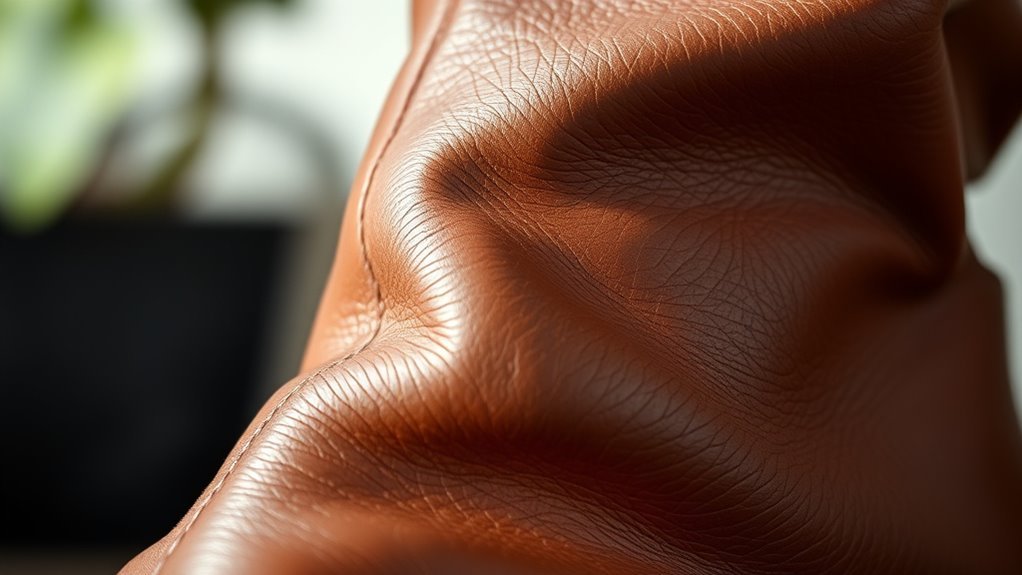
When you wear leather regularly, it gradually adapts by stretching as its fibers become more flexible. This natural process happens because the leather’s fibers relax and mold to your body through gentle movement and consistent wear.
Areas like the belly of the hide usually stretch more than sturdier parts such as the back or tail. Leather made from full-grain or top-grain sources particularly responds well, shaping itself naturally without extra effort.
As you wear it, body heat and bending help the leather soften and conform, enhancing comfort. Over time, this natural stretch allows your leather items to fit better and feel uniquely yours, demonstrating leather’s remarkable ability to adapt and improve with everyday use.
Factors Influencing Leather Stretch

Because leather comes from various parts of an animal’s hide, its ability to stretch depends heavily on where it’s taken from. The belly area, rich in fat deposits, offers greater leather stretchability compared to tougher regions like the backbone.
You’ll also notice that the thickness of leather plays a vital role; thicker leather stretches less, while thinner cuts allow more give. Since leather is a natural material, factors like moisture and heat substantially impact how it stretches over time.
Exposure to warmth and humidity softens the fibers, making it more pliable and easier to stretch. Additionally, how often you use and flex the leather affects its shape retention.
Understanding these factors helps you manage expectancies about leather’s stretch and maintain its durability effectively.
Differences in Stretch Among Leather Types
Since different types of leather undergo various processing methods and come from distinct parts of the hide, you’ll notice they stretch differently. Understanding these differences helps you manage your leather items better. Here’s what you should know about stretchability among leather types:
- Full-grain leather stretches the least because its dense fibers and minimal processing preserve strength and shape.
- Softer leathers like suede and nubuck stretch more easily due to their less processed, porous surfaces.
- Leather thickness and finish also matter. Thinner leathers, such as lambskin, stretch more, while coated or patent leather resist stretching thanks to their glossy, protective layers.
Common Methods to Stretch Leather at Home
When you want to stretch leather at home, two simple methods can help: using heat and wearing the item, or applying an alcohol-water spray. Heat softens the leather, making it easier to mold as you wear or gently pull it.
Meanwhile, the alcohol-water mixture loosens fibers to increase flexibility for a better fit.
Heat and Wear
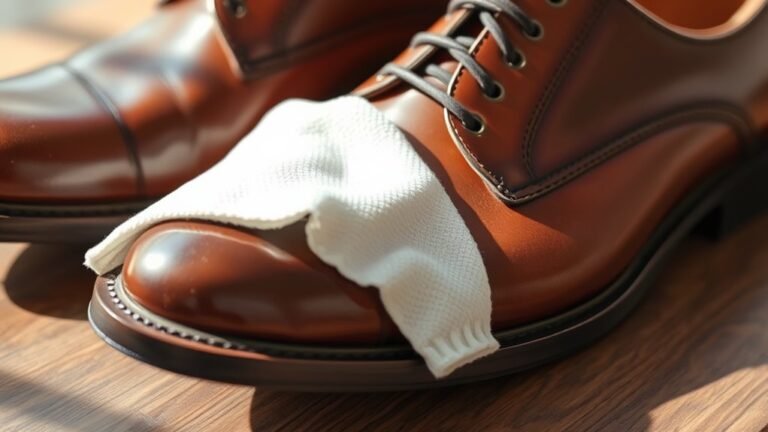
If you want to stretch leather effectively at home, applying gentle heat can make the material more flexible and easier to shape. Using a hairdryer on medium heat softens the leather, allowing you to stretch it without damage.
Here’s how to do it safely:
- Move the hairdryer in circular motions over the leather to warm it evenly and avoid burning or cracking.
- Once warm, wear the leather item or manually stretch it while it’s still pliable to reshape and expand it.
- Repeat the process as needed, pairing heat with wear for lasting stretching results.

Alcohol-Water Spray
A simple alcohol-water spray can effectively soften your leather, making it easier to stretch at home. Mix rubbing alcohol with water in a 1:3 ratio to create this solution.
Lightly mist your leather shoes with the alcohol-water spray to relax their fibers, which aids the leather stretch process. Be sure to apply the spray evenly and keep the leather damp to avoid damage and ensure uniform stretching.
After spraying, wear the shoes or manually stretch them while the leather is still wet. This helps increase their size and improve comfort.
Finally, let the leather dry naturally under gentle tension to lock in the expanded shape. This method is one of the effective stretching methods you can try without professional tools.
Using Heat to Enhance Leather Flexibility
You can use heat to soften leather fibers, making it easier to stretch and shape the material. Just keep a hairdryer on a medium setting about six inches away, moving it evenly to avoid damage.
While the leather is warm, gently pull or stretch it to get the best fit without risking cracks or discoloration.
Heat Softens Leather Fibers
When you apply heat with a hairdryer to leather, the fibers become more flexible, making the material easier to stretch. Heat softens leather by warming it evenly, which loosens the internal structure and increases pliability.
As the leather warms, moisture moves within the fibers, allowing them to shift and stretch more readily. Here’s what you should keep in mind:
- Use gentle, circular motions to apply heat evenly, avoiding hot spots that could damage the leather.
- Aim to warm the leather to about 100°F (38°C) to soften fibers without risking burns or cracks.
- Control the heat level carefully since overheating can cause irreversible harm to the leather’s integrity.
Safe Heating Techniques
Applying heat safely plays a key role in making leather more flexible for stretching. You should use a hairdryer on medium heat, holding it about six inches away from the leather to soften it gently.
Keep the heat source moving in circular motions to warm the leather evenly and avoid hot spots that might cause damage. Focus on warming the leather until it feels pliable, not hot, so you don’t risk burning or cracking it.
Avoid direct contact with flames or excessive temperature. Monitoring the temperature closely and limiting heat exposure helps maintain the leather’s integrity and enhances its pliability for easier stretching.
Using heat correctly ensures you get effective results without compromising the leather’s quality.
Stretching While Warm
Although leather can be tough to stretch cold, warming it with a hairdryer on medium heat makes it much more pliable and responsive. When stretching leather while warm, you’ll find the process more effective and gentle on the material.
Here’s how to do it right:
- Hold the hairdryer about 6 inches from the leather and move it constantly to evenly warm the surface without overheating.
- Gradually heat the leather to make it soft enough for stretching but avoid burning or drying it out.
- While the leather is warm, gently pull or move it to encourage an even stretch.
Once cooled, the leather will retain its new shape, making warm stretching using a hairdryer a smart choice for fitting adjustments.
The Role of Moisture in Leather Stretching
Because moisture softens leather fibers, you can stretch your leather items more effectively by carefully controlling how much water or humidity they absorb. When leather absorbs moisture, its fibers swell and become more pliable, making stretching easier.
You should apply water evenly to avoid overstretching or damaging the leather. Keep in mind that too much moisture can weaken the material if it isn’t dried properly afterward. After moistening, dry your leather slowly in a controlled environment to maintain its flexibility and prevent cracking. By managing moisture levels thoughtfully, you ensure that your leather stretches where needed without losing its shape or integrity. This balance of water and drying is key to successful leather stretching.
Tools and Products for Effective Leather Stretching
You’ll find that using the right tools and products makes stretching leather much easier and more effective. Leather stretching sprays and conditioners soften the material, while shoe stretchers and specialized tools help you target tight spots precisely.
Combining these with gentle heat can really boost your results without damaging the leather.
Essential Stretching Tools
When you want to stretch leather effectively, using the right tools makes all the difference. Leather stretchers, including shoe stretchers, apply consistent pressure to evenly expand and shape your items.
To make stretching safer and easier, stretching sprays soften the leather fibers, increasing flexibility. Heat application also plays a vital role, as warmth helps loosen the material for better stretch without damage.
Here are three essential tools to think about:
- Leather stretchers and shoe stretchers for uniform expansion and shaping.
- Stretching sprays to soften leather fibers and prevent cracking.
- Heat sources like warm towels or heat guns, used cautiously to enhance pliability.
Combining these tools ensures you stretch leather safely and effectively every time.
Leather Stretching Products
A range of leather stretching products can help you achieve a perfect fit without damaging your items. Leather stretching sprays soften the fibers, making it easier to stretch leather evenly.
Applying a quality leather conditioner before stretching keeps leather supple and prevents cracking. To stretch leather items like shoes or straps, you can use shoe stretchers, shoulder strap stretchers, or hand-held stretch blocks that target tight spots precisely.
These tools work best when combined with sprays and conditioners to increase pliability. Professionals often use heat, moisture, and mechanical devices for controlled expansion, but you can replicate safe results at home by following instructions carefully.
Using these products properly lets you stretch leather effectively, enhancing comfort and fit while preserving the integrity of your leather items.
Risks and Precautions When Stretching Leather
Although stretching leather can improve fit and comfort, pushing it beyond its natural limits or seams risks tears, cracks, or permanent deformation. To avoid damage, here are three key precautions you should follow:
- Test first: Always try stretching methods on a hidden or less valuable part to spot any adverse effects before treating the entire piece.
- Avoid excessive heat: Applying too much heat or water can weaken the leather fibers, causing irreversible damage or misshaping.
- Moderate stretching: Don’t overstretch or force seams; aggressive techniques can permanently deform the leather or create weak spots.
If your leather item is valuable or delicate, consider professional help to ensure safe stretching without risking damage.

Tips for Maintaining Leather Fit and Comfort
To keep your leather items comfortable and well-fitted, you should regularly condition them with products like leather balm or conditioner. Conditioning preserves leather’s flexibility, preventing stiffness and helping with maintaining fit over time.
For effective leather stretch, wear your leather shoes during daily activities to allow gradual natural stretching. You can also use stretching methods like applying leather-specific sprays that soften the material, making it easier to adjust the fit.
Applying gentle heat with a hairdryer while stretching increases pliability, but be cautious to avoid damage. Finally, proper storage away from excessive moisture or heat keeps leather elastic and prevents deformation.
Frequently Asked Questions
How Long Does It Take Leather to Stretch?
You’ll notice leather starts stretching within hours if you apply heat or moisture, but it usually takes a day or two for significant stretch.
For full adjustment, expect several days to weeks of consistent wear or treatment.
Are Leather Shoes Supposed to Hurt at First?
Yes, leather shoes can hurt at first because they need time to stretch and mold to your feet. Wearing thick socks or using stretchers helps, but if pain persists, consider a different size for comfort.
Does Wetting Leather Help It Stretch?
Absolutely, wetting leather helps it stretch like magic! When you dampen it just right, the fibers soften and become pliable, letting you shape it easily.
Just don’t soak it. Too much water ruins the leather’s strength!
Is Leather Supposed to Stretch?
Yes, leather is supposed to stretch slightly to mold to your body for a better fit. You shouldn’t force it too much, though, or you risk damaging it. Gentle stretching works best for comfort.
Conclusion
You might worry that stretching leather will ruin its look or feel, but when done carefully, it actually helps your leather items fit better and feel more comfortable.
Leather naturally adapts over time, and by using gentle methods and proper moisture, you can safely stretch it without damage.
So don’t hesitate—embrace the process, and enjoy leather that molds perfectly to you while maintaining its durability and style. Understanding does leather stretch is key to ensuring your leather goods last longer and look great.