How to Get Paint Off Leather Shoes Step by Step
First, identify your paint and leather type to choose the best paint removal method for leather shoes. Gather mild soap, a soft cloth, rubbing alcohol, and leather conditioner before you begin. Test your cleaner on a hidden spot to avoid damage to your shoes.
Gently scrape off excess paint without spreading it further. Apply the cleaner in circular motions to lift the paint from the leather surface. After cleaning, condition the leather to keep it supple and prevent drying out.
Let your shoes dry naturally away from heat and direct sunlight. Follow these steps carefully, and you’ll soon discover even more tips to restore your leather shoes perfectly.
Assess the Type of Paint and Leather

Before you begin removing paint, you need to identify both the type of paint on your leather shoes and the kind of leather they’re made from. Different paints—acrylic, oil-based, or latex—react differently to cleaning methods.
Acrylic paint tends to be water-based and easier to remove, while oil-based paint is tougher and requires stronger solvents.
Next, check the leather type. Smooth leather is more durable and can handle gentle scrubbing, but suede or nubuck is delicate and needs extra care to avoid damage.
You can usually find leather type information on the shoe’s label or product description. Knowing these details helps you choose the safest, most effective removal method without ruining your shoes.
Don’t rush this step; it sets the foundation for successful paint removal.
Gather Necessary Cleaning Supplies

A few key cleaning supplies will make removing paint from your leather shoes much easier and safer. Before you start, gather everything you need to avoid interruptions and ensure the best results. Having the right materials helps protect your leather while effectively lifting paint stains.
Here’s what you should have on hand:
- Mild soap or leather cleaner
- Soft cloths or microfiber towels
- Cotton swabs for precision cleaning
- Rubbing alcohol or nail polish remover (acetone-free)
- Leather conditioner to restore moisture
Make sure all cleaning agents are safe for leather to prevent damage. With these supplies ready, you’ll be set to carefully tackle the paint without harming your shoes’ finish.
Test Cleaning Method on a Hidden Area

Once you have your cleaning supplies ready, start by testing your chosen method on a small, hidden area of your leather shoes. This step is vital to ensure the cleaner or solvent won’t damage or discolor the leather.
Always test cleaning products on a hidden area to prevent damage or discoloration to your leather shoes.
Dab a small amount of the product onto an inconspicuous spot, like the inside edge or underside of the shoe. Wait a few minutes and observe any changes in color, texture, or finish.
If the leather remains intact and looks normal, you can proceed confidently with the cleaning. However, if you notice any adverse effects, stop immediately and try a gentler method or a different product.
Testing first helps protect your shoes from accidental damage during the paint removal process.
Gently Remove Excess Paint
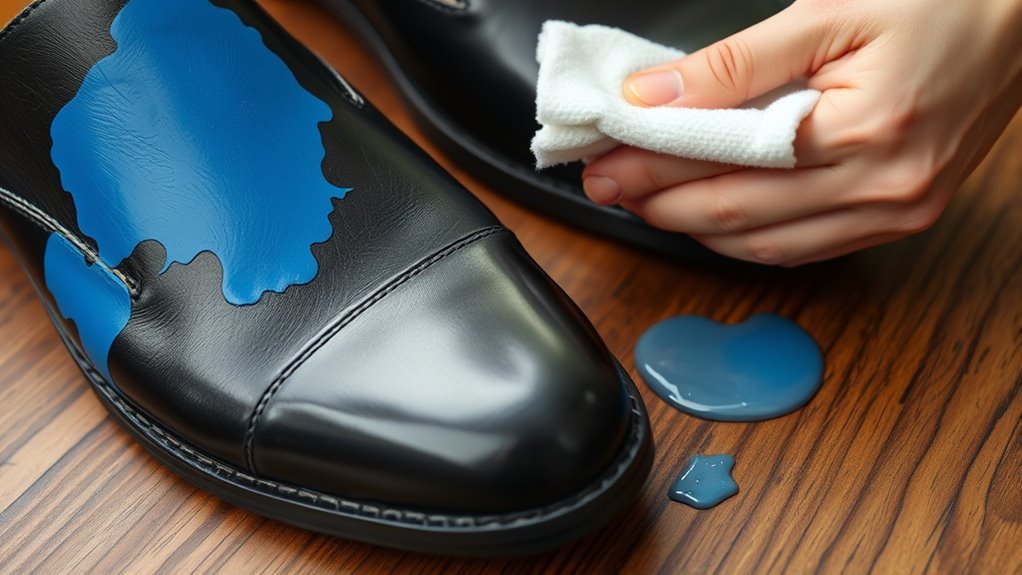
While the paint is still fresh, carefully lift off any excess with a soft cloth or a blunt-edged tool like a plastic scraper. You want to avoid pushing the paint further into the leather. Work gently and patiently, focusing on removing as much as you can without rubbing it deeper.
Use light pressure to prevent damaging the leather’s surface. Here’s how to proceed:
Use a clean, dry cloth to blot loose paint.
Choose a plastic scraper instead of metal to avoid scratches.
Hold the shoe steady on a flat surface.
Work from the outside of the paint patch inward.
Avoid spreading paint to clean areas.
Removing excess paint carefully sets the stage for effective cleaning without harming your shoes.
Apply a Suitable Leather Cleaner
Before you start scrubbing, choose a leather cleaner that’s gentle yet effective enough to break down the paint without damaging your shoes. Test the cleaner on a small, hidden area first to guarantee it doesn’t discolor or harm the leather.
Apply the cleaner using a soft cloth, working in small circular motions to lift the paint. Avoid soaking the leather. Here’s a quick guide to common leather cleaners:
| Cleaner Type | Effectiveness on Paint | Notes |
|---|---|---|
| Saddle Soap | Moderate | Cleans and conditions |
| Leather Cleaner | High | Specifically for stains |
| Mild Dish Soap | Low | Use diluted, gentle option |
| Rubbing Alcohol | Moderate | Use sparingly, test first |
| Baby Wipes | Low | Convenient, mild |
Pick the one that suits your leather type and paint severity for best results.
Condition the Leather After Cleaning
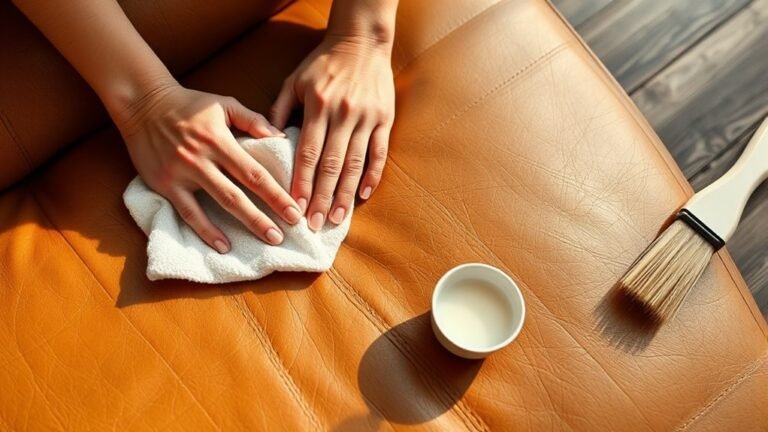
After removing paint from your leather shoes, you’ll want to restore their moisture and suppleness by conditioning them. Conditioning prevents the leather from drying out and cracking, keeping your shoes looking fresh and extending their lifespan.
Conditioning your leather shoes after paint removal keeps them supple, prevents cracking, and extends their life.
Here’s how to properly condition your leather shoes:
Choose a leather conditioner suitable for your shoe type. Apply a small amount of conditioner to a soft cloth. Rub the conditioner into the leather using circular motions.
Let the conditioner absorb for about 15 minutes. Buff the shoes gently with a clean cloth to remove excess product.
Regular conditioning after cleaning helps maintain the leather’s natural oils and flexibility, ensuring your shoes stay comfortable and durable for everyday wear.
Allow Shoes to Dry Naturally
Once you’ve conditioned your leather shoes, you should let them dry naturally to preserve their texture and shape. Avoid placing them near direct heat sources like radiators or in direct sunlight, as this can cause the leather to crack or fade.
Instead, set your shoes in a well-ventilated area at room temperature. You might stuff them with newspaper or shoe trees to help maintain their form while drying.
Be patient. Rushing the drying process by using artificial heat can damage the leather. Allowing your shoes to air dry gently ensures the leather remains supple and extends the life of your footwear.
Frequently Asked Questions
Can Acrylic Paint Permanently Damage Leather Shoes?
Yes, acrylic paint can permanently damage leather shoes if it soaks in or isn’t removed quickly.
You’ll want to act fast to prevent stains and avoid harsh chemicals that might ruin the leather’s finish.
Is It Safe to Use Nail Polish Remover on Leather?
You wouldn’t use a quill on a smartphone, right? Nail polish remover isn’t safe for leather; it can dry and damage the material.
Instead, try gentle leather cleaner or saddle soap to protect your shoes while cleaning.
How Long Does Paint Need to Dry Before Cleaning?
You should wait at least 15-30 minutes for paint to dry before cleaning, depending on the type and thickness.
If it’s still tacky, it’s best to wait longer to avoid smearing or damaging the surface.
Can I Use a Hairdryer to Speed up Drying?
You can use a hairdryer to speed up drying, but don’t blast your shoes with hot air—it’s like rushing a sunrise, risking cracks and damage.
Keep it gentle and moving to protect your leather’s natural glow.
What if the Paint Has Soaked Into the Leather Pores?
If paint’s soaked into the leather pores, you’ll need a leather cleaner or conditioner with mild solvents. Gently work it in, then let it dry.
Avoid harsh chemicals to prevent damage or discoloration.
Conclusion
Now that you know how to tackle paint on your leather shoes, you’re ready to bring them back to life—no need for a medieval knight’s armor polish! Just take it slow, use the right products, and always test first.
Remember to condition your leather so it stays soft and supple. With patience and care, those shoes will look as sharp as the day you bought them.
Keep them dry, and you’ll be stepping out in style again in no time! By following these steps to get paint off leather shoes, you can preserve their quality and keep them looking great.