
Get Oil Stains Out of Your Leather Couch in 3 Simple Steps
Start by gently blotting the oil stain on your leather couch with a clean cloth to absorb excess oil without rubbing it deeper. This initial step is crucial to prevent the stain from setting.
Next, mix a mild soap with warm water, dampen a soft cloth, and wipe the area carefully in circular motions to lift the stain. After cleaning, let the leather dry naturally to avoid damage.
Finally, apply a quality leather conditioner to restore and protect the surface. Keep going, and you’ll discover even more tips to maintain your leather’s flawless look.
Blot and Absorb Excess Oil

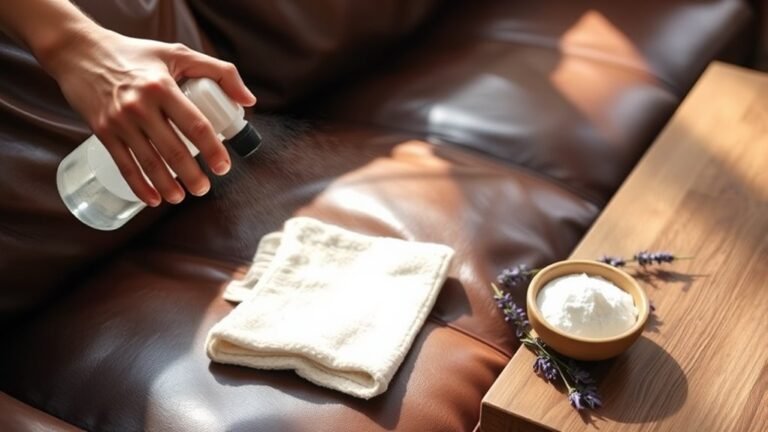
Before you apply any cleaning solutions, blot the oil stain gently with a clean cloth or paper towel to absorb as much excess oil as possible. Don’t rub or press hard, as that can push the oil deeper into the leather. Instead, use a light touch and dab repeatedly, switching to a fresh section of the cloth as it becomes saturated.
If you have some absorbent powder like cornstarch or baking soda on hand, sprinkle a thin layer over the stain after blotting. Let it sit for about 15 minutes to draw out the remaining oil before brushing it off carefully.
Taking these steps promptly helps prevent the stain from setting, making the next cleaning phase more effective and protecting your leather couch from lasting damage.
Apply a Gentle Cleaning Solution

Once you’ve absorbed the excess oil, you’ll want to apply a gentle cleaning solution specifically designed for leather to avoid damaging the material. Start by mixing a small amount of mild soap, like saddle soap or a few drops of dish soap, with warm water.
After absorbing excess oil, gently clean leather with mild soap and warm water to protect its finish.
Dampen a soft cloth with the solution, don’t soak it, and gently wipe the stained area in circular motions. Avoid scrubbing too hard, as that can harm the leather’s finish.
After cleaning, use a clean, damp cloth to wipe away any soap residue. Make sure the leather dries naturally at room temperature; avoid heat sources.
This method helps lift the oil stain without compromising the leather’s integrity, preparing it for the next step in restoring your couch’s appearance.
Condition and Protect the Leather

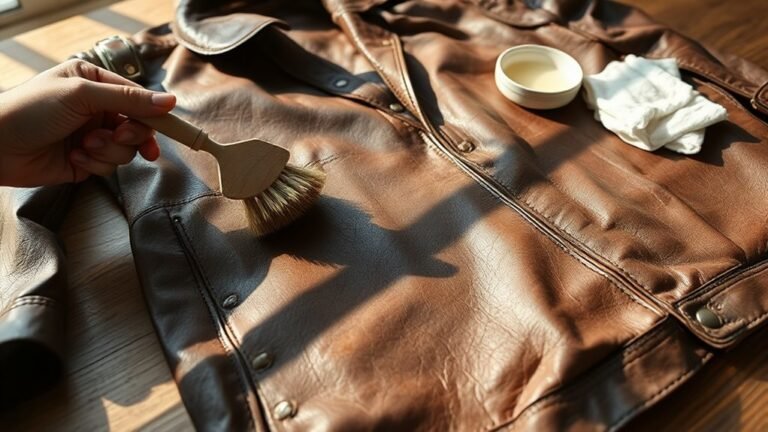
After gently cleaning the oil stain and letting the leather dry, you’ll want to restore moisture to keep the material supple and prevent cracking. Choose a high-quality leather conditioner designed for your couch’s leather type.
Apply a small amount using a soft cloth, working it in with gentle circular motions. Don’t over-saturate the leather; less is more. Let the conditioner absorb fully, usually for a few hours or overnight.
This step not only replenishes lost oils but also creates a protective barrier against future stains.
For ongoing care, condition your leather couch every 3 to 6 months depending on use and climate.
Regular conditioning keeps your couch looking vibrant and extends its life, maintaining both comfort and appearance.
Frequently Asked Questions
Can Olive Oil Cause Stains on Leather Couches?
Yes, olive oil can cause stains on your leather couch. It seeps into the leather, leaving dark, greasy marks that are tough to remove.
You should avoid using it near your leather furniture to prevent damage.
Is It Safe to Use Baby Powder on Leather Stains?
You might think baby powder’s gentle, but it can dry out leather if left too long. Use it sparingly and wipe it off quickly to avoid damage.
Always test on a hidden spot first!
How Long Does It Take for Oil Stains to Set in Leather?
Oil stains can start setting into leather within minutes to a few hours, depending on the type and amount of oil.
You’ll want to act quickly to prevent permanent damage and make cleaning easier.
Can You Use WD-40 to Remove Oil From Leather?
Think WD-40 will save your leather from oil stains? You shouldn’t use it—it can damage the leather finish.
Instead, try gentle cleaners designed for leather to protect your couch while effectively removing oil stains.
What Types of Leather Are Most Prone to Oil Stains?
You’re most prone to oil stains on smooth, untreated leathers like aniline and nubuck because they absorb oils quickly.
Protected or coated leathers resist stains better, so you’ll want to act fast on those delicate surfaces.
Conclusion
Think of your leather couch as a trusted friend who’s caught an unexpected splash of oil. By gently blotting and cleaning, you’re wiping away the worry, like sunlight clearing morning mist from a calm lake.
Then, conditioning your leather is like wrapping it in a soft, protective cloak, readying it to face tomorrow’s adventures.
With these simple steps, you’re not just removing stains—you’re restoring warmth and life to your cherished companion. Following this guide to get oil stains out of your leather couch helps maintain its beauty and durability for years to come.