How to Get Grease Stains Out of Leather Step by Step
To get grease stains out of leather effectively, start by gently blotting the excess grease with a soft cloth—avoid rubbing to prevent spreading the stain. Removing grease stains from leather requires careful treatment to protect the material’s surface.
Next, sprinkle cornstarch or talcum powder over the affected area and let it sit for several hours. This helps absorb the grease deeply embedded in the leather.
Afterward, brush off the powder and apply a leather cleaner to tackle any remaining marks. Wipe the area with a damp cloth to remove residue.
Finally, condition the leather to restore its moisture and flexibility. Allow it to air dry away from direct heat or sunlight to prevent damage.
Following these steps will help guarantee your leather stays in great shape throughout the process.
Identify the Type of Leather

Before you tackle grease stains, you need to identify the type of leather you’re working with. Leather comes in various forms, like full-grain, top-grain, corrected grain, and suede, each reacting differently to cleaning methods.
Identify your leather type first—full-grain, top-grain, suede—each needs a different cleaning approach.
For example, full-grain leather is more durable and easier to clean, while suede is delicate and requires gentle care. Look closely at the texture and finish: smooth and shiny surfaces usually indicate finished leather, whereas rough, fuzzy ones suggest suede or nubuck.
You can also check the label or manufacturer’s instructions if available. Knowing your leather type helps you choose the right stain removal approach and prevents damage.
Taking this step ensures you’re prepared to clean effectively without ruining your leather item.
Gather Necessary Cleaning Supplies

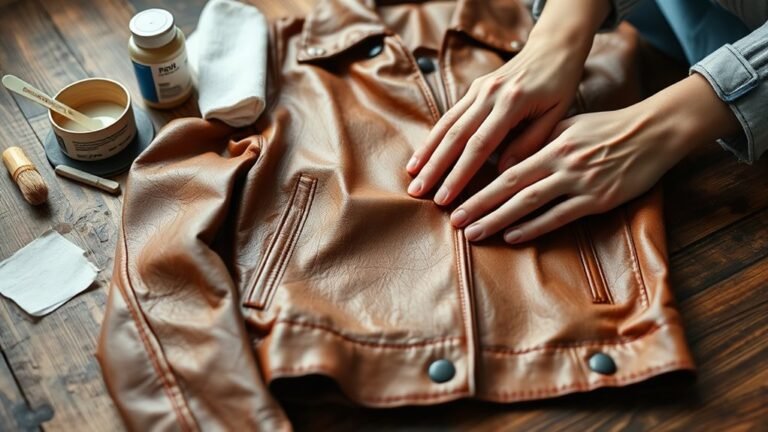
A few key cleaning supplies will make removing grease stains from leather much easier and safer. Before you start, gather everything you need so you won’t have to stop midway. Having the right tools ensures you treat the leather gently and effectively.
| Cleaning Supply | Purpose |
|---|---|
| Soft cloths | For blotting and gentle wiping |
| Mild soap | To clean without damaging leather |
| Cornstarch or talcum powder | Absorbs grease stains |
| Leather conditioner | Restores moisture and texture |
| Small brush | Helps remove powder and dirt |
With these supplies ready, you’ll be set to tackle the grease stain without harming your leather item.
Blot Excess Grease Immediately

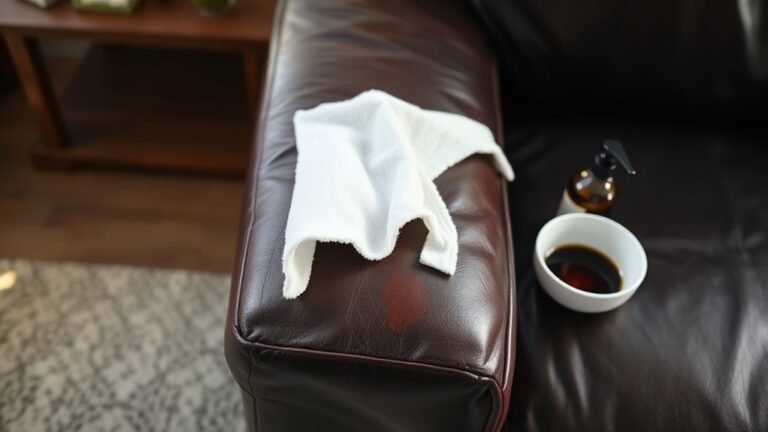
Since grease can quickly seep into leather, you’ll want to blot the excess immediately using a soft cloth. Avoid rubbing, as this can spread the stain and push the grease deeper into the leather’s pores.
Instead, gently press the cloth onto the stain to absorb as much grease as possible. Use a clean section of the cloth each time you blot to prevent transferring grease back onto the leather.
Act quickly to minimize staining and make subsequent cleaning easier.
If the grease has already dried, don’t try to scrape it off roughly, as this can damage the leather’s surface.
Instead, continue blotting gently to lift any remaining residue without harming the material.
This quick action sets the foundation for effective stain removal.
Apply Cornstarch or Talcum Powder
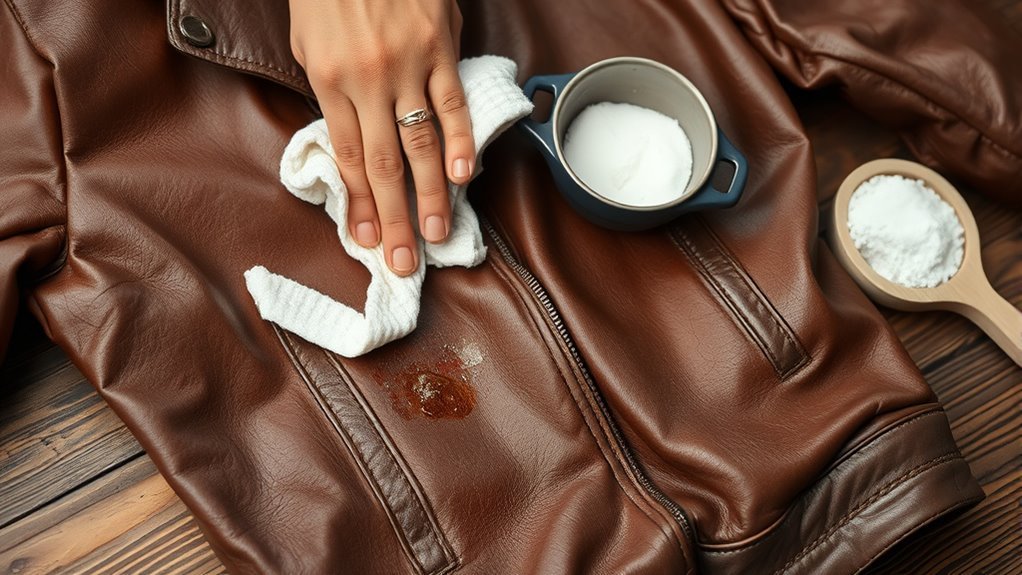
When grease stains sit on leather, you can draw out the oil by sprinkling cornstarch or talcum powder over the affected area. Use a generous amount to fully cover the stain. Make sure the leather surface is dry before you apply the powder, as moisture can prevent absorption.
For fresh grease stains on leather, sprinkle dry cornstarch or talcum powder to absorb the oil effectively.
Gently spread the powder evenly with your fingers or a soft brush, ensuring it penetrates the grease spot. Avoid rubbing or pressing too hard, which might push the oil deeper into the leather.
Cornstarch and talcum powder work as absorbents, pulling the grease from the leather fibers.
You don’t need expensive cleaners at this stage. These simple powders do the trick effectively. Applying them carefully sets the stage for removing the grease without damaging the leather’s texture or color.
Let the Powder Absorb the Grease
Although it might be tempting to rush, you should let the powder sit undisturbed to fully absorb the grease from the leather. This step is essential because the powder works by drawing the grease out of the leather fibers, preventing it from settling deeper.
Leave the powder on for at least several hours, or overnight if possible, to guarantee maximum absorption.
Avoid touching or moving the leather during this time, as disturbance can reduce the powder’s effectiveness.
The longer you allow the powder to work, the easier it will be to remove the stain afterward.
Patience here pays off, so resist the urge to speed things up.
This waiting period sets the foundation for a cleaner, grease-free leather surface.
Gently Brush Off the Powder
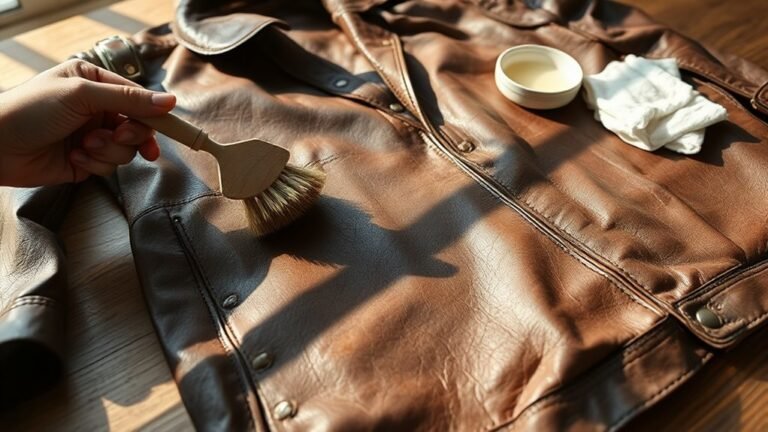
After the powder has fully absorbed the grease, you can gently brush it off using a soft brush or cloth. Be careful not to rub harshly, as leather is delicate and can scratch or lose its finish.
Use light, sweeping motions to lift the powder without pressing it back into the leather. A microfiber cloth or a soft-bristled brush works best for this step.
Here’s a quick guide to help you choose the right tool and technique:
| Tool Type | Best for Leather Type | Brushing Technique |
|---|---|---|
| Soft-bristled brush | Smooth leather | Gentle circular motions |
| Microfiber cloth | Suede or nubuck | Light dabbing |
| Soft cotton cloth | Patent leather | Light sweeping |
| Horsehair brush | Aniline leather | Soft flicking |
| Makeup brush | Delicate leather | Very gentle brushing |
This ensures the powder lifts off safely, prepping leather for the next cleaning step.
Use a Leather Cleaner for Residual Stains
Since powder can only absorb so much grease, you’ll need to tackle any leftover stains with a specialized leather cleaner. Choose a cleaner designed specifically for leather to avoid damaging the material.
Apply a small amount of the cleaner to a soft cloth, not directly onto the leather, to maintain control and prevent over-saturation. Gently rub the stained area in a circular motion, focusing on the grease spot. Don’t scrub aggressively; let the cleaner break down the grease.
After treating the stain, give the cleaner time to work according to the product instructions.
Using a quality leather cleaner guarantees you remove residual grease without compromising the leather’s texture or color, keeping your item looking fresh and well-maintained.
Wipe the Area With a Damp Cloth
When you’ve finished applying the leather cleaner, wipe the area gently with a damp cloth to remove any residue. This step guarantees no cleaner buildup remains, which could attract dirt or damage the leather over time.
Use a soft, clean cloth slightly moistened with water. Avoid soaking the leather. Wipe in smooth, circular motions to lift away loosened grease and cleaner without rubbing harshly.
Keep these tips in mind as you wipe:
- Choose a microfiber or cotton cloth for softness
- Avoid excess water to prevent leather saturation
- Rinse the cloth frequently and wring it out well
- Pat dry with a dry towel if the area feels too wet
This careful wiping preps your leather perfectly for the next restoration step.
Condition the Leather to Restore Moisture
Although the grease stain is gone, your leather may feel dry or stiff. Conditioning it will restore essential moisture and keep it supple. Choose a leather conditioner suitable for your item. Cream or oil-based options work well.
Apply a small amount evenly with a soft cloth, massaging it gently into the leather in circular motions. This nourishes the fibers and prevents cracking.
Here’s a quick guide:
| Conditioner Type | Best For | Application Tip |
|---|---|---|
| Cream | Jackets, bags | Use sparingly, buff after |
| Oil-based | Softer leathers | Avoid over-application |
| Spray | Furniture, car seats | Apply evenly, less mess |
Conditioning regularly maintains leather’s durability and appearance.
Allow the Leather to Air Dry Naturally
After conditioning, let your leather air dry naturally to preserve its texture and prevent damage. Avoid using heat sources like hair dryers or direct sunlight, as they can cause the leather to crack or fade. Instead, place your leather item in a well-ventilated area with moderate temperature.
Allow leather to air dry naturally in a cool, ventilated space to maintain its texture and prevent damage.
This gentle drying process helps the leather retain its softness and durability.
Imagine your leather piece resting on a soft towel, gently absorbing moisture. Picture a cool breeze passing by, keeping the environment fresh. Visualize indirect sunlight softly illuminating the room without harsh rays.
Envision a spacious area where air circulates freely around the leather, speeding up natural drying without stress.
Leather laid flat on a clean, dry surface
Gentle airflow from an open window
Soft, muted lighting in a shaded room
Room temperature maintained steady and cool
Frequently Asked Questions
Can Grease Stains Cause Permanent Damage to Leather?
Yes, grease stains can cause permanent damage to leather if you don’t clean them promptly.
You’ll want to act quickly to prevent discoloration and deterioration, preserving your leather’s appearance and texture effectively.
Is It Safe to Use Household Cleaners on Leather?
You shouldn’t use household cleaners on leather—they can damage it.
Instead, grab a gentle leather cleaner or saddle soap, like a knight polishing armor, to protect and preserve your leather’s natural beauty safely and effectively.
How Often Should Leather Be Conditioned After Stain Removal?
You should condition leather every 3 to 6 months after stain removal to keep it supple and protected.
If the leather feels dry or stiff, don’t hesitate to condition it more frequently for best results.
Can Heat Help Remove Grease Stains From Leather?
Think of heat as a mischievous firefly—it might seem helpful but can actually worsen grease stains on leather.
Are Professional Leather Cleaning Services More Effective?
Yes, professional leather cleaning services are more effective because they use specialized products and techniques. You’ll get deeper stain removal and proper care, reducing damage risk while restoring your leather’s original look and feel.
Conclusion
It’s funny how grease finds its way onto your favorite leather just when you least expect it—but now you know exactly what to do. By acting quickly and following these simple steps, you’ll not only save your leather but also feel pretty proud of yourself.
Remember, patience and the right care go a long way. So next time grease strikes, you’re totally ready to handle it like a pro!
Getting grease stains out of leather requires careful attention and the right technique. With the proper approach, you can restore your leather’s look and keep it in great condition. Trust these steps to effectively remove grease stains from leather and maintain its quality over time.