7 Steps to Clean Mold Off a Leather Jacket
To clean mold off your leather jacket effectively, start by assessing the extent of the mold and its exact location. Gather essential materials such as soft cloths, a mild leather cleaner or a vinegar solution, and gloves for protection.
Begin by testing your cleaning solution on a hidden spot to prevent any damage to the leather. Next, gently brush off any surface mold outside to avoid spreading spores indoors.
Wipe the affected area carefully with your chosen cleaning solution. After cleaning, hang your jacket in a well-ventilated area to ensure it dries completely.
Finally, apply a leather conditioner to keep the material supple and prevent future damage. Following these detailed tips will help protect your jacket in the long term.
Assess the Extent of Mold on Your Jacket

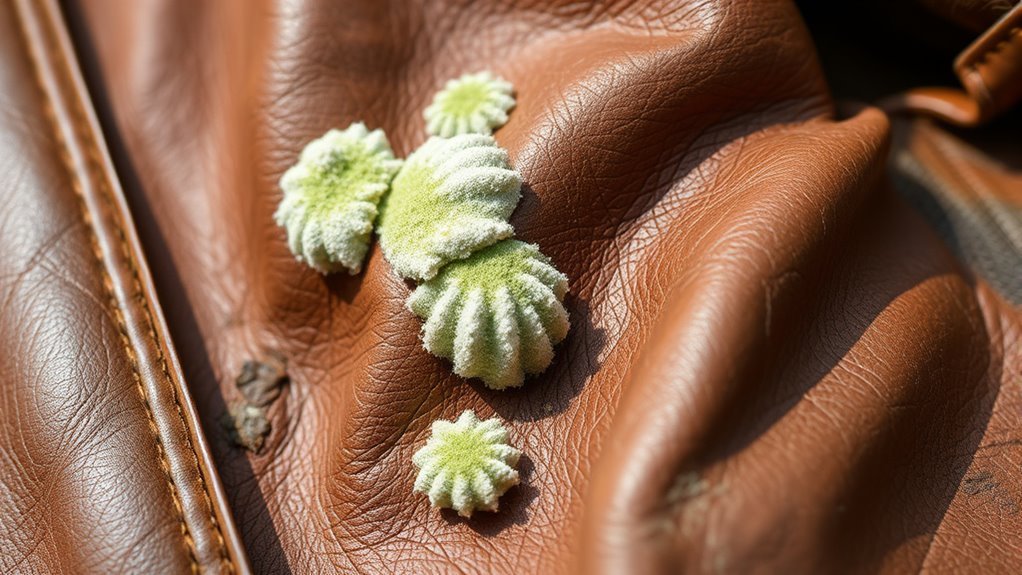
Before you begin cleaning, carefully check your leather jacket to determine how much mold is present. Look for visible spots, patches, or fuzzy growth, especially in seams, folds, and less exposed areas.
Mold can range from light surface stains to deep, stubborn infestations that may have damaged the leather itself.
You should also smell the jacket. Mold often leaves a musty odor that signals a serious problem.
If the mold covers only a small area, a simple cleaning might suffice. However, if the mold is widespread or has penetrated the leather, you’ll need to proceed with extra caution.
Evaluating the extent of mold helps you decide the best cleaning approach and prevents further damage, ensuring your jacket regains its original look and durability.
Gather Necessary Cleaning Supplies

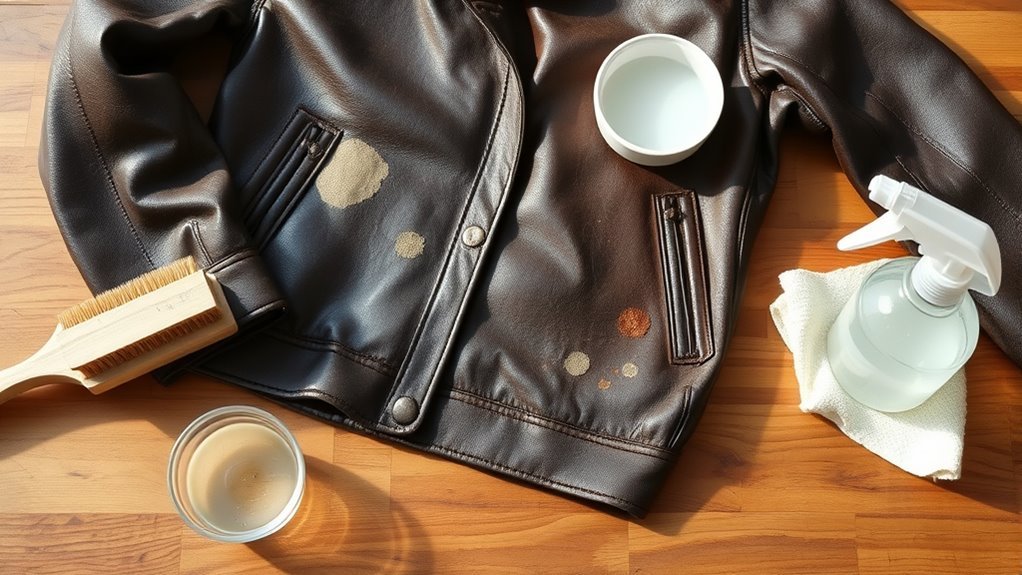
Once you’ve assessed the mold, gather the right cleaning supplies to tackle the job effectively. You’ll need a soft cloth or sponge, a small bowl, and a gentle leather cleaner specifically designed for mold removal. Avoid harsh chemicals or bleach, as they can damage the leather.
Have white vinegar or rubbing alcohol on hand, as these are effective natural mold killers when diluted properly. Also, prepare a spray bottle filled with water for rinsing and a dry towel for blotting excess moisture.
Wearing gloves and a mask is a good idea to protect yourself from mold spores during cleaning. Finally, verify you have access to a well-ventilated area to work in.
With these supplies ready, you’ll be set for the next cleaning steps.
Test a Small Hidden Area First

Although it might seem like an extra step, you should always test your cleaning solution on a small, hidden area of the leather jacket first. This helps prevent unexpected damage or discoloration before you treat the visible mold.
Choose a spot like the inside seam or under the collar. Apply a small amount of the solution, wait 10-15 minutes, and check for any adverse effects.
| Step | Purpose |
|---|---|
| Select hidden area | Protect visible parts of jacket |
| Apply cleaning solution | Test reaction without risk |
| Wait and observe | Ensure no damage or discoloration |
Taking this precaution lets you clean safely and maintain your jacket’s appearance.
Brush Off Surface Mold Gently
Since mold can damage leather if left untreated, you should gently brush off any surface mold using a soft-bristled brush or cloth. Avoid using hard or stiff brushes that might scratch or damage the leather’s surface. Before you start, take the jacket outside to prevent spreading mold spores indoors.
Use light, circular motions to lift mold without pressing it deeper.
Keep these tips in mind:
- Use a clean, dry, soft brush or microfiber cloth
- Work in a well-ventilated area
- Avoid applying too much pressure
- Brush away from your body to prevent spores transfer
This careful approach helps remove surface mold safely, minimizing damage while preparing your jacket for deeper cleaning steps.
Clean the Leather With a Mild Solution
Before applying any cleaning solution, make sure the jacket is dry and free of loose mold.
Mix a mild solution using one part white vinegar and two parts water, or use a gentle leather cleaner diluted according to instructions.
Dampen a soft cloth with the solution, don’t soak it, and gently wipe the leather surface.
Focus on areas with visible mold, but avoid scrubbing hard to prevent damaging the leather.
Work in small sections and rinse the cloth frequently to avoid spreading mold spores.
After wiping, use a clean, dry cloth to blot excess moisture.
This mild cleaning helps remove mold while protecting the leather’s natural oils and finish.
Avoid harsh chemicals or excess water, as they can cause discoloration or stiffness.
Dry the Jacket Properly
Once you’ve gently cleaned the mold off your leather jacket, make sure it dries properly to prevent any new growth or damage. Leather is sensitive to moisture, so drying it right is vital. Avoid direct heat sources like radiators or sunlight, which can cause cracking.
After cleaning mold from your leather jacket, dry it carefully to avoid damage and prevent new mold growth.
Instead, follow these tips:
- Hang the jacket on a padded hanger to maintain shape and air circulation.
- Place it in a well-ventilated room with low humidity.
- Use a fan to speed up drying without blowing air directly on the leather.
- Avoid stuffing it into a closet or plastic bag until fully dry to prevent trapped moisture.
Proper drying helps keep your jacket mold-free and preserves its texture and durability.
Condition the Leather After Cleaning
Although cleaning removes mold and dirt, your leather jacket still needs conditioning to restore moisture and flexibility.
After the jacket dries completely, apply a leather conditioner using a soft cloth. Choose a product specifically designed for leather to avoid damage.
Rub the conditioner gently in circular motions, covering the entire surface evenly. This process replenishes oils lost during cleaning, preventing cracking and stiffness.
Allow the conditioner to absorb fully, usually about 15 to 30 minutes, then buff the jacket lightly with a clean cloth to remove any excess.
Conditioning keeps your jacket supple and extends its lifespan, ensuring it stays comfortable and looks great. Don’t skip this essential step; it’s key to maintaining leather’s natural texture and durability after mold removal.
Frequently Asked Questions
Can Mold on Leather Jackets Cause Health Issues?
Yes, mold on leather jackets can cause health issues like allergies, respiratory problems, and skin irritation. You should avoid direct contact, clean it promptly, and guarantee good ventilation to protect your health and keep your jacket safe.
How to Prevent Mold From Returning on Leather Jackets?
You can prevent mold by storing your leather jacket in a cool, dry place with good ventilation. Use a dehumidifier if needed, avoid plastic bags, and regularly clean and condition the leather to keep it mold-resistant.
Regular maintenance helps maintain the jacket’s integrity and appearance. Always ensure the leather is completely dry before storing to minimize moisture buildup.
Is It Safe to Use Commercial Mold Removers on Leather?
You might think commercial mold removers are a quick fix, but they can harm your leather’s finish.
Instead, try gentle solutions like diluted vinegar or leather-specific cleaners to protect your jacket while removing mold safely.
Can Mold Damage the Color or Texture of Leather?
Yes, mold can damage the color and texture of leather. If you don’t remove it promptly, it can cause discoloration, stains, and even weaken the leather fibers, leading to permanent damage you can’t easily fix.
How Often Should I Clean and Condition a Leather Jacket?
You should clean and condition your leather jacket every 3 to 6 months. Did you know 85% of leather damage comes from neglect?
Regular care keeps it supple, prevents cracks, and preserves its color and texture beautifully.
Conclusion
Cleaning mold off your leather jacket is like giving it a fresh breath of life, restoring its soul from the shadows. By taking these careful steps, you’re not just removing mold—you’re preserving memories stitched into every seam.
Treat your jacket with patience and care, and it will continue to be your trusted companion, weathering time and adventures. With proper mold removal techniques and regular leather jacket care, it will look as vibrant and resilient as the day you first wore it.
Remember, cleaning mold off a leather jacket not only protects the material but also extends its lifespan. Follow these steps to keep your leather jacket mold-free and beautifully maintained.