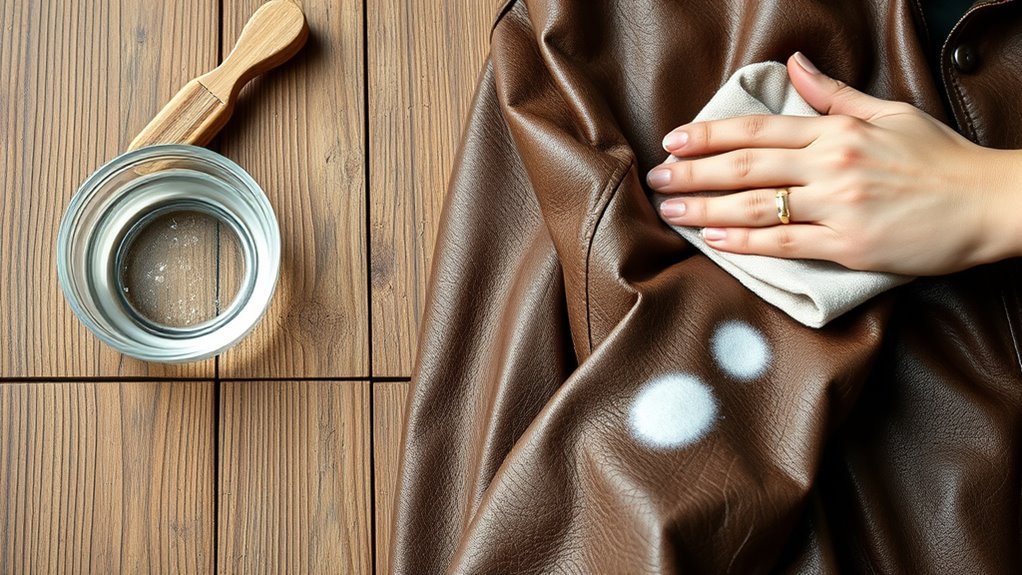
7 Easy Steps to Clean Mold Off a Leather Jacket
To clean mold off your leather jacket effectively, start by assessing the extent of the mold growth and gathering essential supplies like mild soap, distilled water, vinegar, soft cloths, and gloves. Working outdoors or in a well-ventilated area is crucial to protect yourself from mold spores.
Begin by gently wiping off any loose mold with a dry cloth. Next, apply a mild cleaning solution to softly clean the affected areas, being careful not to soak the leather.
After cleaning, condition the leather to restore its moisture and finish by air drying the jacket away from direct sunlight. Keep following these steps, and you’ll discover the best techniques to safely restore your leather jacket.
Assess the Extent of Mold Growth

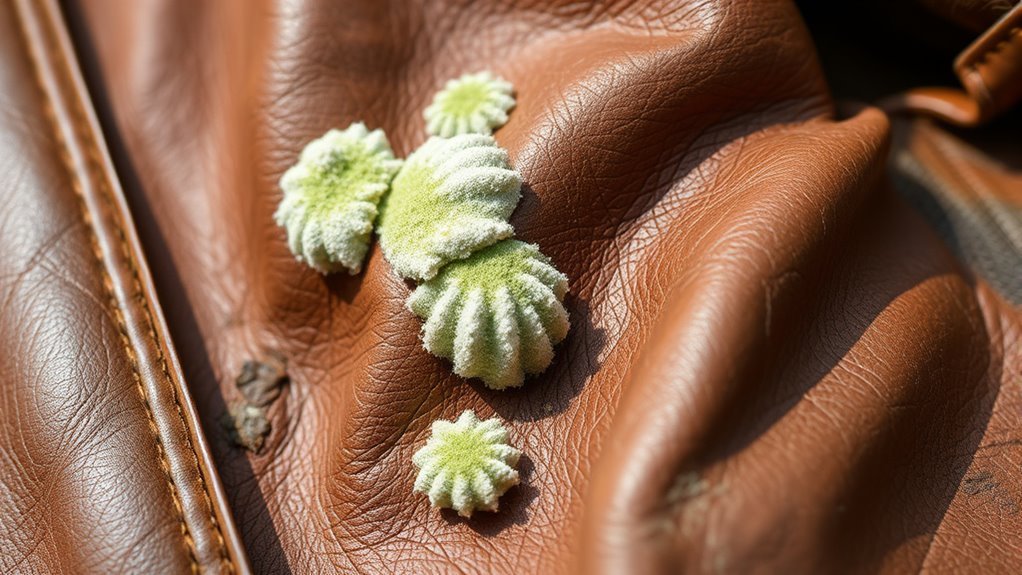
Before you begin cleaning, take a close look at your leather jacket to determine how much mold has spread. Check all areas carefully, including seams, under collars, and inside pockets where mold might hide.
If you see small spots, you can treat them more easily, but widespread mold may require professional help. Pay attention to the color and texture of the mold—it usually appears as white, green, or black fuzzy patches.
Also, smell the jacket; a musty odor confirms mold presence.
Identifying the extent helps you decide how intensive your cleaning needs to be. The more extensive the mold, the more thorough your cleaning process should be to prevent damage and stop mold from returning.
This assessment sets the foundation before you move on to removing the mold safely.
Gather Cleaning Supplies

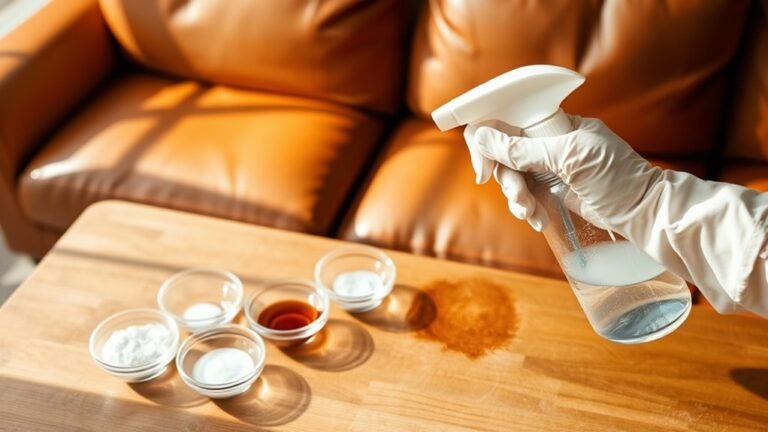
When you’re ready to tackle the mold, gather all the necessary cleaning supplies to guarantee a smooth process. You’ll need a soft cloth or sponge, a small bowl, mild soap like dish detergent or saddle soap, and distilled water to prevent any mineral damage.
Have white vinegar or rubbing alcohol on hand for tougher mold spots, as both are effective mold killers. Grab a soft-bristled brush or an old toothbrush to gently scrub without harming the leather.
Also, keep paper towels or a clean dry cloth nearby to blot excess moisture. Finally, prepare a spray bottle if you prefer applying solutions that way.
Having these supplies ready ensures you won’t interrupt your cleaning and can effectively restore your leather jacket.
Take Precautions and Work in a Well-Ventilated Area

Since mold spores can irritate your respiratory system, you should always work in a well-ventilated area to keep fresh air flowing while cleaning your leather jacket. Open windows and doors, or work outside if possible, to guarantee good airflow.
This reduces the chance of inhaling harmful spores and helps the jacket dry faster after cleaning.
You should also wear protective gear like gloves and a mask to prevent skin contact and breathing in mold particles.
Avoid using a vacuum or brushing the mold without protection, as this can release spores into the air.
Taking these precautions keeps you safe and prevents mold from spreading to other areas of your home during the cleaning process.
Wipe off Surface Mold With a Dry Cloth
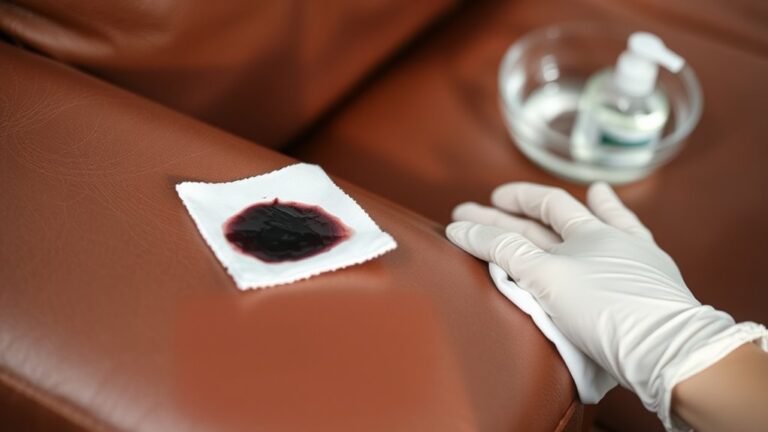
Although mold can seem stubborn, you can remove its surface layer easily by wiping your leather jacket with a dry cloth. Start with a soft, dry cloth to gently brush off any visible mold spores. Avoid pressing too hard to prevent pushing the mold deeper into the leather.
Gently wipe your leather jacket with a soft, dry cloth to remove surface mold without pushing it deeper.
Work outdoors or in a well-ventilated space to avoid spreading spores inside your home. Use light, sweeping motions, covering all affected areas. If the cloth becomes heavily soiled, switch to a clean one to prevent reapplying mold.
This step removes loose mold and prepares the jacket for deeper cleaning. Remember, don’t use a wet cloth yet because moisture can worsen mold growth on leather.
Once you finish, discard or wash the cloth thoroughly to avoid cross-contamination.
Prepare a Mild Cleaning Solution
Before tackling the deeper mold stains, you’ll need to prepare a mild cleaning solution that’s safe for leather. Mixing harsh chemicals can damage your jacket, so stick to gentle ingredients. Use distilled water to avoid minerals, and test your solution on a small hidden area first.
Here’s a simple recipe to get you started:
| Ingredient | Amount | Purpose |
|---|---|---|
| Distilled water | 1 cup | Dilutes solution |
| Mild liquid soap | 1 teaspoon | Removes dirt/mold |
| White vinegar | 1 tablespoon | Kills mold spores |
Stir the mixture well until combined. This solution is effective yet gentle, ensuring your leather stays intact while tackling mold buildup.
Gently Clean the Leather Jacket
When you start cleaning, dampen a soft cloth with the mild solution you prepared and gently wipe the leather in small sections. Focus on areas with visible mold, but don’t oversaturate the leather. Excess moisture can damage it.
Use light, circular motions to lift mold spores without rubbing too hard. Rinse and wring the cloth frequently to avoid spreading mold around. If you notice stubborn spots, apply a bit more solution directly to the cloth and repeat the process carefully.
Avoid harsh scrubbing, which can scratch or discolor the leather. After cleaning each section, switch to a dry cloth to blot away excess moisture.
Take your time with this step to make certain you remove mold while preserving the jacket’s finish and texture.
Condition and Dry the Leather Properly
Since moisture can damage leather if left untreated, you need to condition and dry your jacket carefully to restore its softness and prevent cracking. After cleaning, apply a high-quality leather conditioner evenly using a soft cloth. This nourishes the leather, replenishing lost oils and maintaining its supple texture.
Next, let your jacket air dry naturally, away from direct sunlight or heat sources that can cause stiffening or fading. Patience here pays off!
- Feel the jacket regain its buttery softness.
- Enjoy the confidence of wearing a well-cared-for piece.
- Avoid the heartbreak of irreversible leather damage.
- Keep your favorite jacket looking fresh and vibrant for years.
Proper conditioning and drying not only protect but also revive your leather jacket’s beauty and longevity.
Frequently Asked Questions
Can Mold Damage the Leather Permanently?
Yes, mold can permanently damage leather by causing stains, weakening the material, and leading to unpleasant odors.
If you catch it early and clean it properly, you can prevent lasting harm to your leather jacket.
How Often Should I Clean My Leather Jacket to Prevent Mold?
You don’t have to clean your leather jacket daily—mold isn’t that clingy. Just wipe it down every few months, especially in humid spots, to keep it fresh and mold-free without turning it into a full-time chore.
Is It Safe to Use Commercial Leather Cleaners on Mold?
Yes, you can use commercial leather cleaners on mold, but make sure they’re specifically designed for leather and mold removal.
Test a small area first to avoid damage and always follow the product’s instructions carefully.
Can Mold on Leather Cause Health Issues?
Yes, mold on leather can cause health issues; it can trigger allergies, irritate your skin, and worsen respiratory problems.
What Storage Tips Prevent Mold Growth on Leather Jackets?
You should store leather jackets in a cool, dry place with good air circulation. Avoid plastic bags, use breathable garment covers, and keep humidity below 50%.
Regularly air out the jacket to prevent mold growth.
Conclusion
Now that you’ve tackled the mold like a pro, your leather jacket is ready to shine again.
Remember, treating your jacket with care is like giving it a fresh breath of life—keeping it soft, clean, and mold-free. Stay vigilant and clean at the first sign of trouble to protect your favorite piece for years to come.
With these simple steps, you’re not just cleaning leather—you’re preserving a timeless treasure. Regular mold removal and proper leather care ensure your jacket remains in excellent condition, free from damage and odor.