10 Essential Tips for Caring for a Leather Handbag
To care for your leather handbag and maintain its beauty, choose gentle products specifically made for leather and always test them first. Wipe your bag regularly with a soft cloth to remove dirt and dust. This simple routine helps preserve its appearance and texture.
Condition your leather handbag every few months to keep it soft and prevent cracking. Use a quality leather conditioner designed for handbags. Protect your bag from water by applying a repellent spray, and avoid exposing it to heavy rain to prevent damage.
When not in use, store your handbag in dust bags placed in a cool, shaded spot to protect it from sunlight and dust. Rotate your handbag use to reduce wear and extend its life. Handle stains quickly with appropriate care to keep your bag looking pristine.
Keep your leather handbag out of direct sunlight to avoid fading and drying out. Following these essential tips will help you explore proper care methods and extend the life and beauty of your leather handbag.
Choose the Right Cleaning Products

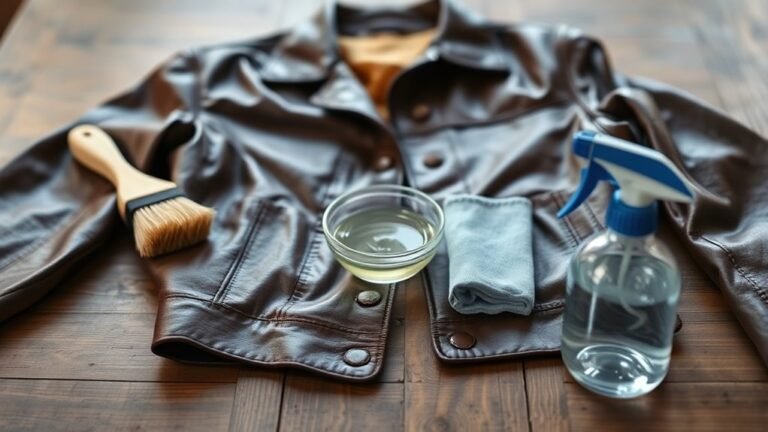
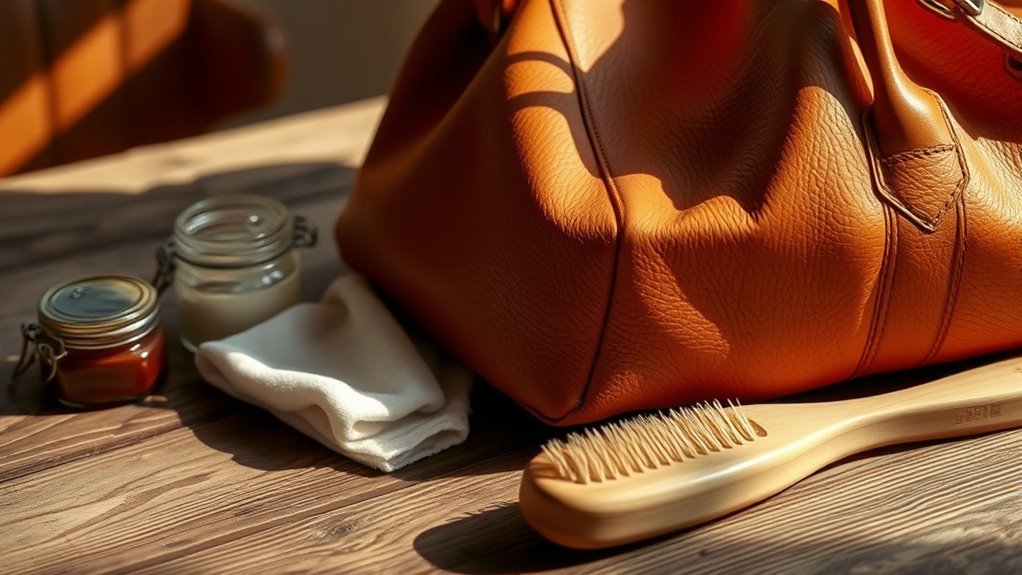
Choosing the right cleaning products is essential to keep your leather handbag looking its best. You want to select products specifically designed for leather, avoiding harsh chemicals like bleach or ammonia that can damage the material.
Look for gentle leather cleaners and conditioners that nourish the leather without stripping its natural oils. When testing a new product, always try it on a small, hidden area first to ensure it doesn’t cause discoloration or dryness.
Avoid using household cleaners or anything with alcohol, as these can dry out or crack the leather. Investing in quality leather care products helps maintain your bag’s softness, color, and durability.
This will ensure it stays beautiful for years to come. Use them sparingly and follow the instructions carefully for the best results.
Regularly Wipe Down Your Leather Bag

Although leather is durable, you should regularly wipe down your handbag to prevent dirt and oils from building up. Use a soft, dry cloth or a slightly damp microfiber cloth to gently remove surface dust and grime.
Avoid using excessive water, as it can damage the leather. Focus on areas that come into frequent contact with your hands and clothing, like handles and corners, where dirt accumulates faster.
Wiping your bag after each use helps maintain its appearance and prevents stains from setting in. Make this a quick habit, especially if you carry your bag daily.
Condition Your Leather to Prevent Dryness

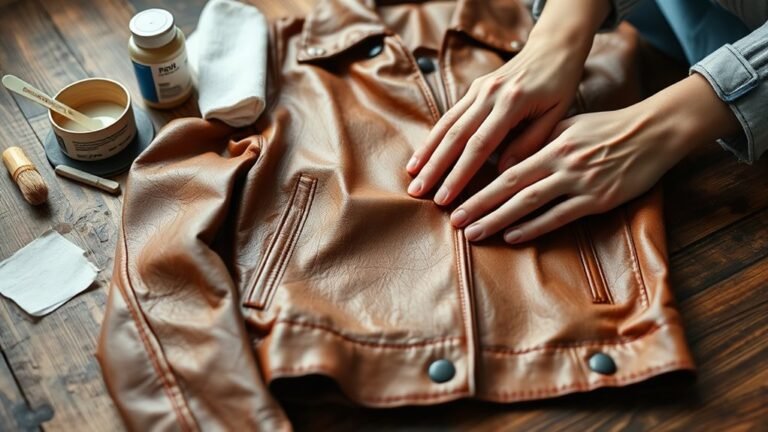
To keep your leather handbag supple and prevent cracking, you need to condition it regularly. Conditioning replenishes the natural oils leather loses over time, especially if it’s exposed to dry air or sunlight.
Choose a leather conditioner suited for your bag’s type. Test it on a small, hidden area first to avoid discoloration. Apply a small amount using a soft cloth, gently rubbing it in circular motions. Let the conditioner absorb fully before using your bag again.
Don’t overdo it; conditioning every three to six months is usually enough. This simple step keeps your leather soft, flexible, and looking fresh, extending your handbag’s life and maintaining its luxurious feel.
Regular conditioning is essential for preserving your bag’s beauty and preventing dryness-related damage.
Protect Your Bag From Water Damage
When water touches your leather handbag, it can cause stains, warping, or even weaken the material over time. To keep your bag looking great, you need to protect it from moisture.
Water can stain, warp, or weaken leather handbags, so protecting them from moisture is essential.
Here’s how you can do that effectively:
- Apply a water-repellent spray designed for leather to create a protective barrier.
- Avoid carrying your bag in heavy rain; use an umbrella or a waterproof cover instead.
- If your bag does get wet, gently pat it dry with a soft cloth and let it air dry away from direct heat.
- Regularly condition your leather to maintain its natural oils, which help repel water and prevent cracking.
Store Your Handbag Properly
Since leather is sensitive to its environment, storing your handbag properly is essential to maintaining its shape and quality.
Always keep your leather bag in a cool, dry place away from direct sunlight, which can cause fading and drying.
Use a dust bag or pillowcase to protect it from dust and scratches.
When storing, stuff your handbag with acid-free tissue paper or a soft cloth to help it retain its shape and prevent creases.
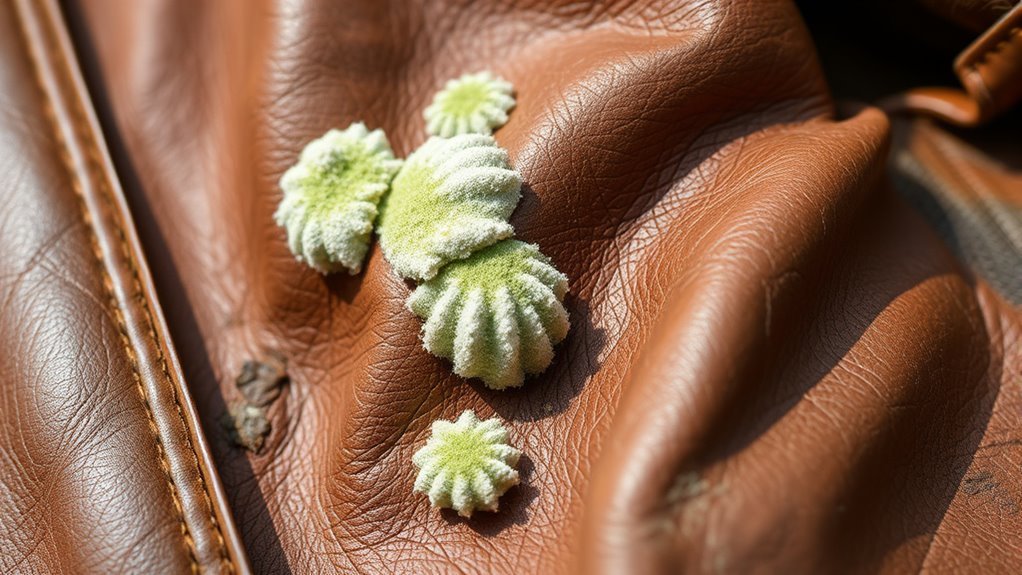
Avoid plastic bags, as they trap moisture and can lead to mold.
If possible, store your bag upright on a shelf rather than hanging it by the straps, which can stretch and deform the leather.
Taking these steps will keep your handbag looking fresh and prolong its lifespan.
Avoid Overloading Your Leather Handbag
Proper storage protects your leather handbag, but how you fill it matters just as much. Overloading your bag can stretch the leather, distort its shape, and strain the seams.
To keep your handbag looking its best, follow these tips:
- Limit the weight to essentials like your phone, wallet, and keys.
- Distribute items evenly to avoid uneven pressure on one side.
- Use small pouches to organize contents and prevent bulges.
- Avoid carrying sharp or bulky objects that can puncture or deform the leather.
Handle Stains Promptly and Carefully
If you notice a stain on your leather handbag, act quickly to prevent it from setting in. Gently blot the stain with a clean, dry cloth. Never rub, as this can spread the stain or damage the leather.
Quickly blot stains on leather bags with a dry cloth—never rub to avoid spreading or damaging the leather.
For liquid spills, absorb as much as possible immediately. Use a slightly damp cloth with mild soap to clean the area, but test on a hidden spot first to ensure it won’t discolor the leather.
Avoid harsh chemicals or abrasive cleaners. After cleaning, let your bag air dry naturally, away from heat sources.
If the stain persists or you’re unsure how to treat it, consider consulting a professional leather cleaner to avoid further damage.
Prompt, careful attention keeps your handbag looking its best.
Keep Your Leather Away From Direct Sunlight
Although leather is durable, exposing your handbag to direct sunlight can cause fading and drying over time. To keep your leather looking its best, you’ll want to protect it from harsh UV rays.
Here’s how you can do that:
- Store your handbag in a cool, shaded area when not in use.
- Avoid leaving it on windowsills or in parked cars where sunlight is intense.
- Use a dust bag or cloth cover to shield it from light exposure.
- Consider applying a leather conditioner with UV protection to maintain moisture and color.
Rotate Your Handbags to Reduce Wear
Since you likely have more than one handbag, rotating them regularly can help prevent excessive wear on any single piece. Using the same bag every day causes faster deterioration, including fading, scratching, and stretching.
By alternating your handbags, you give each one time to rest and recover, which preserves their shape and finish. It also allows leather oils to redistribute naturally, reducing dryness and cracking.
Make a habit of switching bags every few days or weekly, depending on your usage. This simple routine extends the life of your collection and keeps each bag looking fresh.
Plus, rotating lets you match your handbag to different outfits and occasions, adding variety to your style while protecting your investment.
Use a Dust Bag for Extra Protection
When you’re not using your leather handbag, storing it in a dust bag helps shield it from dust, dirt, and scratches. This simple step keeps your bag looking fresh and extends its lifespan.
Here’s why you should always use a dust bag:
- Prevents Dust Buildup: Keeps fine particles from settling on the leather surface.
- Guards Against Scratches: Soft fabric cushions your bag from accidental abrasions.
- Reduces Exposure to Light: Protects color from fading caused by sunlight.
- Maintains Shape: Some dust bags allow slight breathability, preventing mildew while retaining form.
Make sure to choose a dust bag made from breathable material like cotton, and avoid plastic covers that trap moisture.
Taking this extra step ensures your leather handbag stays pristine between uses.
Frequently Asked Questions
Can Leather Handbags Be Machine Washed?
You can’t machine wash leather handbags because water and agitation damage the material.
Instead, spot clean with a damp cloth and use leather conditioner to keep it soft and protected.
Always air dry naturally.
How Do I Fix Scratches on My Leather Bag?
You can fix scratches on your leather bag by gently rubbing them with a leather conditioner or cream.
For deeper scratches, try a matching leather dye, then buff softly to blend and restore the surface.
Is It Safe to Use Homemade Cleaners on Leather?
You wouldn’t splash vinegar on silk, so don’t do it on leather either.
Homemade cleaners can harm your bag’s finish, so stick to products made for leather to keep it soft, shiny, and scratch-free.
How Long Does a Leather Handbag Typically Last?
A leather handbag typically lasts 5 to 10 years, but if you take good care of it, clean and condition regularly, it can easily last even longer, becoming more beautiful with age and use.
Can Leather Handbags Be Dyed a Different Color?
You might just find your old leather handbag can be dyed a different color! Yes, you can dye it, but be sure to use leather-specific dyes and test a small spot first to avoid any surprises.
Conclusion
Caring for your leather handbag is like nurturing a timeless treasure—each gentle wipe and careful condition breathes life into its rich texture. By protecting it from water, sunlight, and stains, you’re weaving a story of lasting beauty and elegance.
So, treat your bag like a trusted companion: store it well, rotate it often, and shield it with a dust bag. With these simple steps, your leather will age like fine wine, only growing more stunning with time.
Following these essential tips for caring for a leather handbag ensures your accessory remains durable and stylish. Proper maintenance is key to preserving its quality and extending its lifespan.