How to Care for Leather Furniture: Easy Cleaning & Maintenance Tips
To care for your leather furniture and maintain its natural beauty, start by dusting and vacuuming weekly.
Next, gently wipe the surface with a damp microfiber cloth and mild soap to remove dirt and grime.
Condition your leather furniture twice a year to keep it soft and prevent cracking.
Always test any cleaning or conditioning product on a hidden spot first to ensure it won’t damage the leather.
Keep your furniture away from heat sources and direct sunlight to avoid fading and drying out.
In case of spills, blot them immediately without rubbing, and avoid using harsh cleaners.
With regular maintenance and proper protection, your leather furniture stays beautiful and durable.
Exploring further will help you master specialized care techniques and extend the life of your pieces.
Important Note on Leather Types

How can you tell if your furniture is made from real or faux leather? Proper identification is key to caring for your leather correctly. Genuine leather comes from animal hide and usually shows natural imperfections, scars, and variations. These unique marks confirm its authenticity.
On the other hand, faux leather, made from synthetic materials like polyurethane or PVC, tends to have a uniform appearance and may peel or crack over time. Understanding these types of leather helps you choose the right cleaning and conditioning methods.
Real leather develops a rich patina but can be damaged by harsh chemicals, while faux leather resists stains better but isn’t as durable. Knowing this will guide you on how to care for your leather furniture effectively and keep it looking its best for years.
Why Maintain Leather Furniture
Knowing whether your furniture is real or faux leather shapes how you care for it, but the reason you maintain it remains the same: to keep it looking great and lasting longer. Regular cleaning and maintenance prevent your leather from drying out, cracking, and fading.
By preserving the leather’s natural oils through proper care, you keep it soft and supple, avoiding stiffness and brittleness. Consistent upkeep also helps you avoid stains, discoloration, and damage caused by dirt, oils, and spills.
Neglecting leather care can accelerate deterioration, leading to costly repairs or replacement. Ultimately, investing time in cleaning and maintenance preserves both the aesthetic appeal and resale value of your leather furniture, ensuring it remains a beautiful and functional part of your home for years to come.
How to Clean Real Leather Upholstery
When you clean real leather upholstery regularly, you protect its natural oils and maintain its smooth texture. Start by vacuuming your leather upholstery with a soft brush attachment to remove dust and debris from crevices.
Regular cleaning preserves leather’s natural oils and texture—start with vacuuming using a soft brush to remove dust and debris.
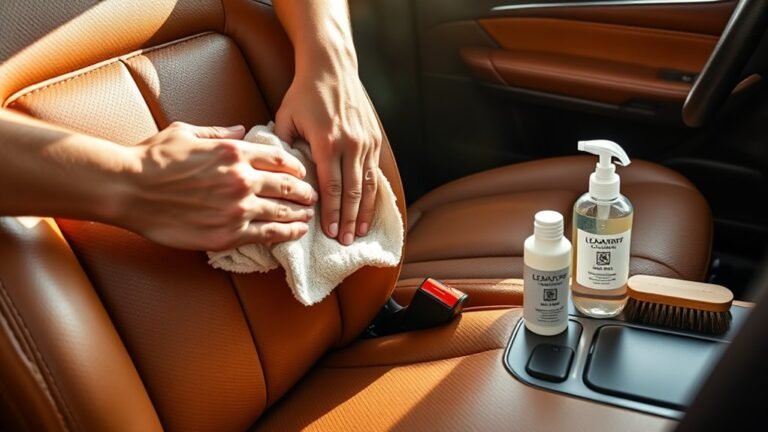
Then, wipe the surface gently using a damp microfiber cloth with a small amount of pH-balanced mild soap solution. Avoid soaking the leather. If spills occur, blot immediately with a clean, dry cloth to prevent stains.
For deeper cleaning every two months, use a specially formulated leather cleaner or warm water, applying it in gentle circular motions. Remember to avoid harsh chemicals like bleach or alcohol-based products, as they damage the leather’s finish and leather protector.
Proper leather cleaning keeps your furniture looking fresh and extends its life.

How to Condition Real Leather Upholstery
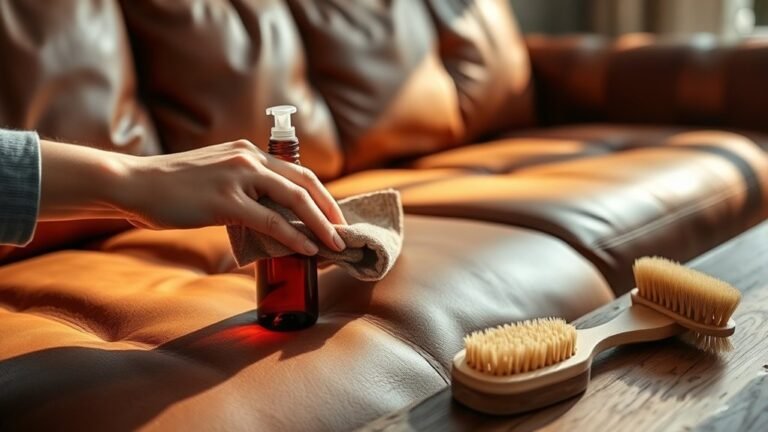
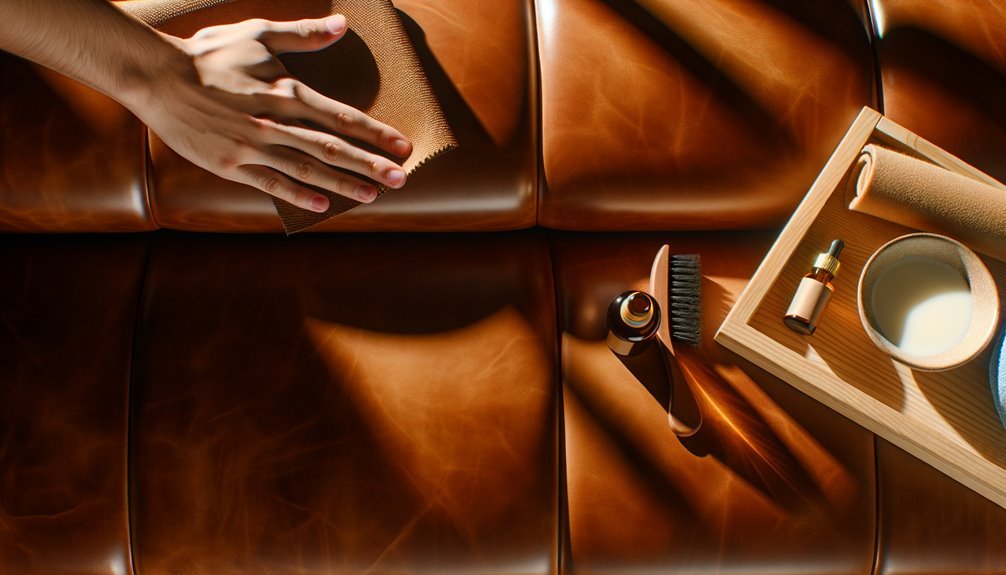
To keep your leather furniture soft and lasting, you’ll want to condition it at least twice a year. Use a high-quality leather conditioner and apply it gently with a microfiber cloth in circular motions for even coverage.
Don’t forget to test the conditioner on a hidden spot first and wipe off any excess to avoid buildup.
Applying Leather Conditioner
Although leather is durable, it needs regular conditioning to stay soft and prevent cracking. Start by testing leather conditioner on a hidden spot to avoid discoloration.
Apply a small amount of conditioner to a clean microfiber cloth. Gently work it into the leather using circular motions, ensuring even coverage without oversaturating.
Allow the conditioner to absorb for at least 15 minutes, letting it penetrate the leather fibers for lasting moisture. Afterward, buff off any excess with a dry cloth to achieve a smooth, polished finish.
Always use products designed for leather upholstery and avoid harsh chemicals or alcohol-based solutions. This careful application helps maintain your leather’s suppleness and extends its life.
Conditioning Frequency Guidelines
Since leather naturally loses moisture over time, you should condition your real leather upholstery at least twice a year to keep it soft and prevent cracking. If your leather faces harsh environments or heavy use, consider conditioning it quarterly to boost its maintenance.
Before applying any conditioner, always test a small, hidden spot to avoid discoloration. Use high-quality, leather-specific conditioners and follow the manufacturer’s instructions for the best results.
Regular conditioning preserves the leather’s natural oils, which extends its lifespan and keeps your furniture looking its best. By sticking to these conditioning frequency guidelines, you’ll maintain the leather’s suppleness and durability, ensuring your investment lasts for years to come.

How Often Should You Clean Leather Furniture
You should clean your leather furniture every 2 to 4 weeks to keep dust from building up and maintain its look. For heavily used pieces or those around pets and kids, more frequent cleaning is a must.
Don’t forget to deep clean with a leather-specific product every couple of months and keep up with regular conditioning to extend its life.
Cleaning Frequency Guidelines
When caring for leather furniture, maintaining a regular cleaning schedule is key to preserving its appearance and longevity. Proper cleaning frequency helps prevent dust buildup and keeps your leather looking fresh without damaging the finish.
Follow these leather care guidelines:
- Vacuum and wipe down your furniture every 2 to 4 weeks for effective dust removal.
- Perform a deep clean with a leather-specific cleaner or mild soap solution about every 2 months.
- Avoid cleaning more than once a month to protect the leather finish from overexposure to cleaning products.
Conditioning and Maintenance
Although regular cleaning keeps your leather furniture looking fresh, conditioning it at least twice a year is essential to maintain its suppleness and prevent cracking. You should clean your furniture every 2-4 weeks to reduce dirt buildup, but avoid excessive moisture that can damage the leather.
Promptly clean spills and follow manufacturer guidelines to prevent over-conditioning, which causes product buildup. Proper maintenance keeps your leather looking great and extends its lifespan.
| Task | Frequency | Tips |
|---|---|---|
| Dust & wipe clean | Every 2-4 weeks | Use a dry or slightly damp cloth |
| Deep clean | Every 6 months | Use leather-specific products |
| Conditioning | Twice a year | Follow product instructions |
| Spill cleanup | Immediately | Blot gently, avoid rubbing |
Types of Leather Furniture
What sets leather furniture apart is the variety of leather types used, each offering unique qualities and care needs. Understanding these helps you choose and maintain your pieces properly.
- Full-aniline leather showcases natural markings and color variations, stained to preserve its authentic look. It demands gentle care with specialized cleaning products to protect its delicate finish.
- Top-grain leather is smooth and durable, often buffed to hide imperfections. Its sleek surface tolerates regular cleaning better but still needs proper conditioning.
- Semi-aniline leather strikes a balance by adding a light coating for easier maintenance while retaining some natural texture.
Knowing these types helps you tailor your care routine, ensuring your leather furniture stays beautiful and lasts for years.
How to Keep Leather Furniture Looking Fresh
To keep your leather furniture looking fresh, you’ll want to adopt a few simple habits that protect its appearance and durability. Rotate cushions quarterly and fluff them regularly to maintain their shape and ensure even wear.
Use decorative pillows and blankets as barriers to shield your leather furniture from oils, dirt, and spills. Always clean spills immediately with a soft, damp cloth, avoiding harsh chemicals, to prevent staining and surface damage. Keep leather furniture out of direct sunlight and away from heat sources to avoid drying and discoloration. Maintain a stable indoor climate with temperatures between 60-77°F and humidity levels of 40-60% to safeguard your leather’s integrity.
General Maintenance Tips for Leather
You should dust and vacuum your leather furniture weekly with a soft cloth to keep dirt from building up. Keep it away from direct sunlight and heat sources to prevent fading and cracking.
Also, protect the surface by avoiding harsh chemicals and wiping spills immediately.
Regular Dusting Routine
Although leather furniture is durable, it demands regular dusting to keep it looking its best. Establishing a consistent dusting routine helps prevent dirt buildup and preserves the leather’s natural beauty.
Here’s how to do it effectively:
- Use a soft, dry microfiber cloth to gently dust the surface weekly, removing loose dirt without scratching the leather.
- Vacuum crevices and seams with a soft brush attachment to eliminate hidden dust and debris.
- Avoid wet or damp cloths during dusting to prevent moisture damage, which can degrade the leather over time.
Avoid Heat Exposure
When leather furniture sits too close to heat sources like radiators or fireplaces, it can dry out and crack, damaging its appearance and durability. To prevent this, keep your leather at least two feet away from any heat source.
Avoid placing it near direct sun or heat vents, as prolonged heat exposure causes fading and accelerates cracking. Use curtains or blinds to shield your furniture from sunlight, preserving its color and texture.
Maintaining a consistent indoor temperature and humidity level also helps minimize damage. Regularly check your furniture’s position to avoid sudden heat fluctuations.
Prevent Surface Damage
Beyond protecting your leather from heat and sunlight, taking steps to prevent surface damage keeps your furniture looking its best. Dirt and grime can easily scratch and dull leather, so regular dusting and vacuuming are vital to maintain its smooth finish.
Additionally, you can minimize risks by creating protective barriers against spills and stains.
Here are three essential tips for preventing surface damage:
- Use coasters, placemats, and soft cloths to shield the leather from spills, stains, and scratches.
- Avoid sitting on arms or edges to reduce stress and prevent distortion.
- Apply a professional leather protector to form a barrier that repels dirt and grime.
Handling Wear and Discoloration
Leather furniture naturally shows signs of wear and discoloration as you use it, which adds to its character and charm. Over time, marks, creases, and color variations develop, reflecting the piece’s unique story.
To manage discoloration caused by sunlight or oils, regular cleaning and conditioning are essential. These steps minimize wear and keep the leather supple.
| Issue | Solution |
|---|---|
| Scratches & Scars | Avoid sharp objects; gentle cleaning |
| Creases & Wrinkles | Regular conditioning to maintain flexibility |
| Discoloration | Protect from direct sunlight; use leather conditioner |
| Fading | Clean gently; apply conditioner to restore moisture |
Specialist Care for Different Leather Finishes
Different leather finishes demand tailored care to preserve their unique qualities and longevity. When cleaning leather, using the wrong method or product can cause damage and dull its finish. Here’s how to care for some common types:
- Vintage cigar leather needs Leather Master Protection and Pull Up Cream. Avoid hard rubbing to keep its finish intact.
- Waxed vellum (goatskin) requires gentle cleaning with a soft, dry or slightly damp cloth. Avoid soaps and chemicals that can harm it.
- Pixel-studded leather demands immediate spill cleanup. Never use bleach or acidic cleaners to prevent irreversible damage.
Always research your leather’s finish before cleaning to avoid costly mistakes. Proper care maintains its beauty and durability.

Frequently Asked Questions
What Is the Best Way to Take Care of Leather Furniture?
You should regularly dust and vacuum your leather furniture, clean spills immediately, and use pH-balanced cleaners.
Condition it twice a year and keep it away from direct sunlight or heat to maintain its beauty and durability.
How Often Should Leather Furniture Be Conditioned?
You should condition your leather furniture at least twice a year, or every 4 to 6 months if it’s heavily used. Don’t overdo it. Follow product instructions to avoid buildup and keep your leather soft and durable.
Are You Supposed to Condition Leather Furniture?
Yes, you should condition leather furniture regularly. Conditioning keeps it soft, prevents cracking, and maintains its look.
Use the right conditioner at least twice a year to protect and extend your leather’s life.
What Can Ruin a Leather Couch?
Did you know over 60% of leather damage comes from sun exposure? You can ruin your leather couch by letting sunlight fade it, using harsh cleaners, placing it near heat, or neglecting regular cleaning and conditioning.
Conclusion
Taking care of your leather furniture not only preserves its beauty but also extends its life—did you know that properly maintained leather can last over 15 years? By regularly cleaning, conditioning, and protecting your leather, you keep it looking fresh and prevent wear or discoloration.
Remember, different leather types need specific care, so always tailor your routine. With a little effort, your leather pieces will remain stylish and comfortable for years to come.
Proper leather furniture care ensures durability, maintains appearance, and enhances comfort, making your investment worthwhile.