How Can You Tell If a Leather Jacket Is Real?
You can tell if a leather jacket is real by feeling its texture—it should be soft but firm with natural grain and wrinkles. Smell it; genuine leather has a rich, earthy scent, not chemical or plastic-like.
Check edges—they’ll be rough and fibrous, not smooth or peeling. Dab a bit of water; real leather absorbs it slowly. Finally, inspect stitching; real leather has tight, even seams.
Keep going to uncover more ways to spot authenticity.
Examine the Texture and Grain of the Leather

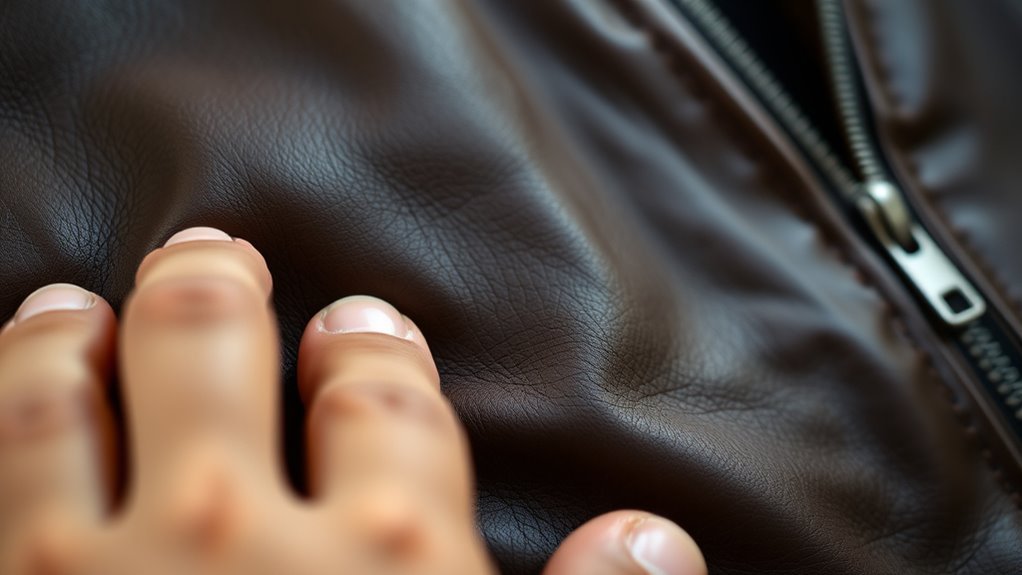
When you examine the texture and grain of a leather jacket, you can quickly spot whether it’s real or fake. Real leather has an uneven, natural grain pattern because it comes from animal hide. You’ll notice subtle imperfections, like tiny scars or pores, which add to its authenticity.
Fake leather often looks too perfect, with a uniform texture that feels plastic-like or synthetic. Run your fingers over the surface; genuine leather feels soft yet firm, while faux leather tends to be smoother and less flexible.
Also, real leather shows natural wrinkles and creases when bent, whereas fake leather resists bending or cracks easily. Paying close attention to these details helps you confidently identify authentic leather jackets.
Check the Smell for Authenticity

Although it’s easy to overlook, the smell of a leather jacket can reveal a lot about its authenticity. Real leather has a distinct, rich, earthy scent that synthetic materials can’t replicate.
When you get close, you should notice a natural, slightly musky aroma that feels warm and genuine. If the jacket smells like chemicals, plastic, or has a strong artificial fragrance, it’s likely fake or heavily treated.
Keep in mind that some genuine leather jackets might have a mild scent due to tanning, but it should never be overpowering or unpleasant. Trust your nose. If the scent feels off or artificial, it’s a red flag.
Smelling the jacket gives you a quick, effective way to help determine if it’s real leather.
Inspect the Edges and Backing Material

If you want to confirm a leather jacket’s authenticity, closely examine the edges and backing material. Real leather has rough, fibrous edges because it’s cut directly from animal hide, whereas faux leather often has perfectly smooth, plastic-like edges.
Flip the jacket inside out and look at the backing, the side opposite the smooth outer surface. Genuine leather usually has a suede-like, slightly fuzzy backing, showing natural texture.
Synthetic leather often has a fabric or plastic backing that feels uniform and artificial.
Also, check if the edges show signs of peeling or flaking; real leather won’t peel, but faux leather might. Paying attention to these details helps you spot genuine leather quickly and avoid being fooled by imitations.
Perform the Water Absorption Test
After checking the edges and backing material, another simple way to verify real leather is by performing the water absorption test. Take a small drop of water and place it on an inconspicuous area of the jacket.
If the leather is genuine, it will absorb the water slowly, darkening the spot temporarily. This happens because real leather is porous and can soak up moisture.
On the other hand, synthetic leather repels water, causing the drop to bead on the surface without soaking in. Avoid soaking the jacket; just a small drop is enough.
After a few minutes, the real leather spot will dry and return to its original color. This quick test can give you clear insight into whether your jacket is authentic or fake.
Look at the Stitching and Craftsmanship
When you examine the stitching and craftsmanship of a leather jacket, you can quickly spot signs of authenticity or imitation. Real leather jackets feature tight, even stitches and reinforced seams. Synthetic or fake leather often has uneven stitching or loose threads.
Check inside the jacket too. The lining and inner seams reveal a lot about quality and care. Here’s a quick guide:
| Feature | Real Leather | Fake Leather |
|---|---|---|
| Stitching Quality | Even, tight, durable | Uneven, loose, easily frayed |
| Seam Reinforcement | Double-stitched or taped | Single stitch, weak reinforcement |
| Lining Material | High-quality fabric, smooth finish | Cheap, rough or synthetic feel |
| Edge Finishing | Neatly trimmed, no fraying | Rough edges, frayed or peeling |
| Hardware | Solid metal zippers and buttons | Plastic or lightweight metal parts |
Conduct the Burn Test Carefully
Though it might seem risky, you can use the burn test to identify real leather with caution. First, find a small, hidden area on the jacket, like inside a seam, to avoid visible damage.
Use a lighter or match to expose the edge to a small flame briefly, then quickly blow it out. Real leather will smell like burnt hair and char slowly, leaving a black, crumbly ash.
In contrast, synthetic leather burns quickly, smells like plastic, and melts into a hard residue. Remember to do this test in a well-ventilated space and keep a fire extinguisher nearby for safety.
Avoid burning large areas. Just a tiny spot is enough to tell the difference without ruining your jacket.
Understand the Price and Brand Reputation
Since genuine leather requires quality materials and skilled craftsmanship, you’ll usually find it priced higher than synthetic alternatives. When shopping, consider the brand reputation and price point.
Premium brands often invest in superior tanning processes, ensuring the jacket’s durability and authentic feel. Be cautious if a “designer” jacket is unusually cheap; it could be a sign of faux leather or poor quality.
| Price Range | Brand Reputation |
|---|---|
| High ($300+) | Established, trusted brands |
| Moderate ($150-$300) | Emerging brands with good reviews |
| Low ($50-$150) | Lesser-known or fast fashion brands |
| Very Low (<$50) | Likely synthetic or low-quality leather |
Understanding these factors helps you make an informed choice and avoid counterfeit or low-quality jackets.
Frequently Asked Questions
How Should I Care for a Real Leather Jacket?
You should keep your real leather jacket dry and clean it with a damp cloth. Condition it regularly to maintain its softness and prevent cracking.
Avoid direct sunlight as it can cause the leather to fade and dry out. Store your jacket in a cool, well-ventilated place to keep it fresh.
Don’t use harsh chemicals or machine wash it, as these can damage the leather. Proper care will help your jacket last for years.
Can Real Leather Jackets Be Waterproofed?
Absolutely, you can give your leather jacket a little extra protection by waterproofing it. Just use a suitable leather conditioner or spray, and you’ll keep it looking sharp and ready for unexpected weather adventures.
Waterproofing helps to repel water and prevent damage, extending the life of your jacket. Make sure to follow the product instructions carefully for the best results.
What Are Common Types of Leather Used in Jackets?
You’ll find common leather types like cowhide, lambskin, and goatskin used in jackets. Cowhide is durable, lambskin feels soft and supple, while goatskin offers flexibility and water resistance, making each unique in style and function.
How Do I Store a Leather Jacket Properly?
Treat your leather jacket like treasure—hang it on a wide, padded hanger to keep its shape. Store it in a cool, dry place, and avoid plastic bags so it can breathe and stay supple, not stiff.
Proper storage helps maintain the jacket’s quality and longevity, preventing cracks and damage. Regularly check for any signs of wear or moisture to keep it looking its best.
Can Real Leather Jackets Be Repaired if Damaged?
Yes, you can repair real leather jackets if damaged. You’ll want to use leather repair kits or consult a professional for tears, scratches, or scuffs to restore its look and durability effectively.
Conclusion
When you’re deciding if a leather jacket is real, trust your senses and these simple tests. For example, imagine you’re eyeing a jacket that looks perfect but smells like plastic—chances are, it’s faux. Real leather feels textured, absorbs a bit of water, and has natural imperfections.
By checking the stitching and knowing the brand’s reputation, you’ll avoid costly mistakes and confidently pick an authentic, quality jacket you’ll love wearing. Recognizing real leather jackets is essential for making a smart purchase that combines style and durability.