7 Essential Tips on What to Use on Leather Seats in Your Car
To keep your car’s leather seats soft and durable, use a pH-balanced leather cleaner (pH 5-7) with a soft microfiber cloth. Avoid harsh chemicals like ammonia, bleach, and alcohol that can damage leather. Regular cleaning is key to maintaining the quality of leather seats in your car.
Regularly apply a quality leather conditioner to replenish oils and prevent cracking. Always test products on a hidden area first to ensure compatibility. Conditioning helps extend the life of your leather and keeps it looking fresh.
Protect your seats with a UV-resistant spray to guard against sun damage. Clean and condition consistently for the best results. Following these steps guarantees your leather seats stay in great shape—there’s more to discover about proper care.
Choose a Ph-Balanced Leather Cleaner

When you clean your leather seats, choosing a pH-balanced leather cleaner protects the material from damage. Leather is sensitive to harsh chemicals and extreme pH levels, which can cause cracking, fading, or stiffness.
A cleaner with a neutral pH, typically around 5 to 7, gently lifts dirt and oils without stripping the leather’s natural oils. Avoid using household cleaners or detergents, as they often have high alkalinity that harms leather.
Always check the product label to confirm it’s designed specifically for leather care. Using a pH-balanced cleaner helps maintain the seat’s softness, appearance, and longevity.
Use a Soft Microfiber Cloth for Application

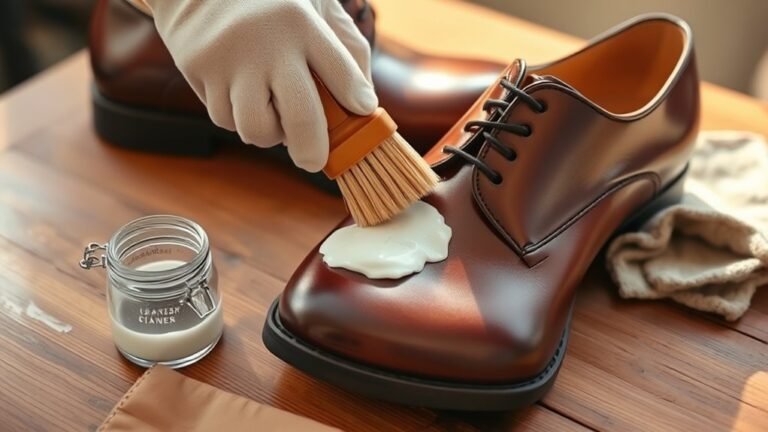
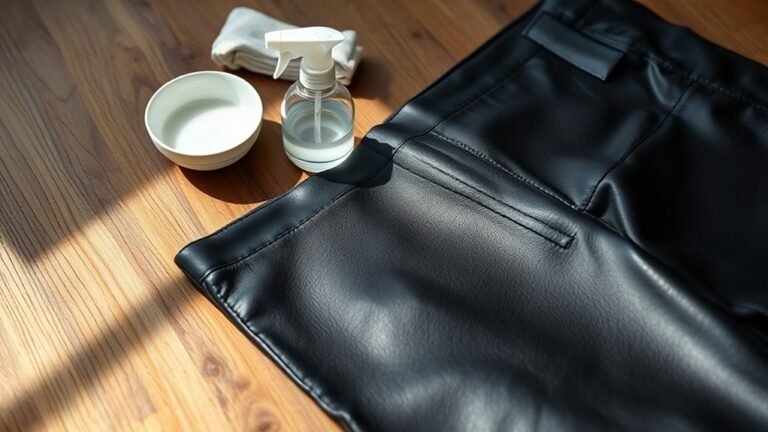
After choosing a pH-balanced cleaner, grab a soft microfiber cloth to apply it gently to your leather seats. This type of cloth is ideal because it won’t scratch or damage the leather’s surface.
Dampen the cloth slightly with the cleaner and work in small sections, using gentle circular motions to lift dirt and grime. Avoid soaking the leather; excess moisture can lead to damage.
Microfiber cloths also trap dirt effectively, preventing it from rubbing back onto the leather.
Once you’ve cleaned a section, use a dry part of the cloth or a new one to buff the area, restoring its natural luster.
Using a soft microfiber cloth ensures your leather seats stay clean and well-maintained without risking harm to the material.
Avoid Harsh Chemicals and Household Cleaners

Although it might be tempting to use household cleaners on your leather seats, you should avoid harsh chemicals that can strip away natural oils and cause cracking or discoloration. These substances often contain ammonia, bleach, or alcohol, which damage leather over time.
Instead, stick to products specifically designed for leather care to keep your seats looking fresh and supple.
| Chemical Type | Common Household Product | Effect on Leather |
|---|---|---|
| Ammonia | Glass Cleaner | Dries out, causes cracking |
| Bleach | Disinfectants | Fades color, weakens fibers |
| Alcohol | Hand Sanitizers | Strips oils, dulls finish |
| Vinegar | All-Purpose Cleaners | Alters texture, stains |
| Detergents | Dish Soap | Removes protective coating |
Protect your investment by choosing gentle, leather-safe cleaners only.
Apply a Quality Leather Conditioner Regularly
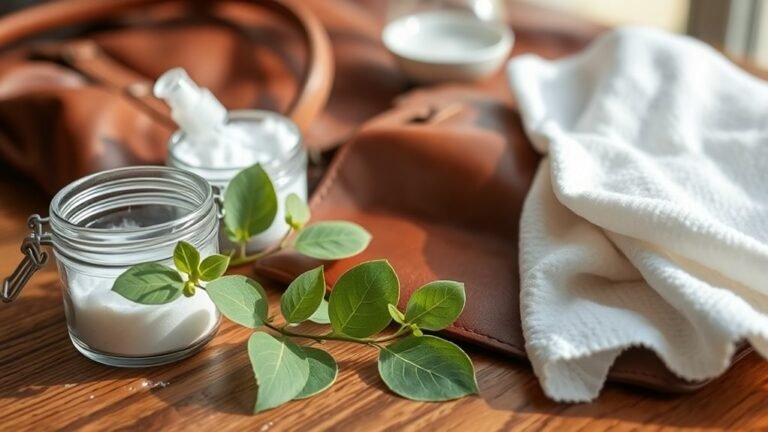
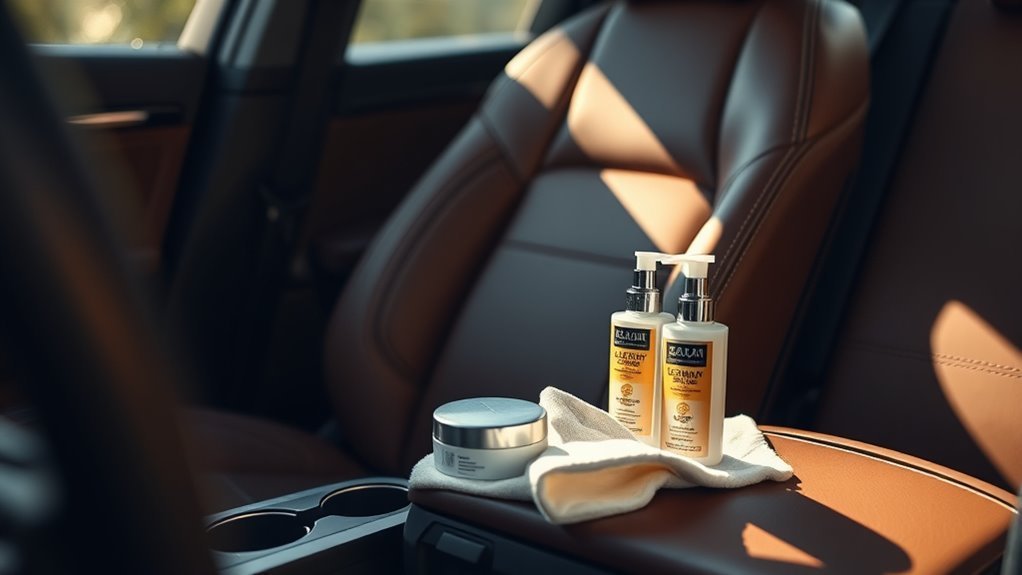
To keep your leather seats soft and prevent cracking, you should apply a quality leather conditioner regularly. Conditioning replenishes the natural oils leather loses over time, maintaining its flexibility and rich appearance.
After cleaning your seats, apply the conditioner evenly using a soft cloth or sponge, working it gently into the leather. Let it absorb fully before wiping off any excess to avoid a sticky residue.
Depending on your climate and usage, condition your seats every three to six months. This routine helps protect against drying, fading, and premature wear, extending your seats’ lifespan.
Test Products on a Small Hidden Area First
Before applying any new product to your leather seats, you should always test it on a small hidden area first. This simple step helps you avoid damaging your seats with harsh chemicals or unexpected reactions.
Choose a spot that’s not easily visible, like under the seat or inside a crease. Apply a small amount of the product and wait for at least 24 hours to see how the leather responds.
Look for any discoloration, texture changes, or residue buildup.
If the leather looks and feels normal, you can safely proceed with treating the entire seat. Testing first protects your investment and guarantees the product is compatible with your car’s specific leather type, giving you peace of mind before a full application.
Protect Seats With a Uv-Resistant Spray
Once you’ve confirmed that a product is safe for your leather, it’s smart to protect your seats from sun damage. UV rays can cause fading, cracking, and drying, which ruin your seats’ appearance and lifespan.
Using a UV-resistant spray specifically designed for leather creates a protective barrier against harmful sunlight. Apply the spray evenly, following the instructions, and allow it to dry completely before using the car.
Reapplying every few months guarantees continuous protection, especially if you park outdoors frequently. This simple step helps maintain your seats’ color and suppleness, saving you from costly repairs or replacements.
Don’t skip this essential layer of defense. Your leather seats will thank you with lasting beauty and durability.
Clean and Condition Seats Consistently
Although protecting your leather seats from UV damage is essential, you can’t overlook the importance of regular cleaning and conditioning to keep them looking their best. You should clean your seats at least once a month using a gentle leather cleaner to remove dirt and oils that can cause deterioration.
After cleaning, always apply a high-quality leather conditioner to restore moisture and prevent cracking. Conditioning keeps the leather supple and extends its lifespan, so don’t skip this step.
Be sure to use products specifically designed for automotive leather to avoid damage. Consistency is key. Make cleaning and conditioning a routine part of your car maintenance.
This simple practice will preserve your seats’ appearance, comfort, and value, ensuring your leather stays soft, smooth, and well-protected over time.
Frequently Asked Questions
Can I Use Baby Wipes to Clean Leather Seats?
You shouldn’t use baby wipes on leather seats because they often contain alcohol or harsh chemicals that can dry out or damage the leather.
Instead, use a cleaner specifically designed for leather to keep it soft and protected.
How Often Should Leather Seats Be Cleaned in Humid Climates?
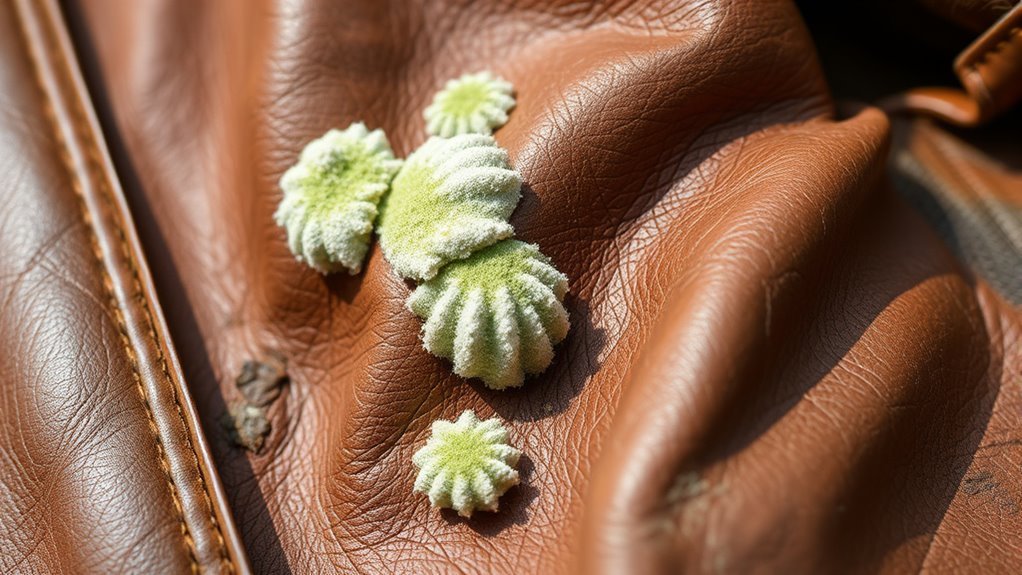
Imagine morning dew settling on leather—clean your seats every two weeks in humid climates to prevent mold and mildew buildup.
This routine keeps your leather fresh, soft, and crack-free despite the damp air around you.
Are Homemade Leather Cleaning Solutions Effective and Safe?
You can use homemade leather cleaning solutions, but you should be cautious. They’re effective for light cleaning but might not protect or condition the leather properly.
Always test on a small area first to avoid damage.
What Temperature Is Ideal for Cleaning Leather Seats?
You should clean leather seats at room temperature, around 68-72°F (20-22°C). Avoid extreme heat or cold, as they can damage the leather.
Keeping the temperature moderate helps your cleaning products work effectively without harming the material.
Can Leather Seat Covers Damage the Original Leather Underneath?
Yes, leather seat covers can sometimes damage the original leather underneath if they trap moisture or cause friction.
You should choose breathable covers and regularly check and clean both the cover and the seat to prevent damage.
Conclusion
When you care for your leather seats with the right cleaner and conditioner, you’re not just protecting your car—you’re preserving memories. Imagine the gentle touch of a soft microfiber cloth gliding over smooth leather, like a breeze on a sunny day.
By avoiding harsh chemicals and using UV protection, you guarantee your seats stay vibrant, just like those bright, carefree drives. Keep this routine, and your leather will age as beautifully as your journeys. Using proper leather seat care products ensures long-lasting beauty and comfort for your car’s interior.