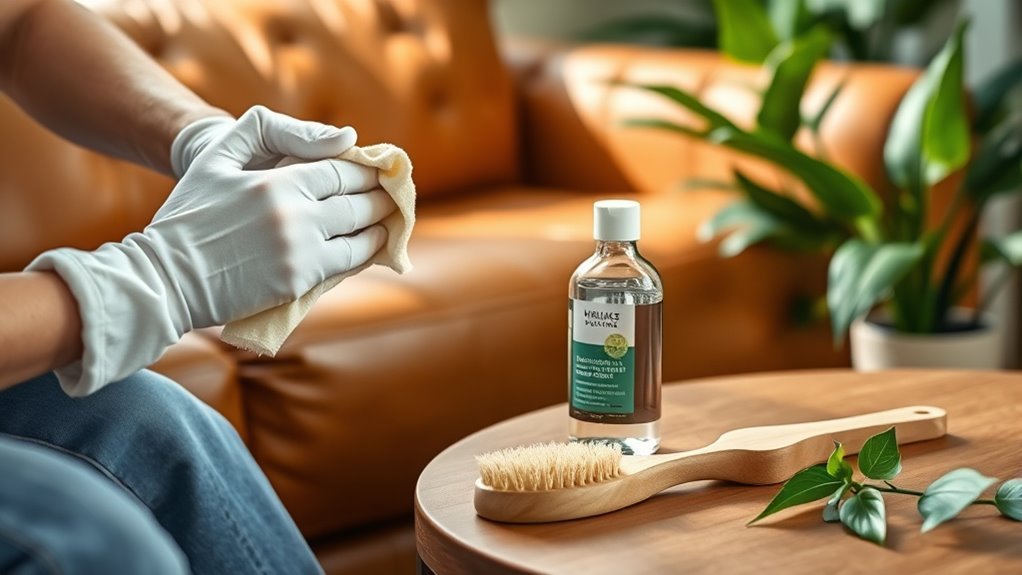
How Should I Clean My Leather Couch and What Products Should I Use?
To clean your leather couch effectively, it’s important to understand the type of leather you have—whether it’s full-grain, top-grain, or bonded leather. Proper leather couch cleaning involves regular dusting with a soft cloth and avoiding harsh chemicals that can damage the material.
Keep your couch out of direct sunlight to prevent fading and cracking. When cleaning, use a mild soap solution with a damp cloth for gentle care. After cleaning, apply a leather-specific conditioner such as Lexol or Leather Honey to maintain softness and flexibility.
Address stains promptly using a leather-safe cleaner to avoid permanent damage. Consistent upkeep and using the right products will help preserve your leather couch’s appearance and longevity. Understanding proper care is essential for maintaining your couch’s look over time.
Understanding Different Types of Leather

How do you know which type of leather your couch is made from? First, check the product label or ask the retailer for specifics. There are mainly three types: full-grain, top-grain, and bonded leather.
Full-grain leather is the most durable and natural, showing the hide’s imperfections. Top-grain leather is sanded and treated for a smoother finish but still strong. Bonded leather, made from leather scraps bonded with polyurethane, looks like real leather but is less durable.
You can also feel the texture. Full-grain feels more natural and breathable, while bonded leather is synthetic and less flexible.
Identifying your couch’s leather type helps you choose the right cleaning method and products to keep it looking great without damage.
Daily Maintenance Tips for Leather Couches

Knowing the type of leather your couch is made from allows you to tailor your daily care routine effectively. Start by dusting your couch with a soft, dry cloth every few days to prevent dirt buildup.
Identify your leather type to customize care and keep your couch dirt-free with regular dusting.
Avoid using harsh chemicals or abrasive tools that can damage the leather’s surface. Keep your couch away from direct sunlight and heat sources to prevent fading and cracking.
Wipe up spills immediately with a clean, damp cloth to avoid stains.
You can also condition your leather couch once a month using a recommended leather conditioner to maintain its softness and prevent drying.
Finally, rotate cushions regularly to ensure even wear and preserve your couch’s appearance longer. These simple steps keep your leather couch looking fresh and durable.
Step-by-Step Cleaning Process for Leather Sofas

Before you plunge into cleaning your leather sofa, gather all necessary supplies like a soft cloth, mild soap, and leather conditioner. First, vacuum your sofa using a soft brush attachment to remove dust and debris from crevices.
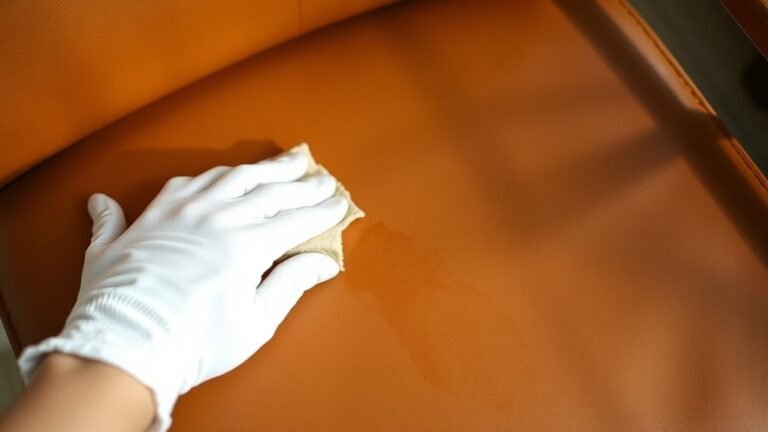
Next, mix a small amount of mild soap with water to create a gentle cleaning solution. Dampen the cloth with this solution, don’t soak it, and wipe the entire surface, working in small sections. Avoid harsh scrubbing to protect the leather’s finish.
Once you’ve cleaned the sofa, use a dry cloth to remove any excess moisture.
Finally, apply leather conditioner evenly to keep the leather supple and prevent cracking. Let it absorb fully before using the sofa again.
Repeat this process every few months for best results.
Recommended Cleaning Products for Leather
Choosing the right cleaning products plays a crucial role in maintaining your leather couch’s appearance and durability. Opt for pH-balanced leather cleaners designed specifically for your couch type. These gently remove dirt without stripping natural oils.
Avoid harsh chemicals like ammonia or bleach, which can dry out and damage leather.
You can also use a mild soap solution made with a few drops of gentle liquid soap mixed in water, but test it on a hidden spot first.
After cleaning, apply a leather conditioner to keep the material soft, supple, and protected from cracking.
Brands like Lexol, Chamberlain’s Leather Milk, and Leather Honey offer reliable products that are widely recommended.
Using the right products regularly will extend your couch’s life and keep it looking great.
Dealing With Stains and Spot Treatments
How do you tackle stains on your leather couch without causing damage? Start by blotting the stain gently with a clean, dry cloth. Never rub, as this can spread the stain or push it deeper.
For fresh spills, use a slightly damp cloth and mild soap, but test it on an inconspicuous spot first. Avoid harsh chemicals or abrasive cleaners.
For tougher stains like ink or grease, specialized leather stain removers or saddle soap work well; again, test before applying broadly.
After treating the stain, wipe the area with a damp cloth to remove residue and dry it thoroughly.
Finally, condition the leather to restore moisture and prevent cracking. Acting quickly and carefully guarantees your couch stays beautiful without compromising the leather’s integrity.
Frequently Asked Questions
Can Leather Couches Be Cleaned With Vinegar or Baking Soda?
You shouldn’t clean leather couches with vinegar or baking soda because they can damage the leather’s finish.
Instead, use a leather cleaner and conditioner designed to protect and preserve your couch’s surface safely.
How Often Should I Condition My Leather Couch?
You should condition your leather couch every 6 to 12 months to keep it soft and prevent cracking.
If it’s in a dry or sunny spot, consider conditioning it more often to maintain its durability.
Is It Safe to Use a Steam Cleaner on Leather?
You shouldn’t use a steam cleaner on leather; it can damage the material by drying it out or causing cracks.
Instead, stick to gentle leather cleaners and conditioners designed specifically for your couch’s type.
Can I Use Baby Wipes to Clean My Leather Sofa?
You can use baby wipes occasionally to clean your leather sofa, but avoid those with alcohol or harsh chemicals.
Always test a small hidden area first to prevent damage and follow up with a leather conditioner to keep it soft.
How Do I Prevent My Leather Couch From Cracking?
You might think frequent cleaning causes cracking, but actually, you prevent it by regularly conditioning your leather with a quality leather conditioner, keeping it away from direct sunlight and heat, and maintaining proper humidity in your home.
Leather dries out and cracks when exposed to harsh conditions, so moisturizing it with conditioner helps maintain its flexibility and appearance.
Avoid placing your leather couch near heaters or in direct sunlight to prevent fading and drying.
Maintaining a balanced humidity level in your home also helps keep the leather supple and less prone to cracking.
Conclusion
So, now that you’re basically a leather whisperer, remember: your couch isn’t just furniture—it’s your prized pet that demands gentle pampering. Skip harsh chemicals unless you want your sofa to look like a crime scene. Stick to the right products, clean regularly, and treat stains like unwanted party guests—swiftly and firmly.
After all, if leather could talk, it’d probably beg you to stop using anything but the gentlest touch. Good luck, leather hero! When it comes to how to clean my leather couch, always choose gentle, leather-safe cleaners and conditioners to keep your furniture looking its best.