7 Tips for the Best Way to Clean Leather Furniture
To clean your leather furniture effectively, start with mild, pH-balanced cleaners and avoid harsh chemicals. Using the best way to clean leather furniture ensures its longevity and keeps it looking pristine. Always test any product on a hidden spot first.
Use a soft cloth or sponge, dampened lightly—not soaked—to wipe surfaces. Act fast to blot spills to prevent stains, and condition the leather regularly to keep it soft and supple. Keep your furniture out of direct sunlight to avoid fading or cracking.
Follow these tips and you’ll discover even more ways to protect your leather’s beauty. Regular care not only maintains its appearance but also extends the life of your cherished pieces.
Choose the Right Cleaning Products for Leather

Although leather is durable, you need to be careful about what cleaning products you use to keep it looking its best. Harsh chemicals, like bleach or ammonia-based cleaners, can damage the leather’s surface and cause discoloration.
Instead, opt for mild, pH-balanced cleaners specifically designed for leather. These products gently remove dirt without stripping natural oils.
Avoid using household detergents or abrasive scrubbing tools, as they can scratch or dry out the leather.
You can also use a simple solution of diluted mild soap and water for routine cleaning, but make sure to wipe it off with a damp cloth and dry immediately.
Choosing the right cleaner preserves your leather’s texture and extends its lifespan, so always prioritize products meant for leather care.
Test Cleaners on a Hidden Area First

Before applying any cleaner to your leather furniture, test it on a hidden spot first to be certain it won’t cause discoloration or damage. Pick a discreet area, like the underside of a cushion or the back of the piece, where any unexpected results won’t be noticeable.
Always test cleaners on a hidden leather spot to prevent discoloration or damage before full application.
Apply a small amount of the cleaner and wait a few minutes to observe any changes in color or texture. If the leather darkens, fades, or feels sticky, stop immediately and try a different product.
Testing first helps you avoid ruining your furniture’s appearance and ensures the cleaner is compatible with your leather type. This simple step saves time and money by preventing costly mistakes before you clean the entire surface.
Always prioritize safety for your leather’s longevity.
Use a Soft Cloth or Sponge for Cleaning

When cleaning your leather furniture, choose a soft cloth or sponge to avoid scratching or damaging the surface. Microfiber cloths work great because they’re gentle yet effective at lifting dirt and dust without abrasion.
Avoid rough materials like scrub brushes or abrasive pads, which can leave marks or wear down the leather finish. Dampen your cloth or sponge slightly with water or a recommended leather cleaner, then wipe the furniture in gentle, circular motions.
This ensures even cleaning and helps maintain the leather’s natural texture. Remember to rinse and wring out your cloth often to prevent dirt buildup.
Using the right tools makes a big difference in preserving your leather’s appearance and extending its life.
Avoid Excessive Water and Harsh Chemicals
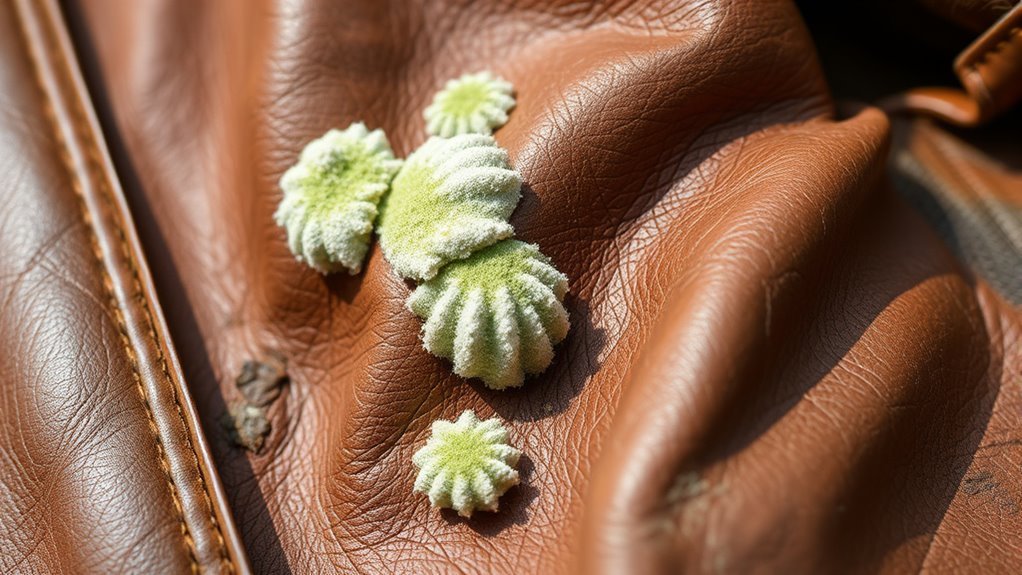
Using the right cleaning tools is only part of the process; you also need to be careful with the amount of water and types of cleaners you use. Leather is sensitive to moisture, so avoid soaking it. Too much water can cause stains, warping, or even mildew.
Instead, dampen your cloth or sponge lightly, just enough to clean without saturating the surface.
Stay away from harsh chemicals like bleach, ammonia, or abrasive cleaners, as they can strip the leather’s natural oils and damage its finish.
Opt for gentle, leather-specific cleaning products or a mild soap diluted in water.
Clean Spills Immediately to Prevent Stains
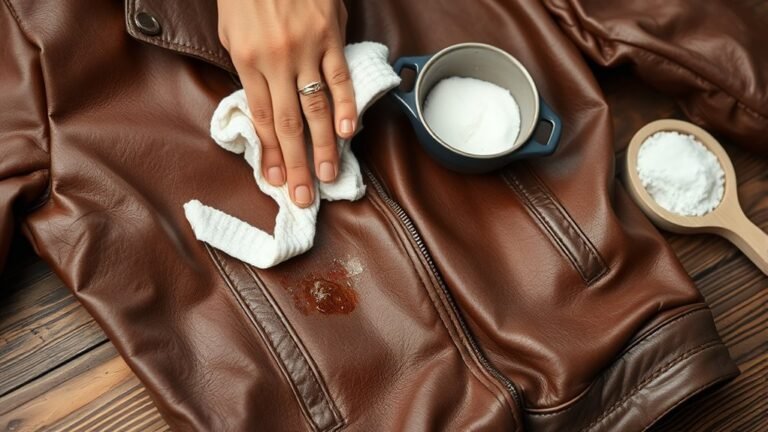
Although leather is durable, spills can quickly cause stains if you don’t act fast. When something spills on your leather furniture, grab a clean, dry cloth and gently blot the area. Avoid rubbing, which can spread the liquid and embed it deeper.
For tougher spills, use a slightly damp cloth, but don’t soak the leather. Acting quickly prevents permanent marks and keeps your furniture looking fresh.
| Spill Type | Immediate Action |
|---|---|
| Water | Blot with dry cloth |
| Oil-based | Blot, then use leather cleaner |
| Ink | Use rubbing alcohol sparingly |
| Food | Blot, then clean with mild soap |
Prompt action is key to maintaining your leather’s pristine appearance.
Condition Leather Regularly to Maintain Softness
Since leather naturally dries out over time, you should condition it regularly to keep it soft and supple. Conditioning replenishes the natural oils that evaporate, preventing cracking and stiffness.
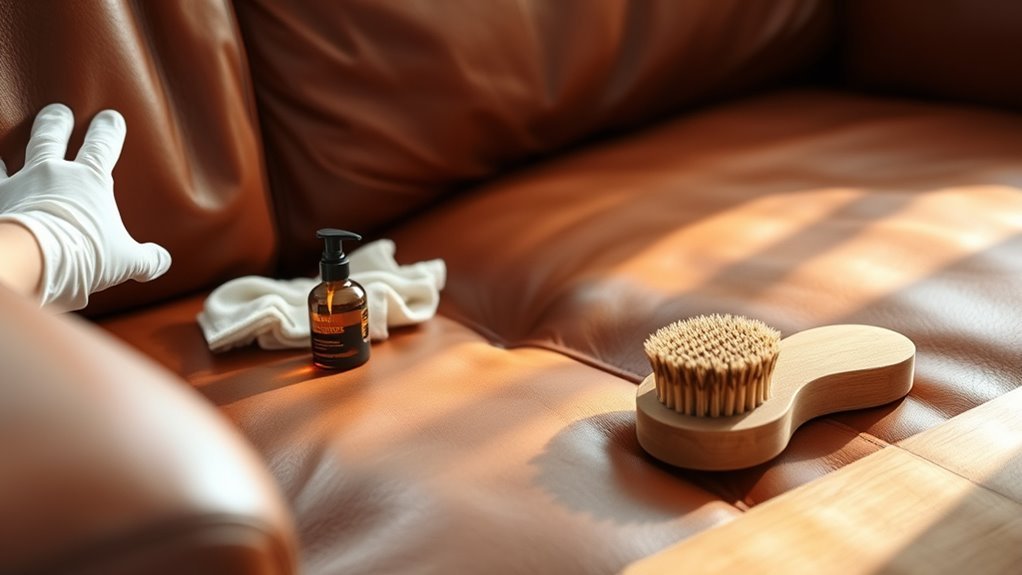
Use a high-quality leather conditioner designed for your furniture type. Apply a small amount with a clean, soft cloth, working it in gently using circular motions. Let it absorb fully before using the furniture again.
Aim to condition your leather every six to twelve months, or more often in dry climates. Avoid over-conditioning, as it can lead to a sticky surface.
Regular conditioning not only maintains softness but also extends the life of your leather furniture, keeping it looking fresh and inviting for years to come.
Keep Leather Furniture Away From Direct Sunlight
When you place leather furniture in direct sunlight, the heat and UV rays can cause the material to fade, dry out, and crack over time. To protect your investment, position your leather pieces away from windows or use curtains and blinds to block harsh sunlight during peak hours.
If moving the furniture isn’t an option, consider applying a UV-protective conditioner designed for leather. This helps shield the surface from damage while maintaining its suppleness.
Remember, even indirect sunlight can gradually harm leather, so monitor the lighting in your room and adjust as needed.
Frequently Asked Questions
Can Leather Furniture Be Cleaned With Vinegar or Baking Soda?
You shouldn’t clean leather furniture with vinegar or baking soda because they can damage the leather.
Instead, use a leather cleaner or a mild soap solution to gently wipe it, then condition it to keep it soft and protected.
How Often Should Leather Furniture Be Professionally Cleaned?
You should have your leather furniture professionally cleaned every 12 to 18 months. This keeps it looking fresh and prevents dirt buildup.
Regular maintenance in between helps, but a deep clean once a year is ideal.
Is It Safe to Use a Vacuum Cleaner on Leather Furniture?
You won’t suck the life out of your leather by using a vacuum! Just don’t use a beater brush attachment—stick to a soft brush or crevice tool, and you’ll keep your furniture looking fabulous.
What Are the Signs That Leather Furniture Needs Repair?
You’ll notice cracks, peeling, or discoloration on your leather furniture when it needs repair. Also, pay attention to loose stitching or sagging cushions—these signs mean you should fix it soon to prevent further damage.
Can Leather Furniture Be Dyed to Cover Discoloration?
Yes, you can dye leather furniture to cover discoloration. Just make sure you clean it thoroughly first, use a dye designed for leather, and test on a small area to avoid unwanted color changes or damage.
Conclusion
Taking good care of your leather furniture not only keeps it looking great but also extends its life. Did you know that properly maintained leather can last over 15 years? By choosing the right products, cleaning spills immediately, and conditioning regularly, you’ll preserve its softness and beauty.
Remember to avoid harsh chemicals and direct sunlight to prevent damage. These steps are essential to maintain the durability and appearance of your leather pieces. Follow these tips, and your leather furniture will stay stylish and comfortable for years to come!
In conclusion, regular cleaning and proper conditioning are key to the best way to clean leather furniture. Using suitable leather care products and timely maintenance ensures your furniture remains in top condition, preserving its elegance and longevity.