How to Recondition Leather: Step-by-Step Guide for Renewal
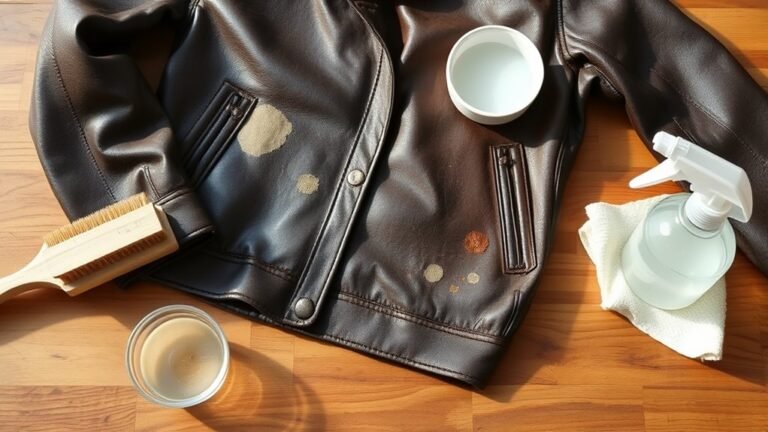
To recondition leather effectively, it is essential to understand the type of leather you are working with and use the right techniques to clean and restore it. Start by gently removing dirt and grime with a damp cloth and mild soap to prevent any damage.
Allow the leather to air dry naturally, keeping it away from direct heat sources.
Next, address any scratches or cracks by applying leather fillers or matching dyes to repair the surface.
Once repaired, apply a quality leather conditioner evenly to restore moisture and flexibility. Buff off any excess conditioner to achieve a smooth finish.
Regular cleaning and conditioning every few months will keep your leather supple and durable.
If you want to bring your leather back to life fully, there’s more to explore.
Understanding Leather Types and Their Care Requirements

When you understand the type of leather you’re working with, you’ll know exactly how to care for it properly. Full-grain leather is the highest quality, retaining the entire grain, making it durable and perfect for regular cleaning and conditioning to maintain its natural patina.
Top-grain leather, though sanded for smoothness, requires similar leather care but is slightly less durable. Genuine leather, made from lower-quality layers, needs gentler treatment as it shows wear faster.
Different leather types demand specific cleaning routines; for instance, water-resistant chrome-tanned leather handles moisture better than vegetable-tanned leather, which develops a unique patina but is more sensitive. Proper leather maintenance tailored to each type ensures your items last longer and stay looking great.
Preparing Leather for Reconditioning
Knowing your leather type helps you choose the right cleaning method before reconditioning. To prepare, first clean the surface to remove dirt, oils, and stains that can prevent conditioning products from absorbing properly.
Understanding your leather type ensures proper cleaning and optimal absorption of conditioners before reconditioning.
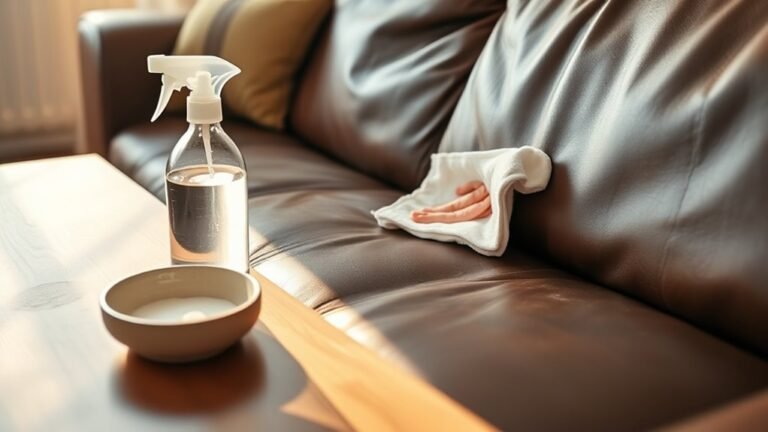
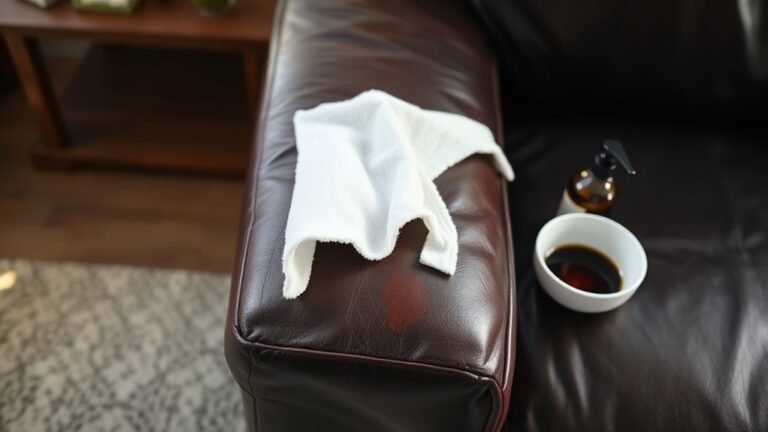
Use a damp, lint-free cloth with a mild soap or leather cleaner. Gently wipe the leather in circular motions, focusing on one small area at a time to avoid damage.
After cleaning, let the leather air dry completely in a well-ventilated space, away from direct sunlight or heat sources that could cause cracking. Before applying any product, test it on a hidden spot to ensure it won’t discolor or harm the leather.
This careful preparation guarantees your leather is ready to absorb conditioners evenly and effectively.
Techniques for Repairing Leather Damage
Before you start repairing leather damage, carefully assess the type and extent of the issues, such as scratches, cracks, or fading. This damage assessment guides your leather repair approach for effective restoration.
For cracks and splits, apply leather fillers in thin layers, letting each dry fully. Minor scratches blend well with a moisturizing conditioner or matching colorant.
Use leather dye to refresh faded or discolored spots, ensuring even coverage and seamless blending. Remember, proper conditioning after repair rehydrates leather, maintaining flexibility and preventing future damage.
Fill cracks with specialized leather fillers, layer by layer
Camouflage scratches using conditioner or color-matching products
Restore color using high-quality leather dye and blend carefully
Follow up with conditioning to keep leather supple and smooth

Applying Conditioning and Moisturizing Treatments
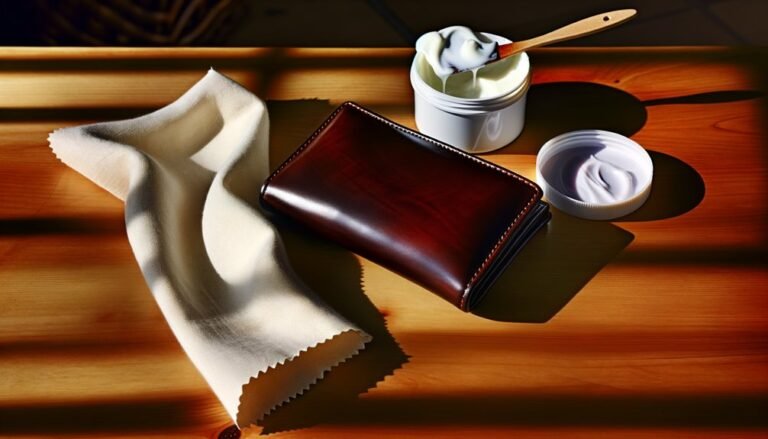
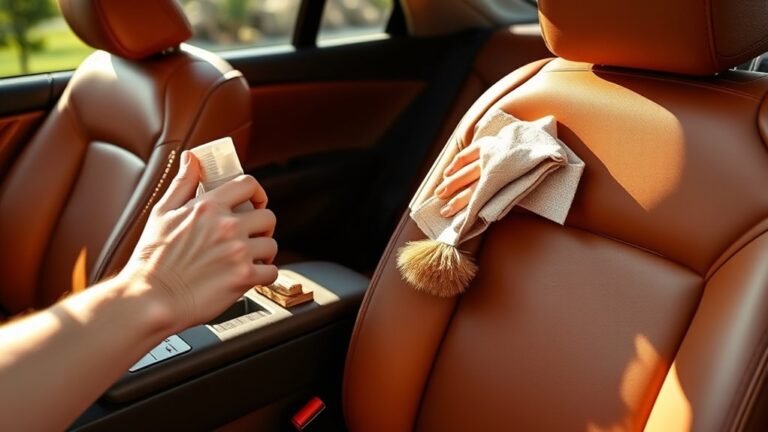
Although leather repair restores appearance, applying conditioning and moisturizing treatments is essential to maintain its softness and durability. To do this, use a high-quality leather conditioner and apply evenly with a soft cloth, working in circular motions for thorough coverage.
Let the product penetrate the leather for 15-20 minutes before buffing off excess with a clean, dry cloth. This process helps prevent drying and cracking while restoring flexibility. Choose a pH-balanced moisturizer designed specifically for leather to guarantee ideal care.
Regular conditioning every 3-6 months, depending on usage and environment, keeps your leather hydrated and resilient. Be careful not to over-condition, as too much product can cause greasiness and attract dirt. Following these steps will keep your leather looking and feeling its best.
Best Practices for Maintaining Reconditioned Leather
After conditioning and moisturizing your leather, maintaining its restored quality requires consistent care. Proper leather maintenance includes regular leather cleaning and moisture control to prevent cracking and preserve suppleness. To keep your leather looking its best, follow these steps:
Clean leather gently with a soft, damp cloth and pH-balanced cleaner to remove dirt buildup.
Apply a quality leather conditioner every 3 to 6 months to restore suppleness and prevent drying.
Use a matching leather balm to restore color and maintain uniform appearance. Store leather items properly in a cool, dry place, avoiding direct sunlight and heat sources.
Frequently Asked Questions
What Is the Best Thing to Rejuvenate Leather?
The best thing to rejuvenate leather is using a high-quality leather conditioner that deeply moisturizes and restores suppleness. You’ll want to clean it gently first, then apply conditioner or oils like mink or neatsfoot for lasting softness.
How to Rehydrate Leather?
You’ll want to apply a quality leather conditioner that restores up to 80% of lost moisture. Gently massage it in, test a small spot first, and let it absorb in a cool, shaded place overnight.
Will WD-40 Restore Leather?
No, WD-40 won’t restore your leather properly. It might make it look shiny briefly, but it can damage the material over time.
Use a dedicated leather conditioner instead to nourish and protect your leather effectively.
Can You Bring Worn Leather Back to Life?
Like a wilted plant revived by water, you can bring worn leather back to life by cleaning, conditioning, and occasionally repairing it.
With consistent care, your leather will regain softness, flexibility, and a refreshed look over time.
Conclusion
Now that you know how to recondition leather, you’re ready to bring tired pieces back to life like a skilled artist restoring a masterpiece. Just remember, each type of leather needs its own special care, and prepping it well sets the foundation for success.
With regular conditioning and mindful maintenance, your leather will stay soft, supple, and stunning for years to come. Treat it right, and it’ll reward you with timeless beauty.
Proper leather care and reconditioning are essential for preserving the quality and appearance of your leather goods. By following these steps, you ensure your leather remains durable and attractive over time.