How to Tell if a Leather Jacket Is Real With Step-By-Step Tips
To tell if your leather jacket is real, start by feeling its texture—you’ll notice natural grain and slight imperfections on genuine leather. Sprinkle a bit of water; real leather absorbs it slowly and darkens temporarily. Sniff the jacket; real leather has a warm, earthy scent unlike the chemical smell of faux.
Check the edges for roughness and look at the back side, which should be fibrous and suede-like. Want to discover more ways to confirm authenticity?
Examine the Texture and Grain of the Leather

Although it might seem subtle, examining the texture and grain of a leather jacket can quickly reveal if it’s genuine. When you run your fingers over real leather, you’ll notice an uneven, natural grain pattern with slight imperfections.
Fake leather often feels smooth and consistent, lacking that organic feel. Press gently on the surface; genuine leather will show small wrinkles or creases that bounce back, while synthetic materials stay flat or feel plasticky.
Also, real leather tends to have a slightly rougher texture when compared to the overly polished finish of faux leather.
By paying close attention to these tactile details, you can confidently distinguish authentic leather from imitations without relying on labels or brand claims.
This simple step is your first defense against counterfeit jackets.
Perform the Water Absorption Test

Since leather is a natural material, it reacts to moisture differently than synthetic alternatives. To perform the water absorption test, lightly sprinkle a few drops of water onto a small, inconspicuous area of the jacket.
Leather, being natural, absorbs moisture differently than synthetic materials—try sprinkling water on a hidden spot to test it.
If the jacket is made of genuine leather, the water will absorb slowly into the surface, darkening the leather temporarily. This happens because real leather is porous and can soak up moisture.
On the other hand, if the water beads up and remains on the surface without absorption, the jacket is likely made from synthetic or coated materials.
Be sure to dab the area gently with a dry cloth afterward to avoid water stains.
This simple test gives you a quick, effective way to distinguish real leather from fake.
Check the Smell of the Jacket

When you pick up a leather jacket, take a moment to smell it closely, as the scent can reveal whether it’s real or synthetic. Genuine leather has a distinct, rich, earthy aroma that comes from the natural tanning process.
It’s often described as warm and slightly musky, something you won’t find in synthetic materials.
On the other hand, fake leather or pleather usually smells like plastic or chemicals due to the synthetic materials and artificial coatings used.
If the jacket has a strong chemical or glue-like odor, it’s likely not real leather.
Keep in mind, some older or heavily treated leather jackets might have less pronounced smells, but a natural leather scent is generally present.
Trust your nose; it’s one of the quickest ways to identify authenticity.
Inspect the Edges of the Material
If you want to quickly spot real leather, take a close look at the edges of the material. Genuine leather has rough, fibrous edges because it’s made from animal hide and cut naturally.
Fake leather usually has smooth, sealed edges since it’s made from synthetic materials like plastic or coated fabric. When you inspect the edges, check if they look layered or have a plastic-like finish. That’s a clear sign of faux leather.
Real leather edges might feel a bit rough or uneven, while artificial leather edges tend to be uniform and polished.
This simple edge inspection helps you distinguish genuine leather from imitations without relying on complicated tests.
Look at the Backside of the Leather
Although it’s easy to focus on the outer surface, you should also check the backside of the leather to verify its authenticity. Real leather typically has a rough, suede-like texture on the reverse side, showing natural fibers.
Synthetic leather, on the other hand, often has a smooth, fabric or plastic backing that feels more uniform and less fibrous. When you flip the jacket inside out, look closely at this backside; genuine leather’s texture is uneven and slightly fuzzy, while fake leather can look artificial or even shiny.
This difference helps you distinguish between natural and man-made materials quickly. By examining the backside carefully, you gain valuable clues about the jacket’s quality and authenticity without relying solely on the outer appearance.
Assess the Weight and Flexibility
Since genuine leather comes from animal hide, it usually feels heavier and more substantial than synthetic alternatives. When you pick up a real leather jacket, you’ll notice its distinct weight and a certain firmness that feels natural, not plastic-like.
Genuine leather feels heavier and firmer, offering a natural weight unlike plastic-like synthetics.
Flex the leather gently to check its suppleness. Real leather bends smoothly without cracking or feeling stiff. Keep these points in mind to assess weight and flexibility:
- Real leather has a dense, substantial feel in your hands
- It flexes easily but remains firm, showing resilience
- Synthetic leather often feels lighter and less sturdy
- Genuine leather may soften over time but won’t lose integrity
- Watch for unnatural stiffness or overly lightweight material
Observe the Stitching and Craftsmanship
Once you’ve felt the weight and flexibility of a leather jacket, your attention should turn to the stitching and overall craftsmanship. Check the seams closely. Real leather jackets have tight, even stitches without loose threads or gaps.
Look for double stitching in high-stress areas like shoulders and elbows; this shows durability and attention to detail. Inspect the edges where different panels meet. They should align perfectly and feel smooth to the touch.
Poor craftsmanship often signals synthetic materials or low-quality leather. Also, examine the lining and zippers. Quality leather jackets use sturdy, well-installed hardware and smooth linings.
Use the Burn Test Safely
When you want to confirm the authenticity of a leather jacket, performing a burn test can provide clear results. However, you need to do it carefully to avoid damaging the jacket or risking injury.
Here’s how to use the burn test safely:
Choose a small, inconspicuous area like inside a seam or hem. Use a lighter or match to briefly expose the material to flame.
Observe the smell: genuine leather smells like burnt hair, synthetic smells like plastic.
Check the ash: leather leaves coarse, dark ash; synthetic melts and forms hard beads.
Don’t hold the flame too long to prevent permanent damage.
Always prioritize safety and consider alternative tests if you’re unsure about burning the material.
Verify the Brand and Label Authenticity
How can you be sure your leather jacket is truly authentic? Start by closely examining the brand and label. Genuine leather jackets from reputable brands feature high-quality labels with clear, crisp printing and stitching.
Look for consistent fonts, correct spelling, and accurate logos. Check the label’s material; real leather brands often use durable fabric tags rather than cheap paper or plastic. You can also verify authenticity by researching the brand’s official website to compare labels and tags.
Ensure labels have consistent fonts, correct spelling, and durable fabric tags for genuine leather authenticity.
Some brands include serial numbers or authenticity cards. Use these to confirm your jacket matches their records. If the label looks off or feels flimsy, it’s a red flag.
Verifying the brand and label authenticity helps you confidently distinguish genuine leather jackets from fakes.
Frequently Asked Questions
How Should I Care for a Real Leather Jacket?
You should clean your leather jacket with a damp cloth, avoid excessive water, and use leather conditioner regularly.
Store it in a cool, dry place away from sunlight to keep it soft and prevent cracking.
Can Faux Leather Damage Real Leather Jackets?
Yes, faux leather can damage real leather jackets if stored together, as it may cause color transfer or surface abrasion.
You should keep them separate and clean your real leather regularly to maintain its quality and longevity.
What Are Common Brands Known for Genuine Leather?
You’ll find genuine leather jackets from brands like Schott NYC, AllSaints, and Wilsons Leather. They’re known for quality craftsmanship and real materials, so you can trust their products to be authentic and durable.
How Long Does a Real Leather Jacket Typically Last?
A real leather jacket typically lasts 10-20 years or more if you take good care of it.
You’ll want to clean, condition, and store it properly to keep it looking great and durable over time.
Are Real Leather Jackets Waterproof or Water-Resistant?
Only about 10% of real leather jackets are naturally water-resistant, not waterproof. You’ll find untreated leather absorbs water, so you’ll want to apply a water-repellent spray to protect your jacket from moisture and stains.
Conclusion
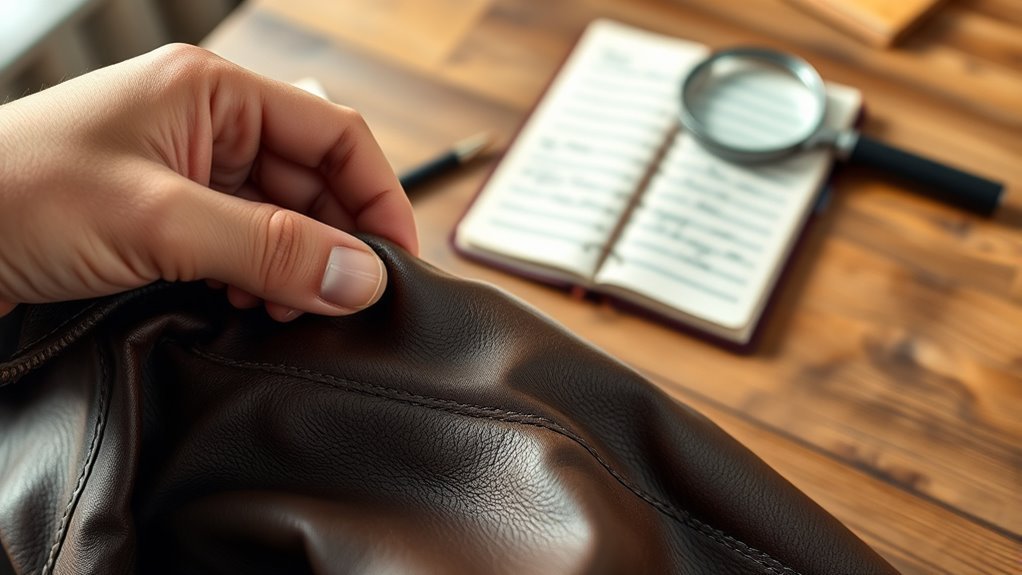
Now that you know how to tell if a leather jacket is real, you’re armed with tools to spot the genuine article like a detective with a magnifying glass. From feeling the texture to checking the smell and even performing a safe burn test, each step brings you closer to uncovering the truth.
Trust your instincts and these tips—real leather will stand out, just like a diamond in a sea of glass. By mastering these techniques, you can confidently identify authentic leather jackets and avoid imitations. Remember, knowing how to tell if a leather jacket is real is key to making a smart purchase and enjoying quality for years to come.