How to Repair Dog Scratches on a Leather Couch in 7 Easy Steps
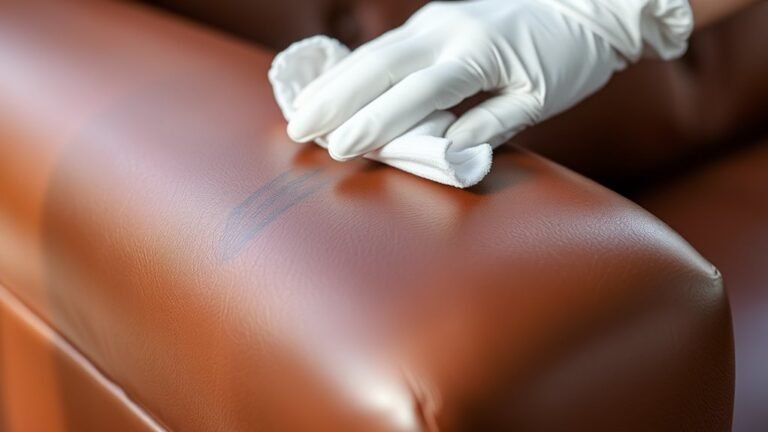
First, assess the dog scratches on your leather couch and gather necessary supplies like leather cleaner, conditioner, repair compound, and dye. Cleaning the scratched area gently is important, but avoid soaking the leather to prevent damage. Carefully trim any loose fibers around the scratches.
Next, apply conditioner to soften the leather, allowing it to absorb fully for best results. For deeper scratches, fill them with a repair compound, smooth it out evenly, and let it dry completely. This step is crucial to restore the couch’s surface texture.
Then, match your couch’s color using leather dye, applying it in thin layers to blend seamlessly. Finish the repair with a protective sealant to preserve the leather and prevent future damage. Keep reading for detailed tips to achieve perfect results.
Assess the Damage and Gather Materials

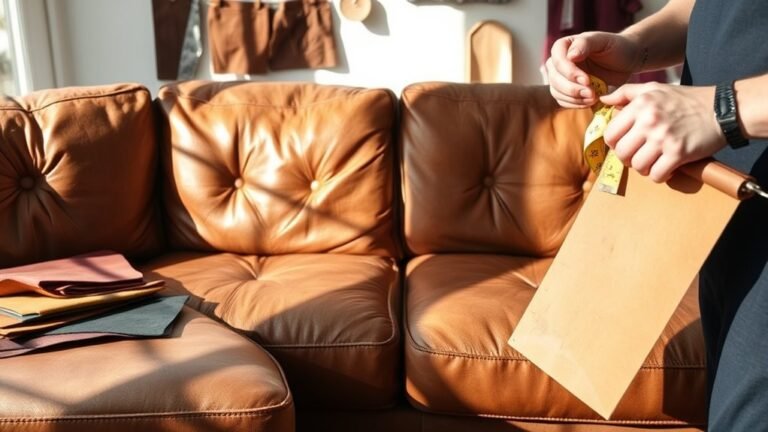
Before you begin repairing, carefully evaluate the extent of the scratches on your leather couch to determine the best approach. Take a close look at each scratch. Are they shallow surface marks or deeper gouges? This will guide you in choosing the right repair method.
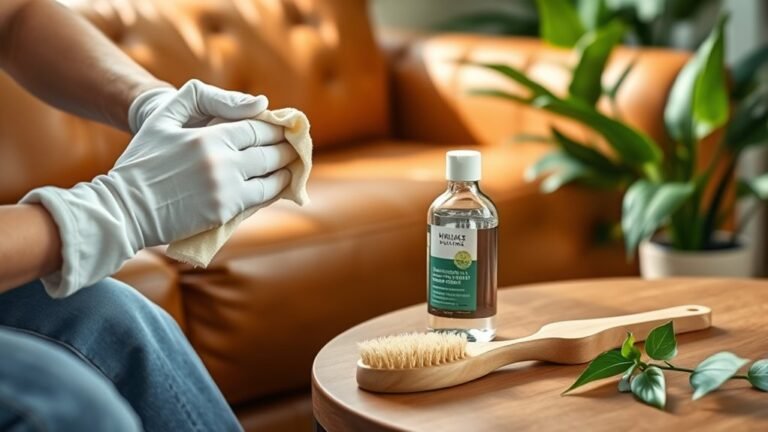
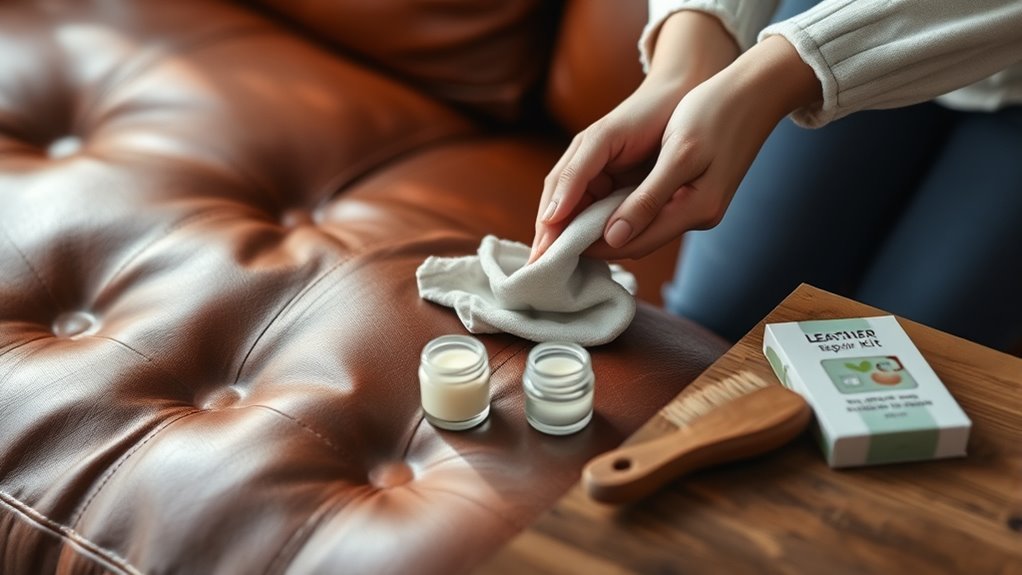
Next, gather all the materials you’ll need. Common supplies include a leather cleaner, soft cloths, leather repair kit, fine sandpaper, and sometimes leather conditioner or dye. Having everything ready prevents interruptions and helps you work efficiently.
If the scratches are minor, you might only need cleaner and conditioner. For deeper damage, a full repair kit is essential.
Clean the Scratched Area Thoroughly

Once you’ve gathered your materials and assessed the scratches, focus on cleaning the affected area thoroughly. Proper cleaning removes dirt and oils that could interfere with the repair process.
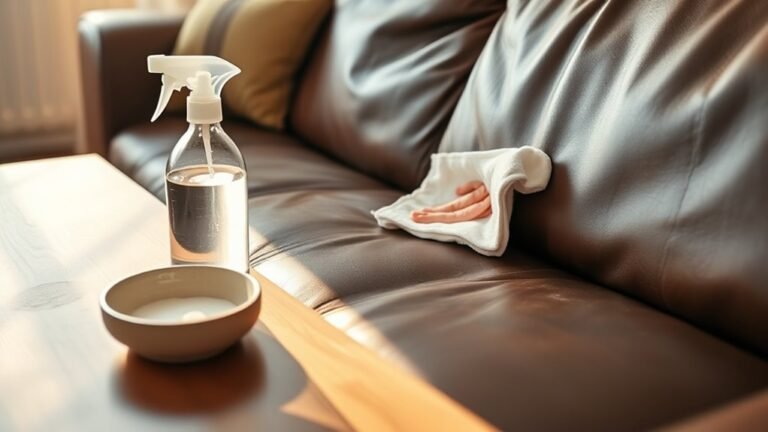
Use a soft cloth dampened with a mild soap solution to gently wipe the scratched surface. Avoid soaking the leather. After cleaning, let it air dry completely before moving on.
| Step | Material Needed | Tip |
|---|---|---|
| 1. Prepare Solution | Mild soap + water | Use lukewarm water |
| 2. Wipe Surface | Soft cloth | Use gentle circular motions |
| 3. Dry Area | Air drying | Avoid direct heat sources |
| 4. Inspect Again | Good lighting | Ensure no residue remains |
Trim Loose Fibers and Edges

After cleaning the scratched area thoroughly, you’ll want to trim any loose fibers and rough edges to create a smooth surface for repair. Use a pair of sharp scissors or small, precise nail clippers to carefully snip away frayed leather strands.
Be gentle to avoid making the scratch worse or cutting too deep. Focus on removing only the loose bits that stick out, leaving the intact leather untouched. This step helps the repair materials adhere better and results in a neater finish.
Take your time, inspecting the area closely under good lighting. Once you’ve trimmed the edges, the damaged spot should look cleaner and less ragged, setting you up perfectly for the next step in restoring your leather couch.
Apply Leather Conditioner to Softened Scratches
Although the scratches may still be visible, you can soften them by applying a high-quality leather conditioner. Start by choosing a conditioner suited for your couch’s leather type. Use a clean, soft cloth to apply a small amount in circular motions, focusing on the scratched areas.
This helps replenish moisture, making the leather more supple and minimizing the appearance of scratches. Let the conditioner absorb fully for at least 20 minutes, then buff gently with a dry cloth to restore shine.
Regular conditioning not only improves the look of scratches but also prevents future damage by keeping the leather hydrated and flexible. Remember, consistent care is key to maintaining your couch’s beauty after every repair step.
Use Leather Repair Compound to Fill Deep Scratches
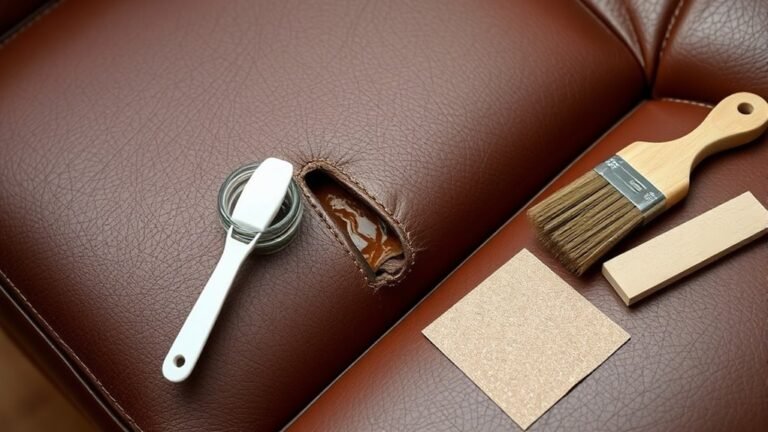
If deep scratches mar your leather couch, you’ll want to use a leather repair compound to restore its smooth surface. This compound fills in the gouges, creating a level base for further treatment.
Here’s how to apply it effectively:
- Clean the scratched area thoroughly to remove dirt and oils.
- Use a palette knife or similar tool to spread the compound evenly into the scratch.
- Smooth the surface carefully, ensuring no excess compound remains.
- Let the compound dry completely, following the product’s recommended drying time before touching or proceeding.
Match and Apply Leather Dye or Colorant
Since matching the color precisely is essential, you’ll want to choose a leather dye or colorant that blends seamlessly with your couch’s original shade. Start by testing the dye on a hidden area to ensure it matches perfectly once dry.
Use a small sponge or applicator to apply the dye evenly over the scratched area, working in thin layers. Allow each layer to dry completely before applying the next to build up the color gradually.
Avoid saturating the leather, as too much dye can cause uneven patches.
Once you achieve a consistent color, gently feather the edges to blend the repair with surrounding leather.
This careful application restores your couch’s appearance and prepares it for the final protective step.
Finish With a Protective Leather Sealant
After restoring the color, you’ll want to protect your work by applying a leather sealant. This final step seals in the dye, preventing fading and further damage from scratches or spills. Choose a sealant designed specifically for leather to maintain flexibility and breathability.
When applying the sealant, keep these tips in mind:
- Use a clean, soft cloth or sponge for even coverage
- Apply in thin, light layers to avoid buildup
- Allow each layer to dry completely before adding another
- Test on a small, hidden area first to ensure no discoloration
Frequently Asked Questions
Can Dog Scratches on Leather Cause Permanent Damage Over Time?
Yes, dog scratches can cause permanent damage if you don’t address them quickly.
You’ll want to clean, condition, and repair the leather promptly to prevent cracks and discoloration that worsen over time.
How Can I Prevent My Dog From Scratching the Leather Couch Again?
You simply can’t let your dog turn your couch into a shredded mess! Train them with commands, provide scratching alternatives like toys, trim their nails regularly, and use protective covers to keep your leather looking flawless forever.
Are There Specific Leather Types More Resistant to Dog Scratches?
Yes, you’ll find top-grain and full-grain leather more resistant to dog scratches than bonded leather. These tougher types handle wear better, so choosing them helps protect your couch from damage over time.
Can I Use Household Items Instead of Professional Leather Repair Products?
You might feel like MacGyver, but yes, you can use household items like olive oil or vinegar to soften scratches.
Just remember, these are quick fixes—professional products give longer-lasting, more polished results for your leather couch.
How Long Does It Take for the Repair Process to Fully Cure?
It usually takes about 24 to 48 hours for the repair to fully cure.
You’ll want to avoid using the couch during this time to guarantee the patch sets properly and lasts longer.
Conclusion
Now that you’ve followed each step, you might be wondering if your couch truly looks new again.
Wait for it… as the leather sealant dries, the scratches begin to vanish, blending seamlessly with the rest of the surface. You’ll almost forget those pesky dog claws ever left a mark.
With a little patience and care, your leather couch is ready to face whatever comes next—flawless and strong. Repairing dog scratches on a leather couch has never been easier.
By following these simple steps, you ensure your furniture remains beautiful and durable despite your pet’s playful nature.