7 Steps to Remove Urine Smell From Leather Couch
Start by spotting all urine stains and odors on your leather couch using your nose or a UV light. Blot excess urine immediately with a clean, white cloth—don’t rub to avoid spreading the stain.
Mix a mild solution of white vinegar, warm water, and a few drops of soap, then gently blot the affected area. Follow up with an enzyme cleaner to break down odors deeply.
Let the couch air dry thoroughly before applying leather conditioner to restore moisture. Keep going to uncover more detailed tips for complete removal.
Identify the Urine Stain and Odor Source

Before you can effectively remove the urine smell from your leather couch, you need to pinpoint the exact location and source of the stain and odor. Start by carefully inspecting the couch, focusing on areas where your pet or child might’ve had an accident.
Use your nose to detect any lingering urine scent, as some stains may not be visible. Check seams and crevices, since urine can seep into these tight spaces.
If the stain isn’t obvious, try using a UV light in a dark room; urine glows under UV, helping you spot hidden spots.
Identifying all affected areas guarantees you don’t miss any odor sources, making your cleaning efforts more effective and preventing the smell from returning.
Blot Excess Urine Immediately

Once you discover the urine stain, act quickly to blot the excess moisture using a clean, absorbent cloth or paper towel. Don’t rub the stain—that can push the urine deeper into the leather. Instead, gently press the cloth against the affected area to soak up as much liquid as possible.
Repeat with fresh cloths until no more moisture transfers. Here’s what you should do:
- Use white cloths or paper towels to avoid color transfer
- Apply light pressure without scrubbing
- Blot from the outside edges toward the center
- Change cloths frequently to maximize absorption
- Avoid using colored or textured towels that may leave fibers behind
Acting fast at this stage helps prevent the urine from soaking further and reduces lingering odors.
Prepare a Mild Cleaning Solution

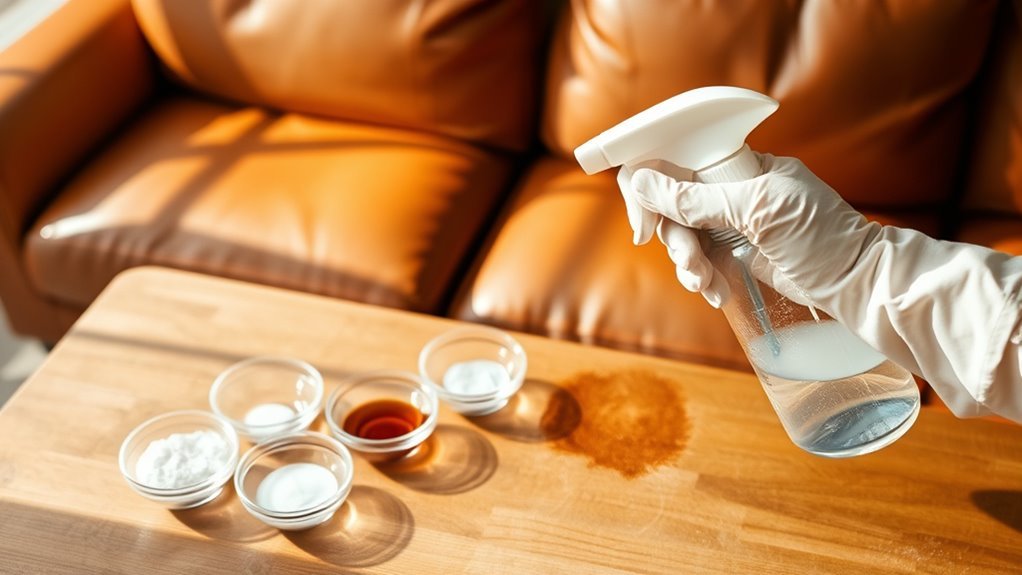
After blotting up the excess urine, you’ll want to create a gentle cleaning solution that won’t harm your leather couch. Mix one part white vinegar with two parts warm water. Vinegar neutralizes odors without damaging leather.
Blot excess urine, then mix one part white vinegar with two parts warm water to gently clean and neutralize odors.
Add a few drops of mild liquid soap, like castile or baby shampoo, to boost cleaning power. Stir the mixture gently until it’s well combined.
Avoid harsh chemicals, bleach, or alcohol-based cleaners, as they can dry out or discolor the leather. Make sure your solution is diluted enough to be safe but effective.
Test it first on a small, hidden area of the couch to ensure it won’t cause any damage or discoloration. Once you confirm it’s safe, your mild cleaning solution is ready for use.
Gently Clean the Affected Area
While the cleaning solution is ready, dampen a soft cloth with it and gently blot the urine stain on your leather couch. Avoid scrubbing, as that can push the stain deeper or damage the leather. Use light, pressing motions to lift the urine without spreading it.
Keep these tips in mind as you clean:
- Use a microfiber or cotton cloth for softness
- Blot from the outside edges toward the center
- Rinse the cloth frequently in clean water, then reapply the solution
- Avoid soaking the leather; keep it slightly damp
- Pat the area dry with a clean, dry cloth afterward
This careful approach helps remove urine without harming your leather’s finish or texture.
Use an Enzyme Cleaner for Deep Odor Removal
Cleaning the leather gently removes surface stains, but stubborn urine odors can linger beneath. To tackle this, use an enzyme cleaner specifically designed to break down urine proteins. These cleaners penetrate deep into the leather, neutralizing odors instead of just masking them.
Here’s how to apply the enzyme cleaner effectively:
| Step | Action | Tip |
|---|---|---|
| 1. Test | Apply cleaner on hidden spot | Avoid discoloration |
| 2. Spray | Lightly spray affected area | Don’t saturate leather |
| 3. Wait | Let it sit for 10-15 minutes | Follow product instructions |
| 4. Blot | Gently blot with a clean cloth | Avoid rubbing |
| 5. Repeat if needed | Reapply for persistent odors | Patience pays off |
This method ensures deep odor removal without damaging your leather couch.
Air Dry the Couch Completely
Once you’ve treated the leather with an enzyme cleaner, you’ll want to air dry the couch completely to prevent moisture from causing damage or lingering odors. Proper drying is essential, so follow these tips to guarantee your couch dries thoroughly:
Open windows to increase air circulation.
Use a fan to speed up airflow around the couch.
Avoid direct sunlight, which can dry out and crack leather.
Keep pets and people off the couch to allow uninterrupted drying.
Make sure the room temperature stays moderate, not too humid or cold.
Condition the Leather to Restore Moisture
Because drying can leave your leather couch feeling stiff and dry, you’ll want to condition it to restore moisture and maintain its suppleness. Choose a high-quality leather conditioner that suits your couch’s type, and test it on a small, hidden area first to ensure it doesn’t discolor the leather.
Apply the conditioner evenly using a soft cloth, working it gently into the surface with circular motions. Let it absorb fully for the time recommended on the product label.
Conditioning not only replenishes lost oils but also protects your leather against cracks and wear.
Repeat this process every few months or after deep cleanings to keep your couch looking and feeling its best, ensuring it stays soft, smooth, and odor-free over time.
Frequently Asked Questions
Can Urine Damage Leather Permanently?
Yes, urine can permanently damage leather if you don’t clean it quickly. It can stain, weaken the material, and cause unpleasant odors.
Act fast to preserve your leather’s appearance and durability.
Is It Safe to Use Vinegar on Leather?
Think of leather as a delicate garden; vinegar’s acidity can burn its leaves. You shouldn’t use vinegar directly on leather, as it might cause damage.
Instead, opt for mild cleaners designed specifically for leather care.
How Long Does Urine Odor Last if Untreated?
If you don’t treat urine odor, it can last weeks or even months, especially on porous surfaces. The smell intensifies over time as bacteria break down the urine, so you’ll want to act quickly to prevent it.
Can Professional Cleaning Remove Urine Smell Completely?
Absolutely, pros can zap the urine smell so thoroughly it’ll seem like it never happened! Their powerful tools and special cleaners reach deep, erasing odors you thought were permanent.
You’ll love the fresh, clean result!
Are All Enzyme Cleaners Safe for Leather?
Not all enzyme cleaners are safe for leather. You should choose one specifically formulated for leather to prevent damage.
Always test it on a hidden spot first to ensure it won’t discolor or harm your couch.
Conclusion
Now that you know how to tackle urine smells on your leather couch, don’t wait to act—remember, “a stitch in time saves nine.” By addressing the stain quickly and following these steps, you’ll protect your couch and keep it looking fresh.
With a little care, you’ll not only remove the odor but also restore your leather’s natural beauty. Using the right cleaning techniques for leather ensures that your couch remains soft and supple.
Keep your leather couch comfortable and clean for years to come by consistently removing urine smell and preventing future stains. Taking prompt action is key to maintaining the quality and appearance of your leather furniture.